
A duvet is the largest, quietest piece of laundry in the home. It lives beneath a cover, out of sight, and every night it absorbs warmth, skin oils and a little of Singapore’s humidity, until the day you lift the cover and realise the inner has been overlooked for far too long. And then comes the practical problem: it simply will not fit in the washing machine.
The reassuring part is that a duvet that is too big for the drum can still be washed beautifully, whether by hand in the bath, in a large-capacity machine, or by a professional. What separates a fresh, lofty duvet from a lumpy, musty one is not the size of your machine. It is three things: how gently it is washed, how thoroughly it is rinsed, and how completely it is dried. This guide walks through all three, fabric by fabric and filling by filling.
Why a Duvet Is Not Simply Large Laundry
A duvet is a quilted envelope of insulating fill, and it behaves very differently from a shirt or a towel. Once wet, the filling absorbs a remarkable amount of water, and the duvet can become many times heavier than it was dry. That weight is the root of almost every duvet-washing problem.
Inside a drum that is too small, a wet duvet cannot move freely. Water and detergent cannot circulate through the core, the load becomes unbalanced during the spin, and the stitching and internal baffles take strain they were never designed for. Worse, the rinse is incomplete, so detergent is left in the fibre, where it makes the fill stiff, dull and prone to clumping.
Singapore adds one more variable. In constant humidity, a duvet that is even slightly damp at its core will turn musty within a day or two, which is why drying, not washing, is where most duvets are won or lost.
Read the Label Before Anything Else
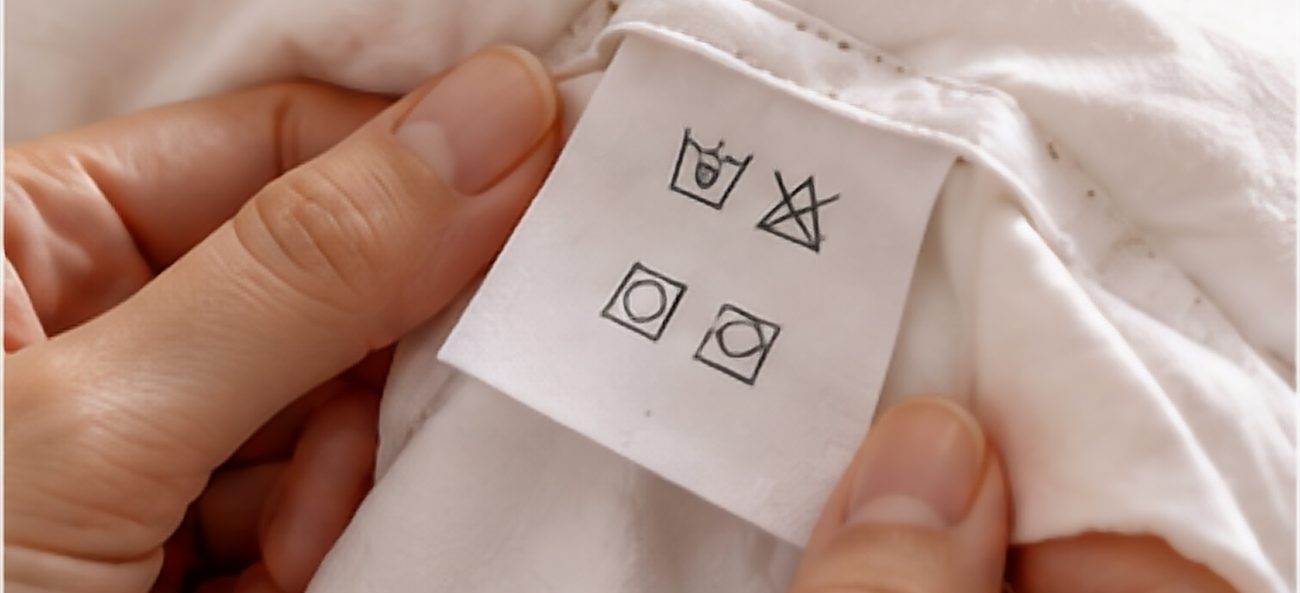
Four small symbols decide the whole method. Read them before you run a single drop of water.
The care label sewn into the seam of your duvet tells you the filling, the maximum water temperature and whether machine washing, tumble drying or dry cleaning is allowed. It is the one piece of information that overrides every general rule, including the ones in this guide.
- A tub with a hand: hand wash only. This is the symbol the bathtub method below is made for.
- A tub with a number: the maximum wash temperature in degrees Celsius. Never exceed it, and for a duvet, going lower is always safer.
- A crossed-out tub: do not wash with water. This is a job for a professional.
- A circle inside a square: tumble drying is permitted. Dots inside the circle indicate the heat level, and fewer dots mean lower heat.
- A crossed-out square and circle: do not tumble dry. Air dry only.
- A circle on its own: professional dry cleaning, with a letter inside that tells the cleaner which process to use.
If the label is missing or has faded, treat the duvet cautiously: assume cool water, gentle handling and no tumble drying until you know what it is made of.
Choose Your Route: Four Ways to Wash an Oversized Duvet
Most home machines in Singapore hold somewhere between 7 and 10 kg of dry laundry. That sounds generous, but a king or super-king duvet, and almost any down duvet once it is wet, can overwhelm a drum that size. As a rough test, a duvet should sit in the drum with a hand’s breadth of free space all around it. If you have to push it in, it is too big. Your machine’s manual will also say whether bedding is recommended.
| Route | Best for | Effort | Watch for |
|---|---|---|---|
| Bathtub hand wash | Synthetic and down duvets of any size, if the label permits | High: around an hour hands-on, plus drying | Heavy wet weight; slow drying |
| Large-capacity laundromat machine | Synthetic duvets too big for a home machine | Moderate | Label temperature; heavy loads straining stitching |
| Home machine, if it fits loosely | Single and small double synthetic duvets | Low | Overloading, unbalanced spin, incomplete rinse |
| Professional care | Down, feather, wool, silk, super-king and heavy winter weights | None | Ask how the duvet will be dried right through to the core |
Your Duvet Kit: Five Things Worth Having
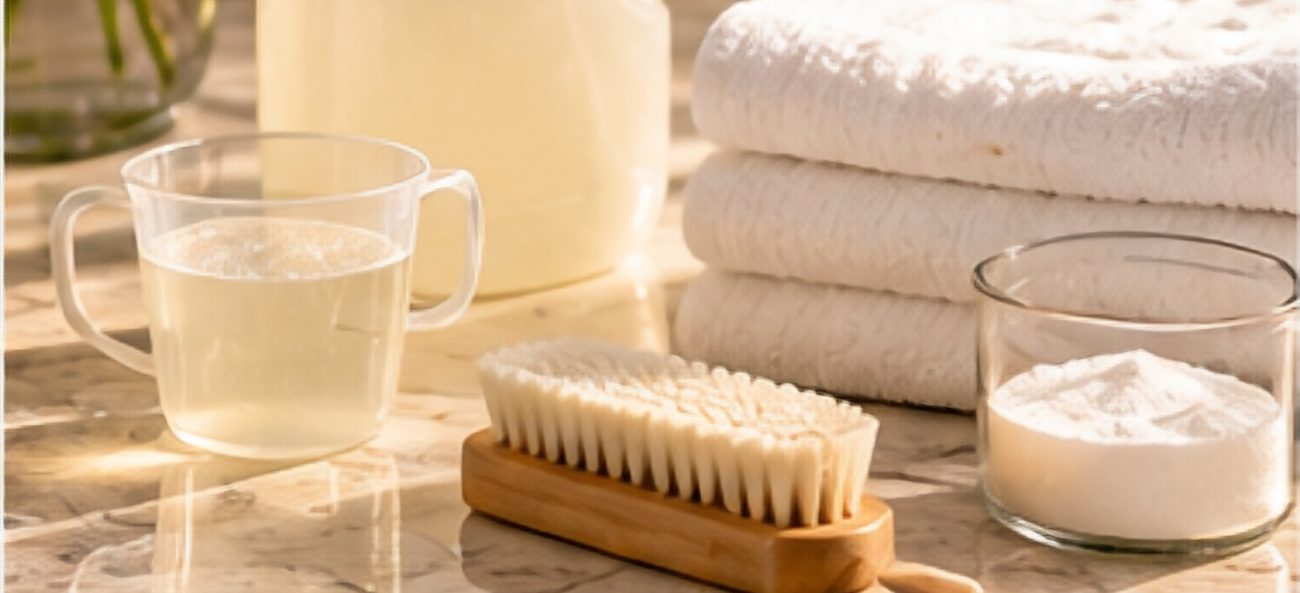
A mild detergent, a soft brush and plenty of white towels: the kit is simple, and it is enough.
You do not need specialist products. A small, deliberate kit handles nearly every duvet:
- A mild liquid detergent. Choose a gentle, fragrance-light formula, or a detergent made for down if you own a down duvet. Powders can leave residue in thick fill, so liquid is the safer choice.
- A clean bathtub. Scrub it first and rinse it thoroughly, because any cleaner left on the surface will end up in the duvet.
- A soft-bristle brush. For treating spots gently without roughing the shell fabric.
- Several large, clean towels. White or colour-fast, for pressing out water and for laying the duvet on while it dries.
- Dryer balls or clean tennis balls. They break up clumps in the filling during tumble drying, if the label allows it.
Two things stay on the shelf. Fabric softener coats the fibres and flattens the loft, and chlorine bleach weakens the shell and can yellow the fill. For a stubborn mark on the shell, treat just that spot before the wash with a little diluted detergent worked in softly with the brush, then let it rest for ten minutes.
The Bathtub Method, Step by Step
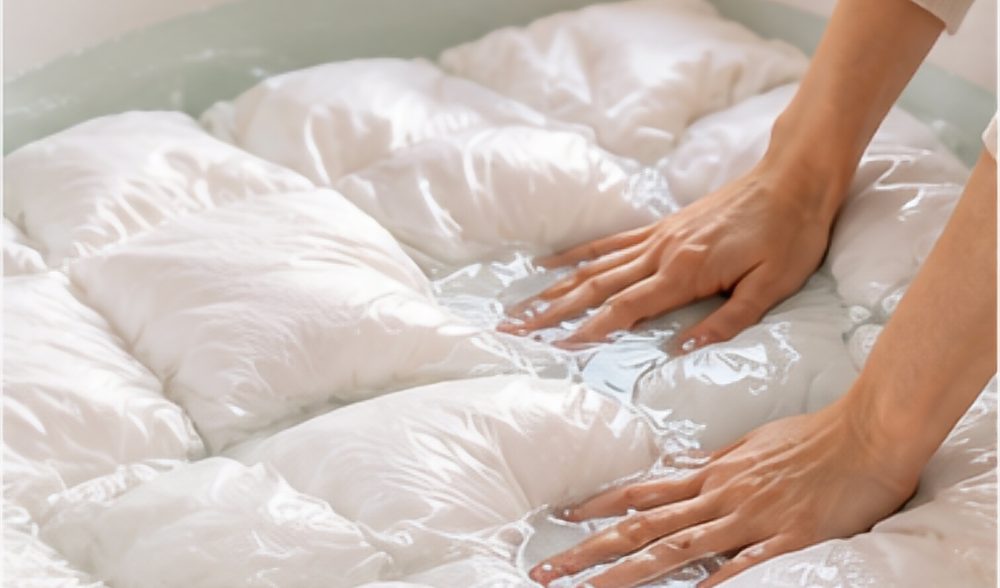
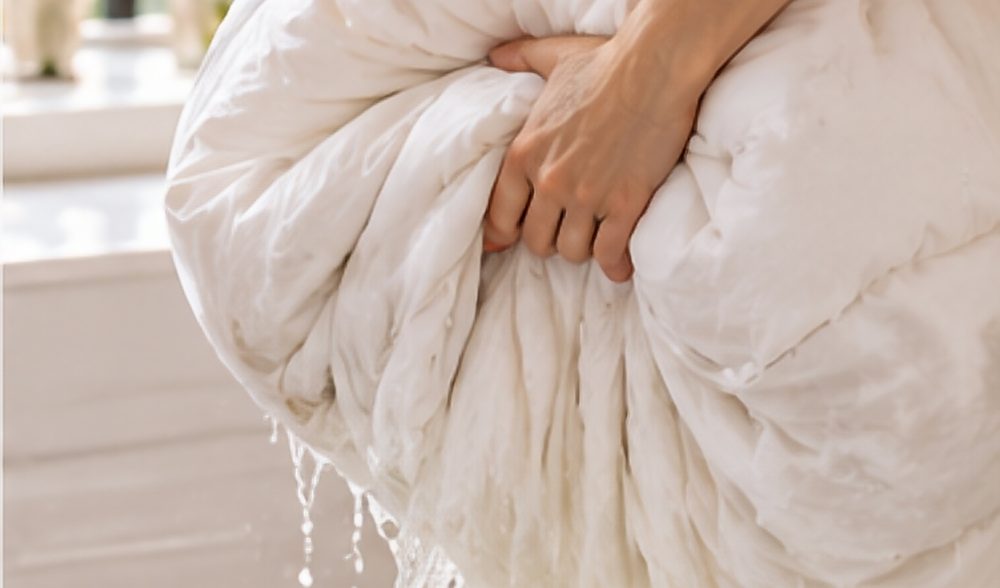
This is the gentlest way to wash a duvet that is too big for the machine. It works for most synthetic and down duvets whose label permits washing, and it gives you full control over temperature, detergent and rinsing.
- Prepare the tub. Scrub it, rinse it thoroughly and run it with lukewarm water, comfortably warm to the hand and never hotter than the label allows. About 30°C is a sensible target.
- Dissolve the detergent first. Add a small amount of mild liquid detergent, following the bottle’s directions for the volume of water, and swirl it through before the duvet goes in. More detergent does not mean cleaner; it only means more to rinse out.
- Submerge and press. Lay the duvet in the water and press down gently with your palms, working across it in sections to push out the trapped air. Down in particular floats stubbornly, so be patient. Leave it to soak for twenty to thirty minutes, pressing it again once or twice.
- Press, never scrub. Use the flats of your hands. Do not rub, twist or wring, which can tear the internal baffles and bunch the filling.
- Drain and press out the water. Leave the duvet in the tub while it drains and press from the edges towards the centre, folding it over itself in sections as you go.
- Rinse until the water runs clear. Refill with clean lukewarm water, press, drain and repeat, usually at least three times. Rinsing is the step most often rushed, and leftover detergent is the main reason duvets dry stiff, dull and clumpy.
- Remove the excess water. Gather the duvet up in both arms, supported from underneath. Never lift it by a single corner, because a saturated duvet is very heavy and the stitching will tear. Press it against the side of the tub, or lay it on a stack of towels and roll it to squeeze out more. A short, gentle spin in a large-capacity machine does this best, if the label permits.
Drying: Where Most Duvets Are Won or Lost

Plenty of air and a little patience: a high floor, a breeze and a drying rack beat any shortcut.
A duvet that feels dry on the surface can still be damp at its core. In Singapore’s humidity, that hidden dampness is what turns a freshly washed duvet musty, so allow more time than you think you need. There are two good ways to do it, and the best results often combine them.
Option 1: Tumble dry on low heat
If the label permits, a large-capacity dryer at a laundromat is the most reliable route, because a duvet needs room to tumble freely. Choose the lowest heat setting, add two or three dryer balls or clean tennis balls, and pause every so often to take the duvet out, shake it and redistribute the filling. High heat can flatten synthetic fill, dry out down and permanently felt wool, so patience on a low setting is always better than heat.
Option 2: Air dry with real airflow
Lay the duvet flat across two sturdy racks, or drape it evenly over a wide drying frame, rather than folding it over a single thin line. Choose a bright, breezy spot, and start in the morning on a day with no rain in the forecast. Strong direct sun is fine for a brief spell on synthetic fill, but down and delicate shells prefer bright shade with moving air. Turn the duvet over and shake it out every few hours. Allow a full day for synthetic fill and up to two days for down.
If you must dry indoors, choose the best-ventilated room you have, place the racks near a fan, and use a dehumidifier or air conditioning to pull the moisture out of the air.
Restoring the Loft
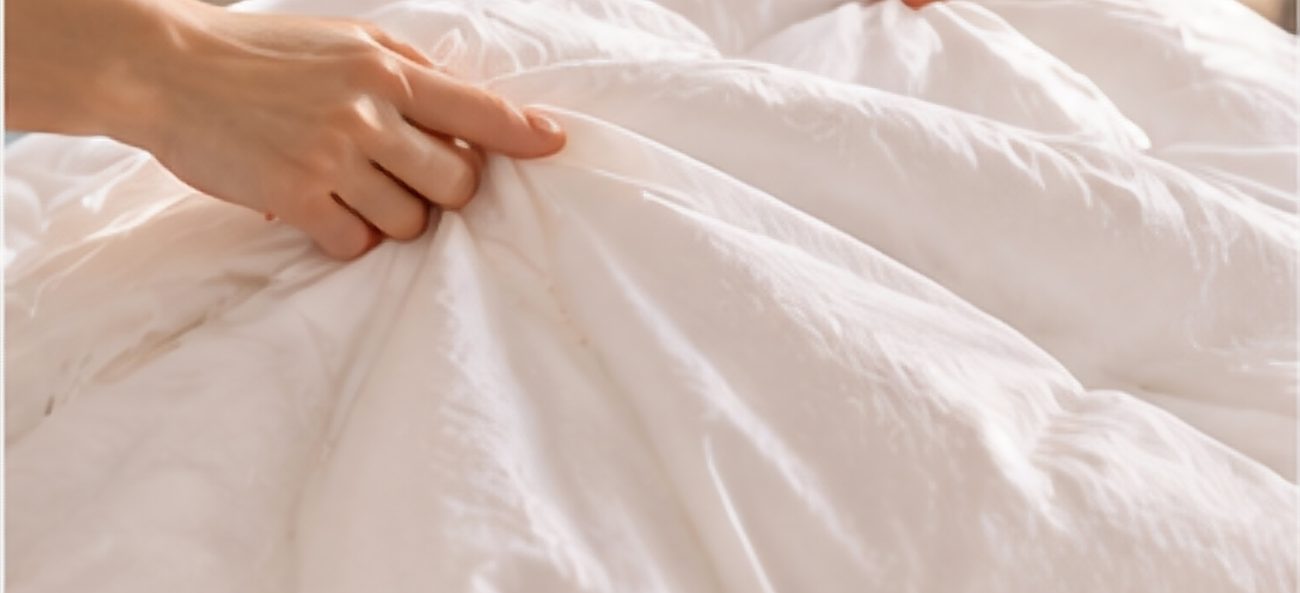
A final shake and a gentle plump brings the filling back to life.
Even a perfectly washed duvet can look flat and lumpy when it first comes out of the dryer or off the rack. This is normal, and it is easy to correct. Once the duvet is completely dry, shake it out firmly and work through each section with your hands, breaking up any clumps of filling and pushing it back towards the corners. If the label allows, a short, low-heat tumble with dryer balls for ten to fifteen minutes will restore the loft further. Finally, let it air for an hour in a shaded, breezy spot before it returns to the bed.
Filling by Filling: Where Home Washing Ends
Everything above assumes a standard synthetic or down duvet. Filling matters enormously, so here is how each one behaves.
Polyester & Microfibre
The most forgiving filling. It tolerates the full method, dries relatively quickly and holds its shape well. Keep the heat low and skip the softener.
Safe to wash at homeGoose & Duck Down
Luxurious, light and warm, but slow to dry and prone to clumping. It can be washed gently if the label allows, with a very thorough rinse and a long, patient dry.
Home with care, or professionalDown & Feather Blends
Heavier and firmer than pure down. Feather quills can pierce a damaged shell, and the filling dries slowly, so a professional finish is the safest choice.
Spot-treat, or professionalCotton-Filled
Cotton fill is very absorbent, extremely heavy when wet and slow to dry. A home wash risks a damp core, so it is better left to those with industrial dryers.
Professional onlyWool
Wool can felt and shrink with soaking, agitation or heat. Air it regularly, spot clean only, and send it to a professional when it needs more.
Professional onlySilk-Filled
Silk fibre is a delicate protein that water and alkaline detergent can damage. Follow the label, which will almost always point to specialist care.
Professional onlyBamboo & Lyocell Blends
Soft and breathable but can be weaker when wet. Follow the label, use cool water, press gently and dry fully with good airflow.
Check the labelSuper-King & Heavy Winter Weights
Whatever the filling, the sheer wet weight and drying time make these a risk at home. A professional machine and dryer are far kinder to the stitching.
Professional onlySeven Mistakes That Ruin a Duvet
- Forcing it into the machine. An overloaded drum cannot rinse or spin properly, and it strains both the duvet and the motor.
- Using too much detergent. Thick fill traps residue, leaving the duvet stiff, dull and sometimes irritating to the skin.
- Adding fabric softener. It coats the fibres, flattens the loft and reduces breathability.
- Wringing or twisting. This tears baffles and bunches the filling into permanent lumps. Press and roll instead.
- Using high heat. Hot water and hot dryers can flatten synthetic fill, dry out down and felt wool.
- Putting it back damp. A damp core grows mildew quickly in a humid climate. Test the core, then test it again.
- Ignoring the label. It is the manufacturer’s own instruction for your duvet, and it outranks any general advice.
Keeping a Duvet Fresh Between Washes
The less often a duvet needs a full wash, the longer its fill stays lofty and its stitching stays strong. Frequent, small habits do most of the work:
- Always use a duvet cover. Launder the cover weekly or fortnightly, and the inner stays dramatically cleaner.
- Air the bed each morning. Fold the duvet back for twenty minutes before making the bed, so the moisture of the night can escape.
- Give it a monthly airing. An hour or two in a breezy, bright spot refreshes the fill and keeps odours at bay.
- Wash two to three times a year. In Singapore’s climate, that is a sensible rhythm for a duvet in regular use. A guest-room duvet can go longer.
- Store it breathably. A cotton storage bag lets moisture escape, whereas plastic and vacuum bags trap it and crush the loft.
- Add a mattress protector. It reduces the transfer of oils and dust into the bedding in the first place.
Frequently Asked Questions
How often should I wash my duvet?
For a duvet in regular use, two to three times a year is a sensible rhythm in Singapore’s humidity, provided you use a duvet cover and wash it weekly. A guest-room duvet can go once or twice a year, and any duvet should be washed sooner if it develops a smell or a stain.
Can I fit my duvet in a standard home washing machine?
Sometimes, if it is a single or small double synthetic duvet and the care label allows machine washing. As a rough rule, it should sit loosely in the drum with a hand’s breadth of free space. If you have to push it in, or it is down, it is safer to use the bathtub, a large-capacity machine or a professional.
How do I know my duvet is completely dry?
Press your palm into the thickest part of the duvet. It should feel light and warm, never cool or damp, and smell neutral. When in doubt, give it a few more hours of airflow before it goes back on the bed.
Does washing a duvet kill dust mites?
Heat is what kills mites, and the temperatures that do so, around 55 to 60°C, are often higher than a duvet’s label allows. Washing at the label’s temperature still removes a good share of mites and allergens, and regular washing helps. If allergies are a concern, ask a professional about the best sanitising option for your duvet.
Why does my duvet smell musty after washing?
Almost always because the core was still damp when it was put away or back on the bed, or because detergent residue was left in the fill. A longer dry with better airflow, and an extra rinse next time, usually solves it.
Can I use fabric softener on a duvet?
We would avoid it. Softener coats the fibres, which flattens the loft and reduces breathability, particularly in down and microfibre. A thorough rinse and a gentle shake out will leave a duvet softer than any additive.
The Verdict

A clean, lofty duvet is the quiet luxury of a bed that feels new again.
A duvet that will not fit in the washing machine is not a problem. It is simply a different method. Read the label, wash it gently in lukewarm water, rinse until the water runs clear, remove the water by pressing rather than wringing, and dry it right to the core. Follow those five steps and even the largest duvet comes back fresh, lofty and ready for the bed. And for the down, the wool, the silk and the super-king pieces that deserve more than a bathtub, let someone with the right equipment take over.
Piing’s pickup and delivery takes the heaviest job in the house off your hands, so a spotless, fully dried duvet is simply waiting at your door. Pickup & delivery across Singapore
Let Piing! handle the laundry and dry cleaning. Book a pickup and get your clothes collected, cleaned and delivered across Singapore — no store visits, no hassle.
Book a Pickup →