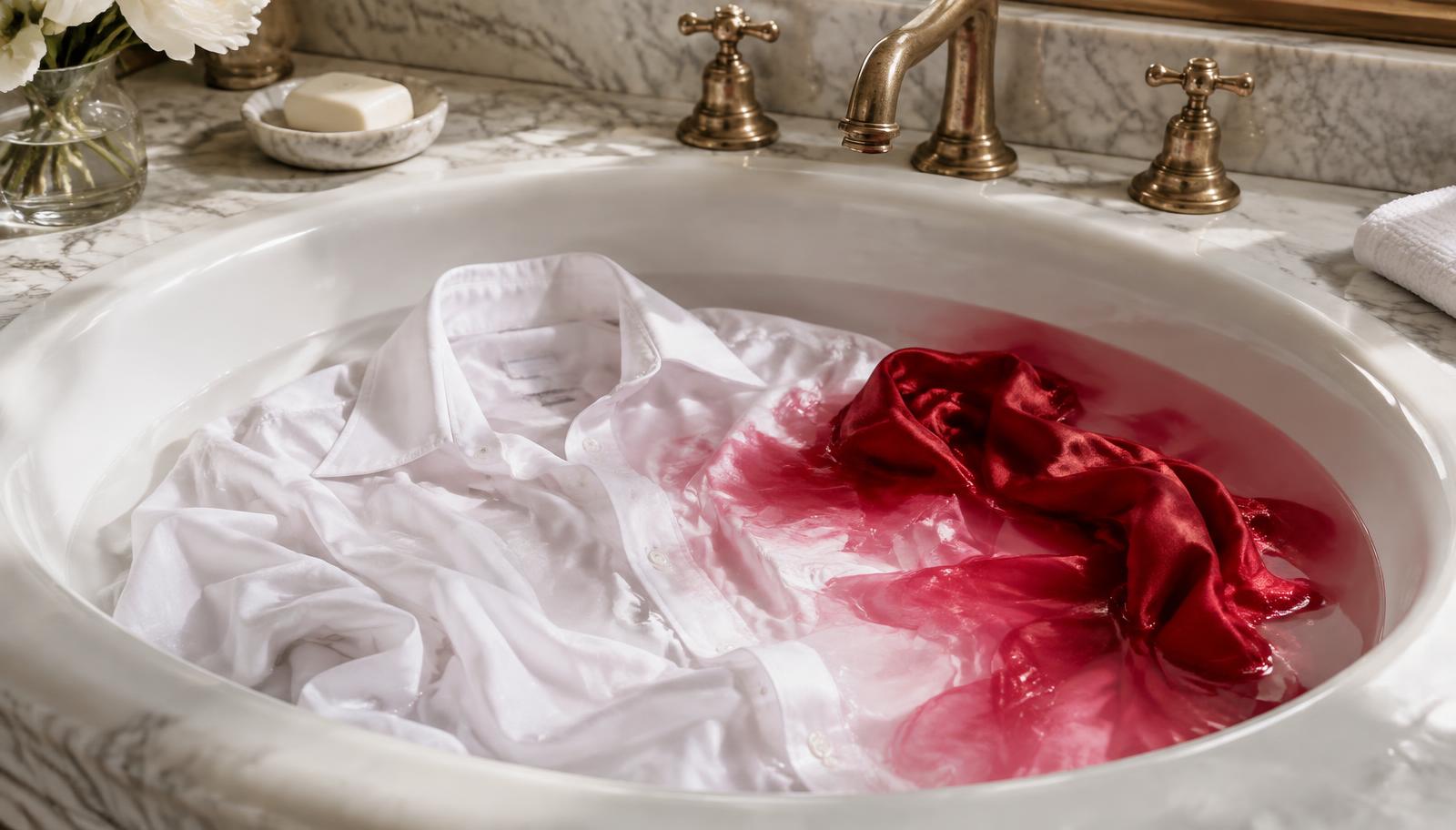
There is a particular kind of silence that follows opening the washing machine and finding that a white shirt has turned a soft, unmistakable blush pink. One new red scarf, one dark towel, a single wayward sock, and an entire load of whites, from the crisp poplin shirts to the good linens and hotel-weight towels, has quietly changed colour.
The reassuring part is that colour transfer is, more often than not, recoverable. Freshly transferred dye has usually attached itself only loosely to the fibres, and it responds well to gentle, patient treatment, provided you move quickly and nothing hot reaches it first. This guide explains why it happens, the exact rescue method, which fabrics can be treated at home, and which belong in expert hands.
Why Whites Pick Up Colour
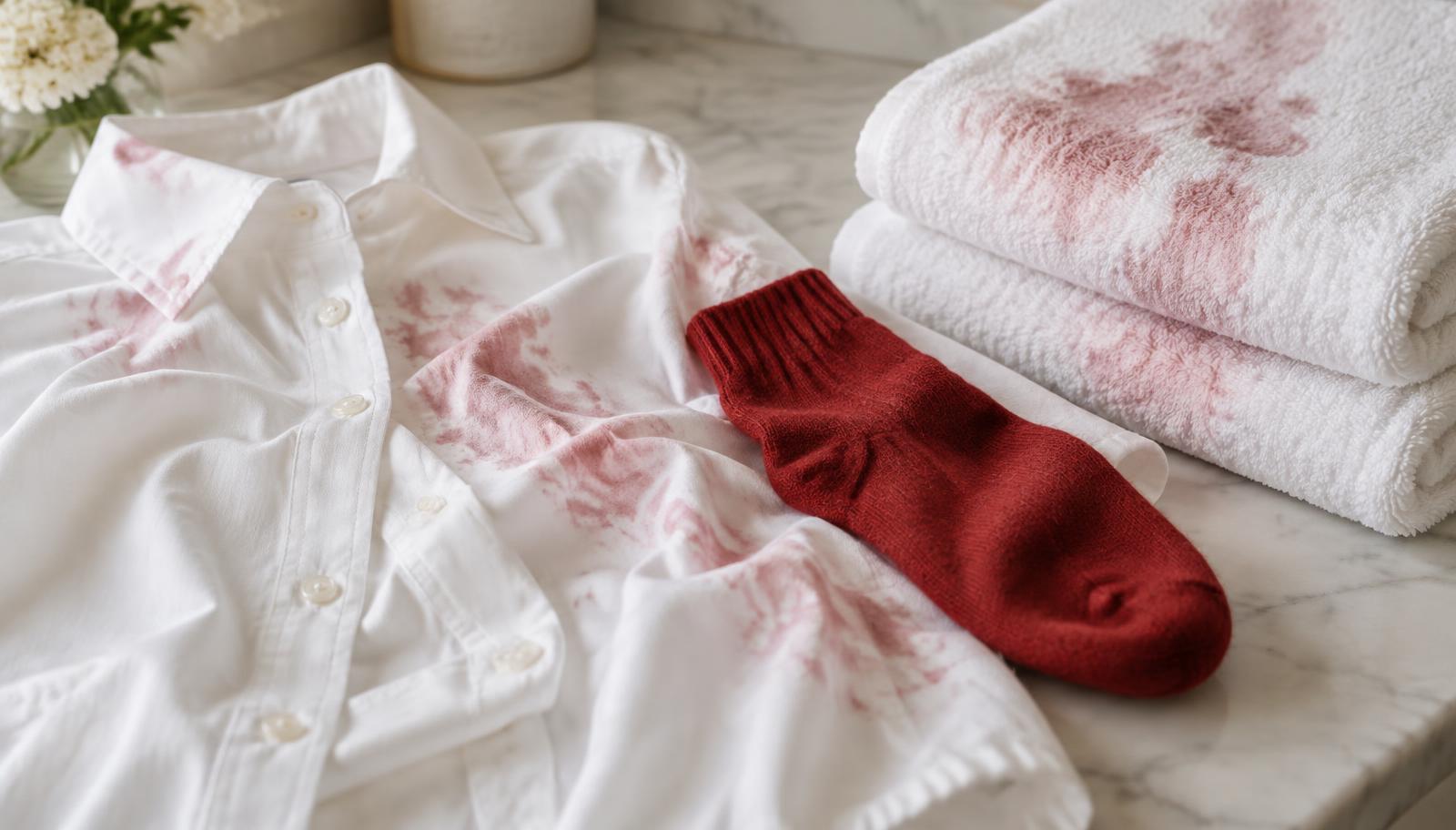
One red sock, one damp basket: the pink tint travels to everything it touches.
Many deeply coloured garments, particularly reds, deep blues, blacks and anything bought new, carry excess dye that was never fully fixed into the fibre. Water, agitation and detergent loosen it, and once it is free in the water, it looks for the nearest fibre to attach to. White cotton, linen and terry carry no dye of their own, so they are the most receptive of all. That is why the damage is so visible on whites, and why pink, the diluted cousin of red, is the classic result.
Singapore adds its own variables. In constant heat and humidity, a damp red top sitting against white shirts in a laundry basket for a few hours can transfer dye without any wash at all. Add a warm cycle, a new festive outfit, a fresh pair of dark denim or a sports jersey, and the conditions for colour transfer are complete.
Where Is Your Stain on the Clock?
The right first move depends on how far the dye has travelled. The earlier you are, the gentler the fix. Use this table as your starting point.
| Situation | What is happening | First move | Avoid |
|---|---|---|---|
| Wet, straight from the wash or the basket | Dye is loose in the water and on the fibres | Remove every item at once; rinse in cold water | Letting the load sit; running another cycle |
| Tinted but still damp | Dye is fresh and the easiest to lift | Cold rinse, then a detergent soak | Letting it dry out |
| Dried, but never heated | Dye has begun to settle | Re-wet thoroughly, then an oxygen soak | Ironing to “check” the colour |
| Tumble-dried or ironed | Heat has bonded the dye to the fibre | Repeat oxygen soaks; consider a professional | A second trip to the dryer |
| Whole load tinted evenly | Dye has spread across every item | Treat tinted whites together, with no coloured items | Chlorine bleach on the whole load |
| Silk, wool or tailored piece | Protein fibres and structure are easily damaged | Go straight to a professional | Soaking or oxygen whitener |
Your Rescue Kit: Five Things Worth Keeping
You do not need a cupboard of specialist products. A small, deliberate kit handles the vast majority of colour-transfer accidents:
- A large, clean basin or the bathtub. Plenty of room lets garments move freely and keeps dye from concentrating in one place. Rinse it first so no residue meets your whites.
- A mild liquid detergent. The first line of defence. It holds loose dye in the water so it can be rinsed away instead of resettling.
- An oxygen-based whitener. For white cotton, linen and synthetics only, it lifts dye tints without the fibre damage chlorine bleach can cause. Follow the product’s own directions.
- A colour-run remover. A last resort for white fabrics when a faint tint survives, used strictly as the product directs.
- Colour-catcher sheets. Not a rescue tool but a prevention one, useful for every wash that includes anything deeply coloured.
The Rescue Method: Rinse, Soak, Repeat
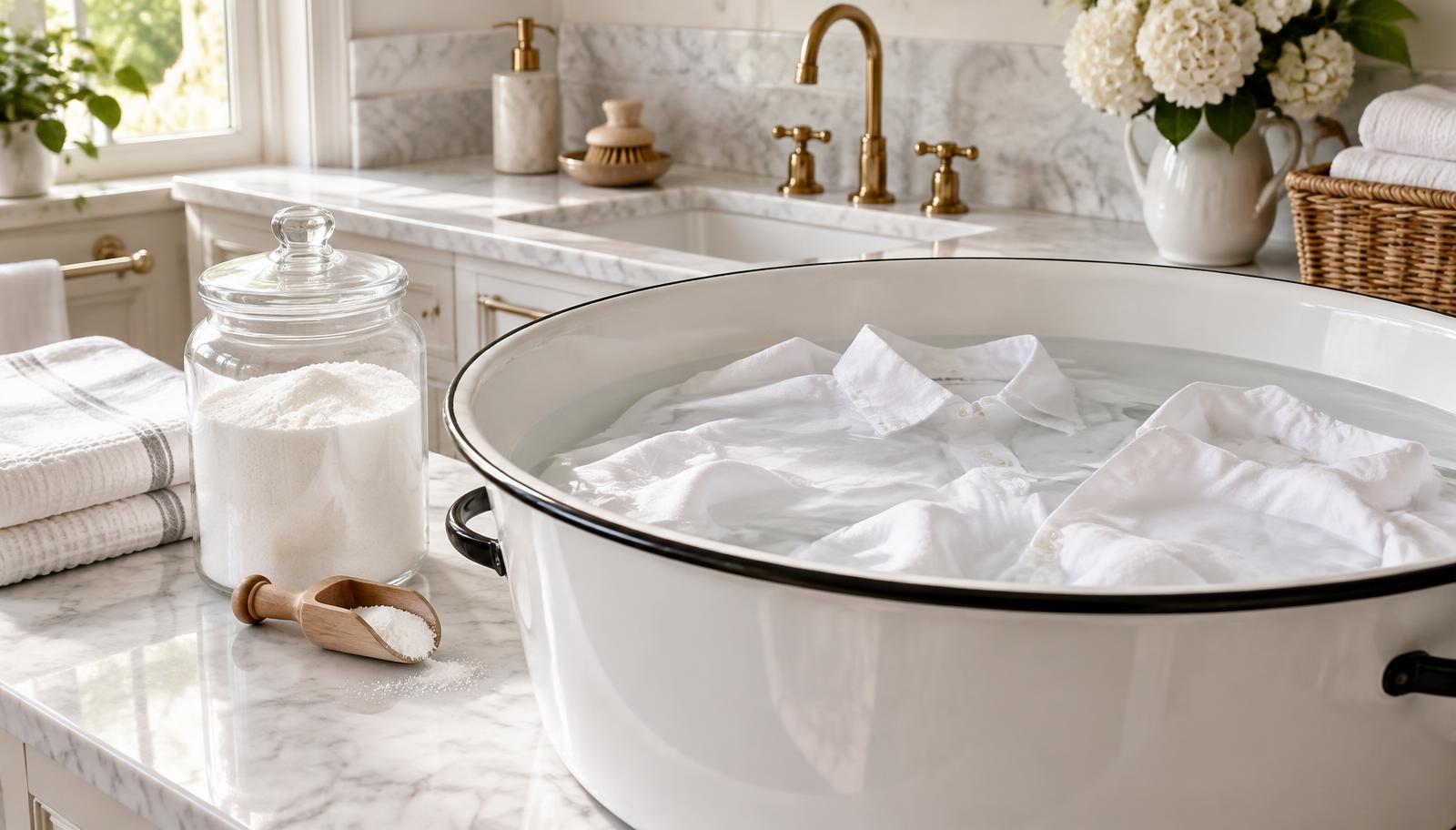
A cool, clear soak does the gentle work: patience lifts what scrubbing only grinds in.
The principle is to release the dye and carry it away, never to rub it deeper into the weave. Work in this order, and do not skip ahead.
- Separate everything immediately. Remove the bleeding item and check every white that touched it. Do not wring or twist the tinted pieces, which presses the dye in.
- Rinse in cold water. Hold each piece under cold running water, or dunk it in a fresh cold basin, until the water runs clear. This flushes the loose dye before it settles.
- Pre-treat the darkest areas. Work a little liquid detergent gently into the most tinted patches with your fingertips and leave it for ten to fifteen minutes.
- Soak in cold water with detergent. Use a fresh basin, a mild dose of detergent and give it thirty to sixty minutes, swirling gently now and then. If the water turns pink, change it and soak again.
- Step up to an oxygen soak if a tint remains. On white cotton, linen and synthetics, make up an oxygen-based whitener soak at the temperature and for the time the product directs, and only as warm as the care label allows. Never combine it with other products.
- Rinse and inspect while wet, in daylight. Hold the fabric against a plain white towel. A faint tint that looks gone indoors can show clearly in natural light.
- Wash the whites on their own. Launder as the care label directs, with nothing coloured in the drum, and air dry only once the tint has completely disappeared.
When a Faint Tint Lingers
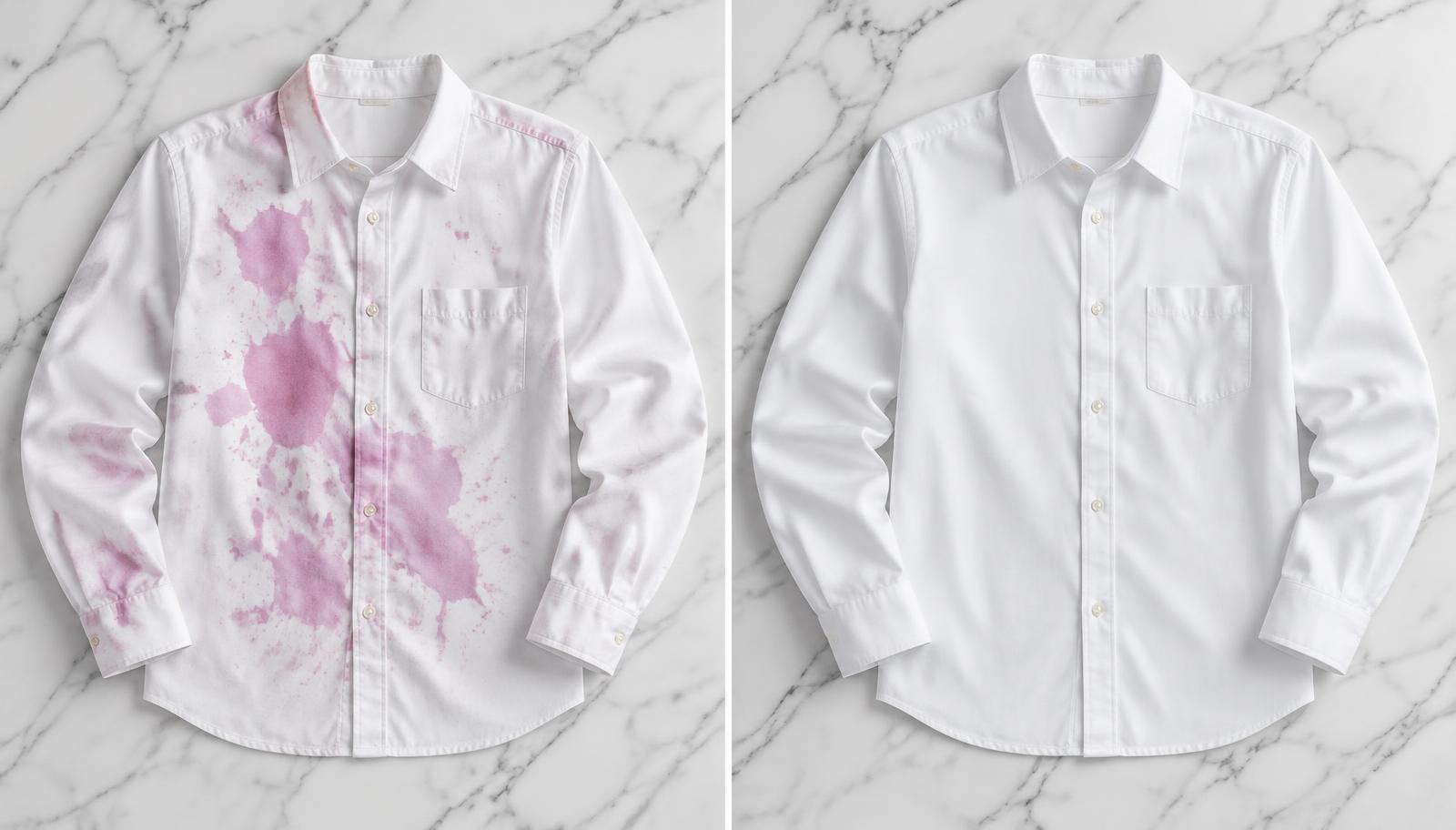
Blush to brilliant: a quick rinse, a patient soak and no heat until the tint has gone.
If a faint blush survives two oxygen soaks, a colour-run remover is the next step. These products are formulated to strip loose dye from white fabric, and they work well on white cotton and linen. Use them on whites only, strictly as the pack directs, and never on anything with coloured trim, prints, embroidery or elastic, which can be affected too.
Chlorine bleach is tempting, but it is not a rescue. It can yellow some fabrics, weaken fibres, damage elastane and ruin silk and wool, and many care labels forbid it outright. We would not reach for it.
Know when to stop. If two or three rounds produce no further change, the remaining tint has probably bonded to the fibre, and continued soaking only risks wearing the fabric. At that point a professional can often achieve what home methods cannot, and sooner is always better.
Fabric by Fabric: Where Home Treatment Ends
Everything above assumes sturdy white cotton. Whites come in many fabrics, and each has its own limit.
Cotton Poplin & Oxford
The most forgiving white. It tolerates the full method: cold rinse, detergent soak and an oxygen soak if needed.
Safe to treat at homeTerry Towels & Bed Linen
Absorbent weaves take up dye readily but also release it well. Soak the whole piece so the colour does not concentrate in one patch.
Home, full soakLinen
Treat as cotton, but handle softly. Wet linen is fragile, so press gently, never wring, and always air dry.
Home, with a light touchSilk & Satin
Water can leave rings, and oxygen whiteners and chlorine damage the protein fibre. Do not soak. Go to a professional promptly.
Professional onlyWool & Cashmere
Agitation felts the surface and oxygen whiteners can harm the fibre. Rinse cool only if you must, and hand it over when in doubt.
Professional onlyPolyester & Nylon Blends
Polyester tends to resist dye transfer, while nylon and elastane can grab it. Cool soak first; use an oxygen soak only if the label allows.
Cool soak, spot-testTailored & Structured Shirts
Fused collars, linings and shaped seams do not tolerate long soaks or scrubbing. Professional finishing keeps the structure intact.
Professional onlyLace & Embellished Whites
Soaking can loosen beads, sequins and delicate threads, and trims may not be colourfast. Do not treat at home.
Professional onlySeven Mistakes That Make the Tint Permanent
- Drying to “see if it worked”. A dryer or iron bonds any remaining dye to the fibre. Always inspect the garment wet first.
- Starting with a hot wash. Heat sets dye. Begin cold, and only warm an oxygen soak to what the product and the care label allow.
- Reaching for chlorine bleach. It can yellow, weaken and damage elastane, silk and wool, and does not reliably reverse a dye tint.
- Rewashing with coloured items. The tinted whites must be treated and washed on their own, or the dye simply moves again.
- Scrubbing or wringing. Friction pushes dye deeper and roughens the weave, leaving a dull patch even after the colour is gone.
- Mixing products. Combining bleach with vinegar, ammonia or other cleaners is unsafe and rarely helps. One product at a time.
- Waiting. Dye set for days is harder to lift than dye set for minutes. The first hour is the best chance you will get.
The Singapore Factor: Heat, Humidity and Sorting

The best rescue is the one you never need: whites, darks and colours, sorted from the very first step.
Prevention is far easier than treatment, and in this climate it is worth building into your routine. A few small habits stop colour transfer before it starts:
- Sort three ways. Whites, lights and darks, with reds, deep blues and blacks kept apart from everything else at first.
- Wash new dark and red garments alone. New pieces carry the most loose dye. Wash them separately, in cold water, for the first few washes. This includes festive outfits and new denim.
- Test before you trust. Dampen a hidden seam and press it against a white cloth. If colour lifts onto the cloth, the garment will bleed.
- Use colour-catcher sheets. They trap loose dye in the wash, and they are a useful safety net, though never a substitute for sorting.
- Never let damp coloured items sit against whites. In humid conditions, wet contact alone is enough. Hang worn items to air before they go in the basket.
- Wash cool and do not overload. Cooler cycles release less dye, and a drum with room to move flushes loose colour away instead of trapping it.
Frequently Asked Questions
Can I fix a pink tint after it has been through the dryer?
Often it can be improved, but there is no guarantee. Re-wet the garment thoroughly, repeat the oxygen soak and keep it away from further heat. Heat-set dye is harder to lift, so the sooner a professional sees it, the better the outcome.
Does white vinegar fix colour bleeding?
It is a popular home remedy, but it does not reliably remove dye that has already transferred. A detergent soak followed by an oxygen-based whitener is more predictable. Never combine vinegar with chlorine bleach.
Can I rewash the whole tinted load together?
Only the tinted whites, and only on their own. Rinse and soak first, then wash with nothing coloured in the drum. Rewashing straight away with any loose-dye item in the load simply moves the colour again.
Do colour-catcher sheets really work?
They help by capturing loose dye in the wash water, which makes them a sensible safety net. They do not replace sorting, and they cannot help if damp coloured items sit against whites before the wash.
Why did my white shirt turn pink in a cold wash?
Cold water reduces dye release but does not eliminate it. Heavily dyed new garments can shed colour even in cool cycles, and a damp pile left in the basket can transfer dye before the wash even begins.
The Verdict
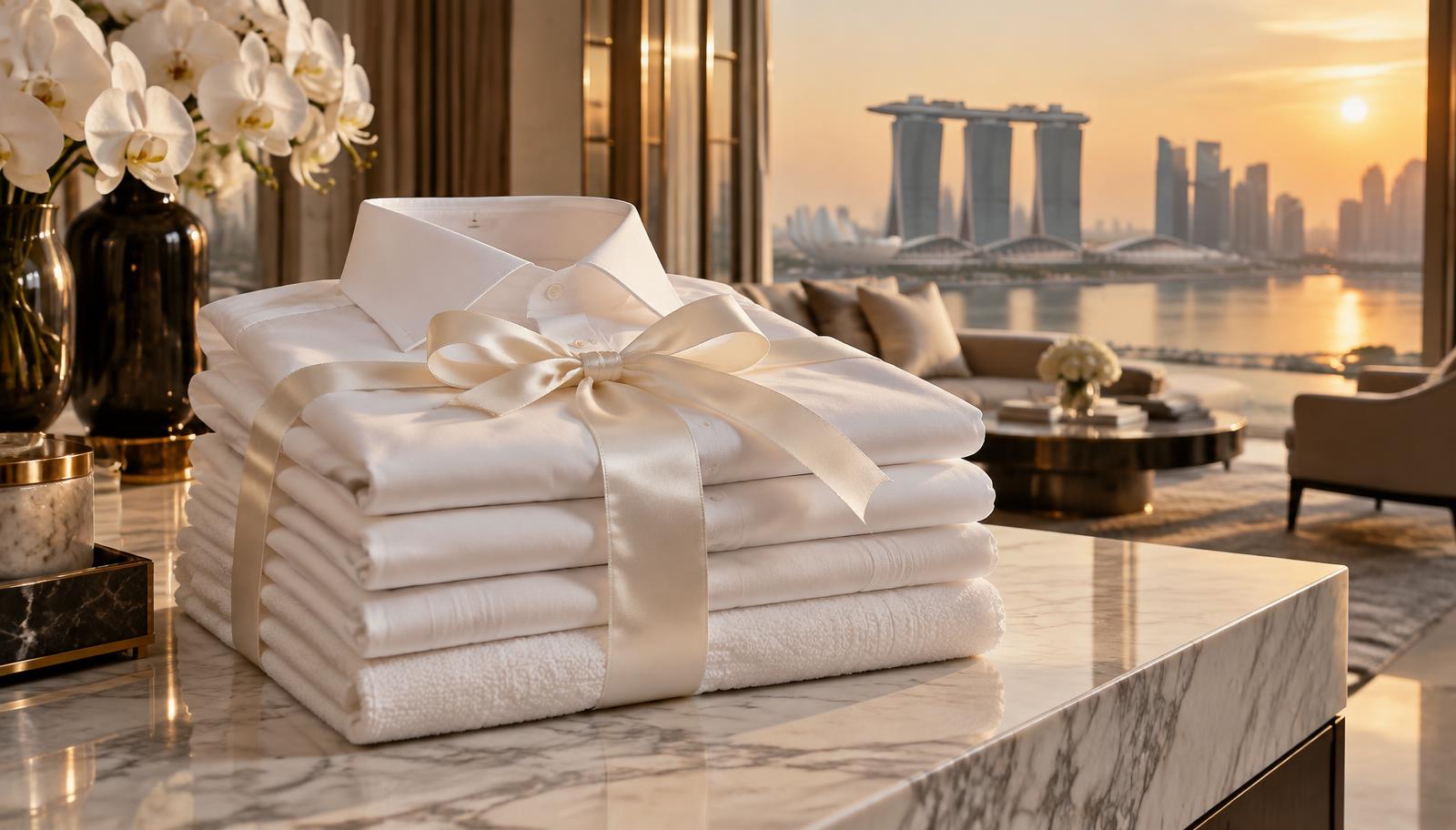
Whites stay luminous through speed, gentleness and the right method.
A colour accident is not the end of a white garment. It stays recoverable when the first hour is handled well: separate, rinse cold, soak gently, step up to an oxygen soak and keep every source of heat away until the tint is gone. Sort from the start, wash new dark pieces alone, and keep chlorine bleach for another day. And for the silks, the tailoring and the pieces you cannot replace, let someone with the right tools take over.
Piing picks up, cleans and finishes every garment exactly the way its fabric demands, then delivers it back, ready to wear. Pickup & delivery across Singapore
Let Piing! handle the laundry and dry cleaning. Book a pickup and get your clothes collected, cleaned and delivered across Singapore — no store visits, no hassle.
Book a Pickup →