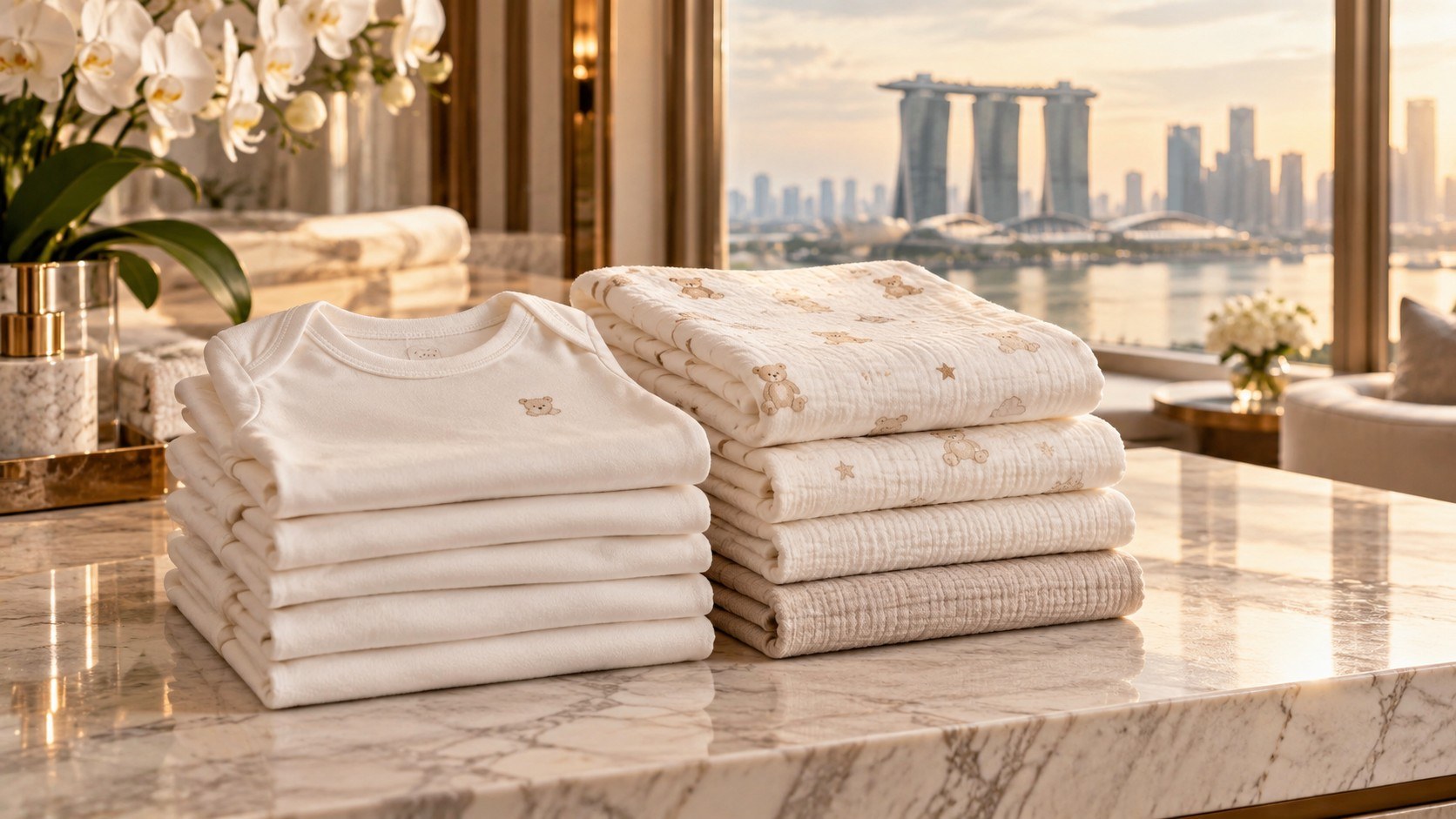
Few loads of laundry are handled with more care than a newborn’s. The garments are tiny, the skin they touch is new, and a household that has just welcomed a baby suddenly produces more washing than it ever has before: bodysuits, muslins, swaddles, bibs, cot sheets and the occasional unplanned change of everything.
The reassuring part is that you do not need special equipment or a complicated routine. Safe baby laundry comes down to a handful of consistent habits: wash before the first wear, choose a gentle detergent and measure it properly, rinse well, dry fully and store clean. This guide explains each step, how to rescue the stains that inevitably arrive, and which pieces are best left to experts.
Why Baby Laundry Is Different
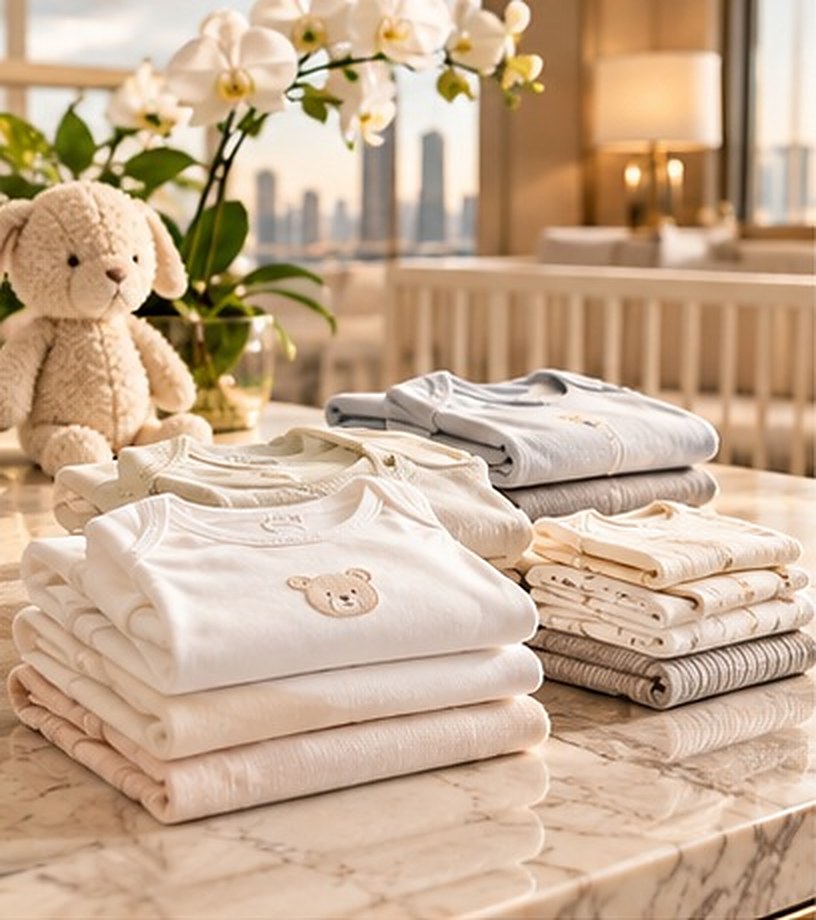
Soft, simple and fragrance-free: the foundation of a well-kept nursery wardrobe.
A newborn’s skin is thinner and its protective barrier is still developing, which makes it more easily irritated by detergent residue, fragrance and dyes. And unlike adult clothing, baby clothes are in near-constant contact with skin: slept in, drooled on, held against shoulders and changed several times a day.
Singapore adds its own variables. Heat, sweat and humidity mean more outfit changes, and damp fabric that is not dried completely can turn musty quickly. That makes careful rinsing and thorough drying just as important as the choice of detergent.
Before the First Wear: Wash Everything New
New garments can carry dust, manufacturing finishes and traces of handling from the factory, the shop and the packaging. Gifts and hand-me-downs may have spent months in storage. The simple rule is that everything washes before it touches your baby, including muslins, swaddles, cot sheets, bibs, hats and soft toys that are labelled washable.
- Check each piece first. Look for loose threads, buttons, beads and trims, and snip or secure anything that could come away. Check inside mittens and socks, where loose threads can hide.
- Remove scratchy tags. Cut them out carefully if they sit against the skin, but keep a note of the care instructions.
- Wash with the same gentle routine you will use every time. It is the best way to learn how each garment behaves, including whether a new colour is likely to bleed.
Sort Before You Wash

Three baskets, three loads: whites, pastels and darks, sorted before the wash begins.
Sorting protects colours and keeps delicate whites bright. A simple three-basket system works beautifully: whites and lights, pastels and colours, and darker pieces. Keep any heavily soiled items in a separate lidded basket or bag so they can be rinsed before they meet the rest.
New coloured garments are the most likely to release dye in their first few washes, so wash them on their own until the water runs clear. If a pink or blue tint does appear on a white, our guide to fixing colour bleeding on your whites shows the rescue method step by step.
Labels and Detergent: Two Small Decisions That Matter
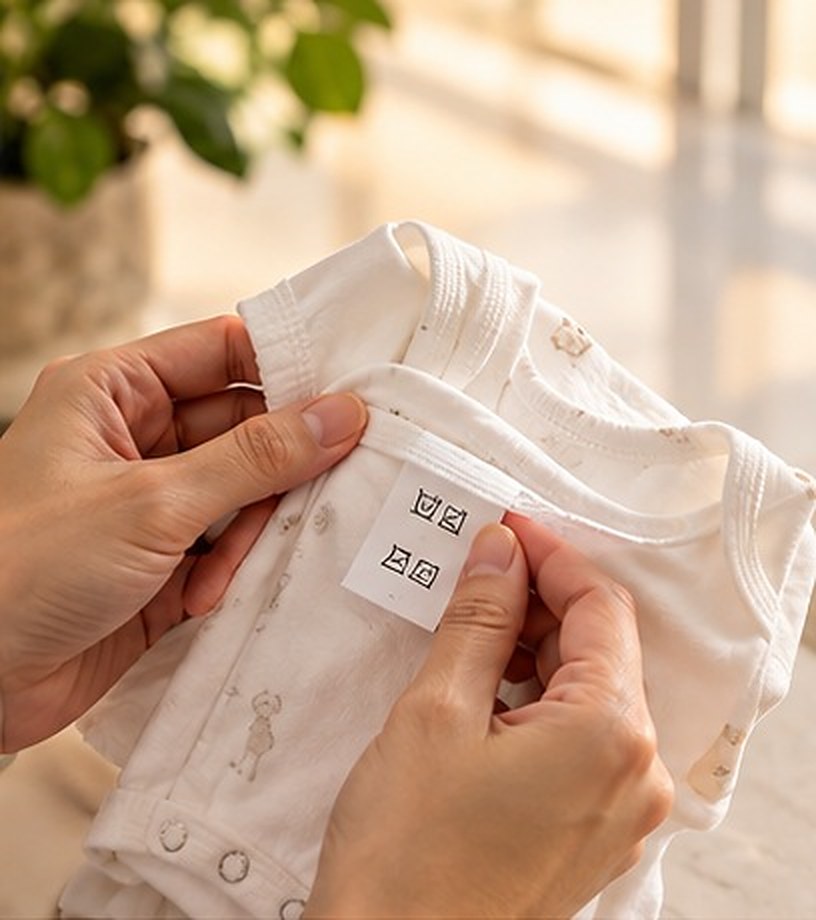
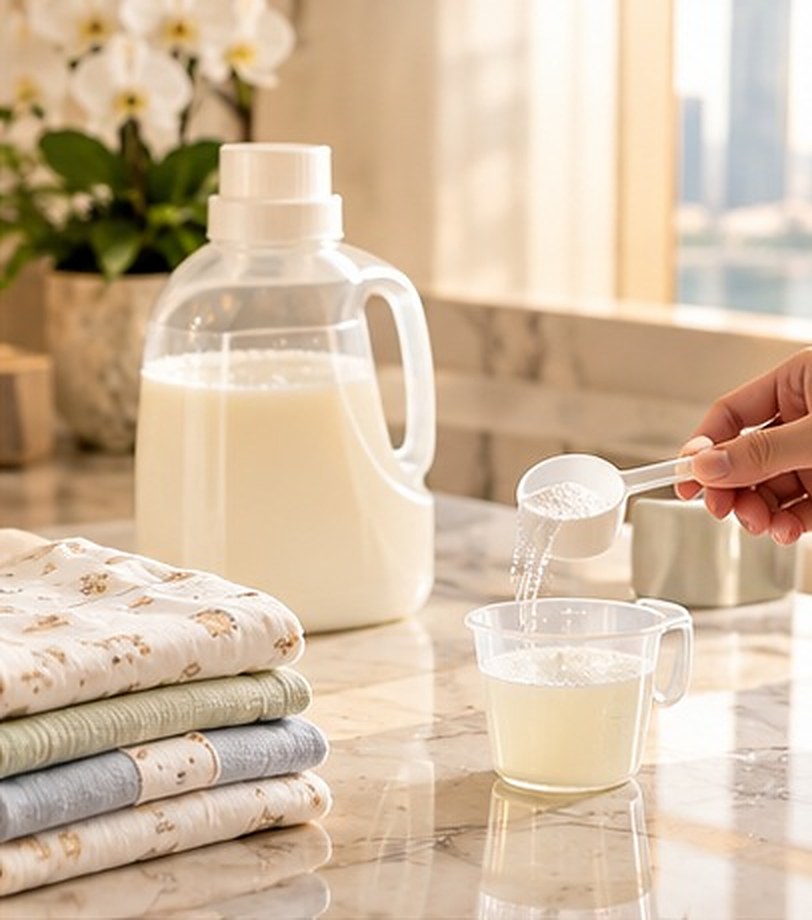
The care label tells you the maximum temperature, whether tumble drying is allowed and whether the fabric tolerates any kind of whitener. It is worth reading even on tiny garments, because organic cotton, wool blends and printed pieces can behave very differently from plain cotton.
For detergent, the principle is mild, fragrance-free and dye-free, used at the dose on the pack. A baby-labelled product is not essential, but a gentle one is. Beyond the choice of product:
- More is not cleaner. Excess detergent leaves residue in the fibres, which can irritate skin. Measure rather than pour.
- Skip fabric softener. It can coat fibres, reduce the absorbency of muslins and cloths, and add fragrance your baby does not need.
- Avoid chlorine bleach. It is harsh on fabric and unnecessary for most baby laundry.
- Add an extra rinse. It is the simplest way to wash away detergent residue.
The Wash Cycle, Step by Step
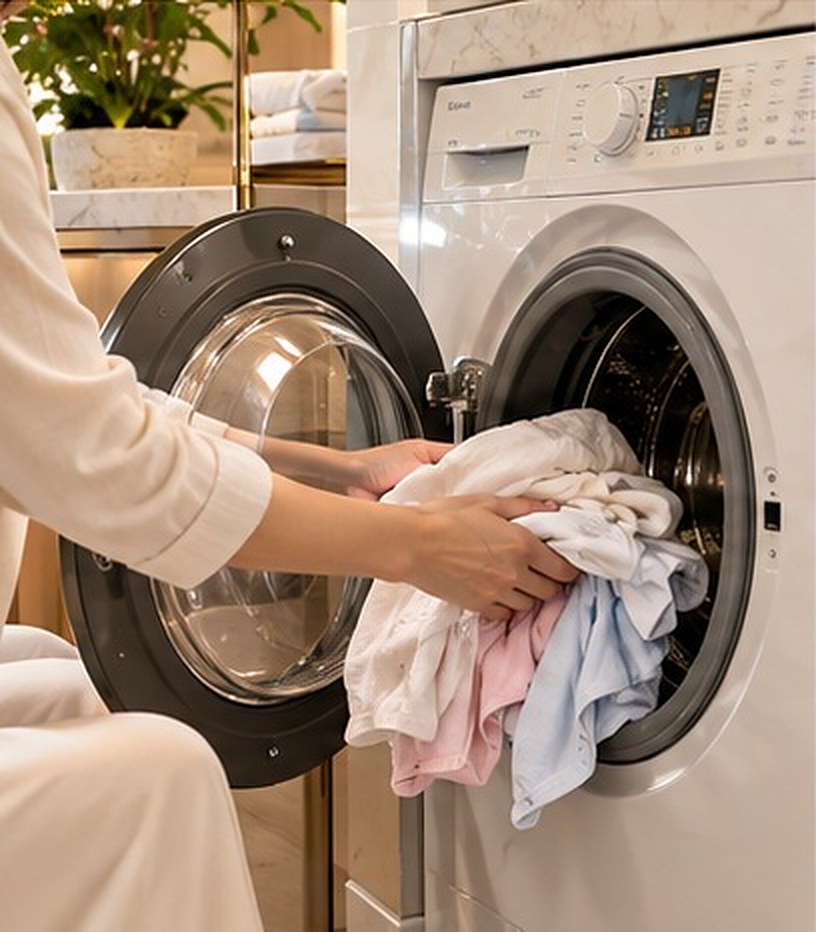
Load loosely, measure carefully and let the machine do the rinsing.
- Prepare the garments. Fasten poppers, zips and Velcro so they do not snag. Place tiny socks, mittens and hats in a mesh bag so they do not vanish into the drum.
- Rinse soiled pieces first. Scrape off any solids into the toilet and rinse the stain in cold running water from the back of the fabric.
- Do not overload. Clothes need room to move so detergent can dissolve and rinse out properly.
- Choose the temperature on the label. A warm cycle is typical for everyday cotton. Muslins and bedding that the label allows can take a hotter wash for extra hygiene, while colours and delicates usually prefer cooler water.
- Measure the detergent and add an extra rinse. Use the amount the pack directs for the load size.
- Remove promptly. A damp load left sitting in the drum is an invitation to mustiness. Move it straight to drying.
It is also worth running a periodic maintenance wash on the machine drum and wiping the door seal, so residue and moisture do not build up where your baby’s clothes are cleaned.
Milk, Spit-Up and Nappy Stains: Rescue in Minutes
Baby stains are mostly protein-based, which means they respond best to cold water at first. Heat can set them. Act early, and these marks lift far more easily than they appear to when you first spot them.
| Stain | What it is | First move | Avoid |
|---|---|---|---|
| Milk and formula | Proteins and fats | Rinse in cold water from the back, then wash | Hot water; letting it dry |
| Spit-up | Milk with stomach acid | Blot, rinse cold, work in a drop of mild detergent | Rubbing it into the weave |
| Nappy blowout | Solids and pigment | Scrape off solids, rinse cold, soak in cold water with detergent | A hot first rinse; mixing with the load |
| Mashed fruit and vegetables | Natural pigments | Rinse cold, treat with detergent, wash | Drying before the mark is gone |
| Creams and lotions | Oils and barrier ingredients | Work mild detergent in before washing | Fabric softener |
For stubborn whites, a short spell of gentle daylight after washing can help freshen them, but avoid long exposure for coloured pieces, which may fade. Always check the garment wet before any heat reaches it, and treat again if a shadow remains.
Fabric by Fabric: Where Home Washing Ends
Everything above assumes sturdy cotton. Nursery wardrobes include far more delicate pieces, and each has its own limit.
Cotton Jersey Bodysuits
The everyday workhorse. Wash as the label directs with mild detergent, and keep heat gentle to limit shrinkage.
Safe to wash at homeMuslin & Cotton Swaddles
Crinkled weaves dry quickly and soften with every wash. Skip softener, which can reduce their absorbency.
Home, no softenerBamboo & Viscose
Weaker when wet. Use a gentle cycle in cool water, and never wring or twist the fabric.
Gentle cycle onlyMerino & Wool
Heat and agitation felt the fibre. Use a wool-safe detergent, cool water and dry flat.
Wool cycle or professionalFleece & Padded Sleepsuits
Synthetics hold on to oils and odours. Wash cool to warm, skip softener, which coats the fibre, and keep drying heat low.
Cool wash, low heatKnitted Cardigans & Booties
Knits stretch under their own weight when wet. Support them while lifting and dry them flat.
Gentle, dry flatChristening Gowns & Heirloom Lace
Silk, lace and old stitching are fragile, and cleaning at home risks damage that cannot be undone. Keepsakes deserve expert care.
Professional onlyEmbroidered & Appliquéd Pieces
Moisture and friction can loosen trims, threads and decorations. Do not wash these in the machine.
Professional onlyDrying in Singapore’s Humidity
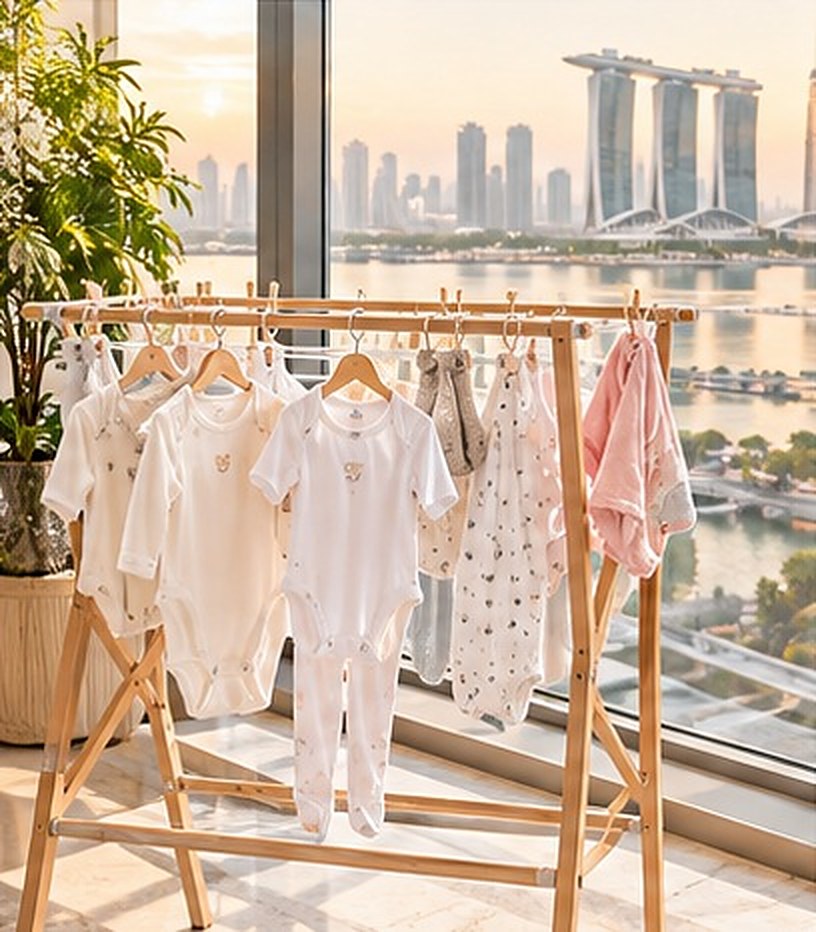
A slatted rack in a well-ventilated room dries tiny garments gently and evenly.
Drying is where humid climates test baby laundry. The goal is simple: fully dry, with good airflow, and no heat the fabric cannot take.
- Air dry where air moves. Use a rack in a ventilated room or near a window, and space garments out so air can reach every layer.
- Check seams and folds. Collars, poppers and padded areas stay damp longest. Feel them before you fold.
- Go indoors on hazy or rainy days. Dust, haze and moisture outdoors undo the work of a good wash.
- Tumble dry low only if the label allows. High heat shrinks cotton and can damage elastic and prints.
- Shake out muslins and towelling. It restores softness and helps them dry faster.
If a batch ever smells musty after drying, it was probably stored or dried while still slightly damp. Our guide to why clothes smell musty after washing explains how to reset them.
Folding and Storage: Keep It Clean
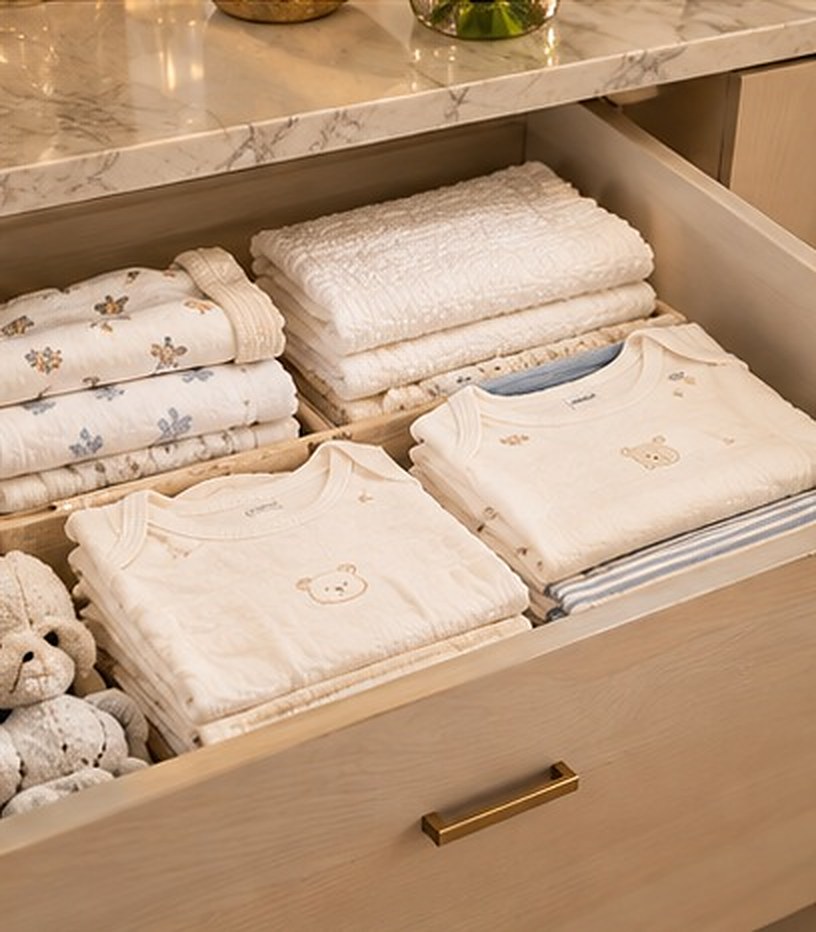
Clean, dry and organised: a drawer you can open in the middle of the night without thinking.
- Store only completely dry clothes. A fraction of moisture is enough to invite mildew in a humid climate.
- Use clean drawers. Wipe them and line them with a clean cotton cloth before filling.
- Organise by size. Keep a labelled set for the next size up, and wash again before first use if clothes have been stored for months.
- Avoid mothballs. Naphthalene and camphor can be harmful to infants, particularly those with G6PD deficiency, which is routinely screened for in Singapore. Ask your paediatrician if you have any concerns.
- Keep keepsakes separate. Heirloom pieces should be stored in breathable cotton, away from damp and direct light.
A Calm Weekly Rhythm for Nursery Laundry
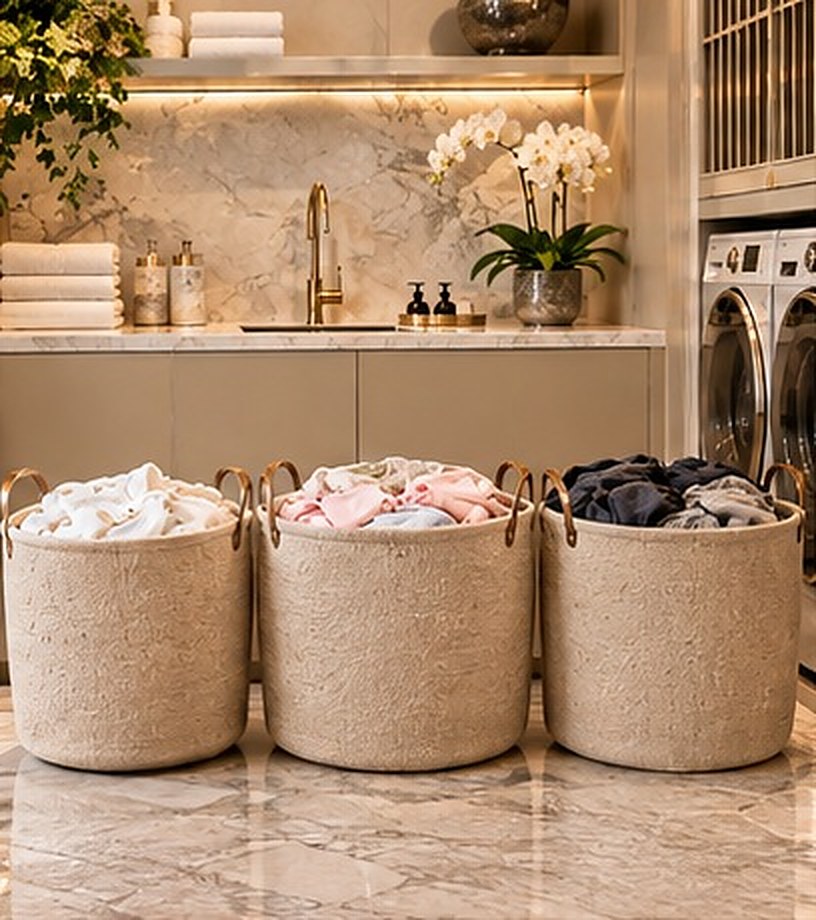
A calm laundry station turns a never-ending chore into a manageable rhythm.
With a newborn, laundry rarely arrives in tidy weekly batches. A light rhythm keeps it manageable:
- Daily: rinse soiled pieces straight away and keep them in a lidded basket until wash time.
- Every two to three days: run a small baby load rather than waiting for a mountain.
- Weekly: refresh cot sheets, swaddles and muslins, and wash them straight away after any accident.
- Monthly: wipe the machine seal, run a drum clean and check the next size up in storage.
- Always: own enough sets that laundry never becomes an emergency.
Frequently Asked Questions
Do I really need to wash new baby clothes before the first wear?
Yes. New garments can carry dust, finishes and traces of handling from manufacture and the shop. A gentle wash before the first wear removes them and also shows you how each garment behaves.
Can I wash baby clothes with the rest of the family’s laundry?
For a healthy baby it is not strictly necessary to separate them, but a dedicated load makes it easier to use one mild detergent consistently. If you wash together, make sure the whole load uses a gentle product and rinses thoroughly.
Is fabric softener safe for baby clothes?
It is best avoided. Softener can coat fibres, reduce the absorbency of muslins and cloths and add fragrance. A good rinse and proper drying keep clothes soft without it.
What temperature should I wash baby clothes at?
Follow the care label. A warm wash is typical for everyday cotton, with cooler water for colours and delicates. Muslins and bedding the label allows can take a hotter wash for extra hygiene. For stains, start with cold water.
How do I remove nappy and milk stains?
Scrape off any solids, rinse in cold running water from the back of the fabric, then treat with a drop of mild detergent before washing. Avoid heat until the mark has completely gone.
Do I need a special baby detergent?
Not necessarily. What matters is that the detergent is mild, fragrance-free and dye-free, that you measure it properly and that you rinse well. If you have concerns about your baby’s skin, ask your paediatrician.
The Verdict
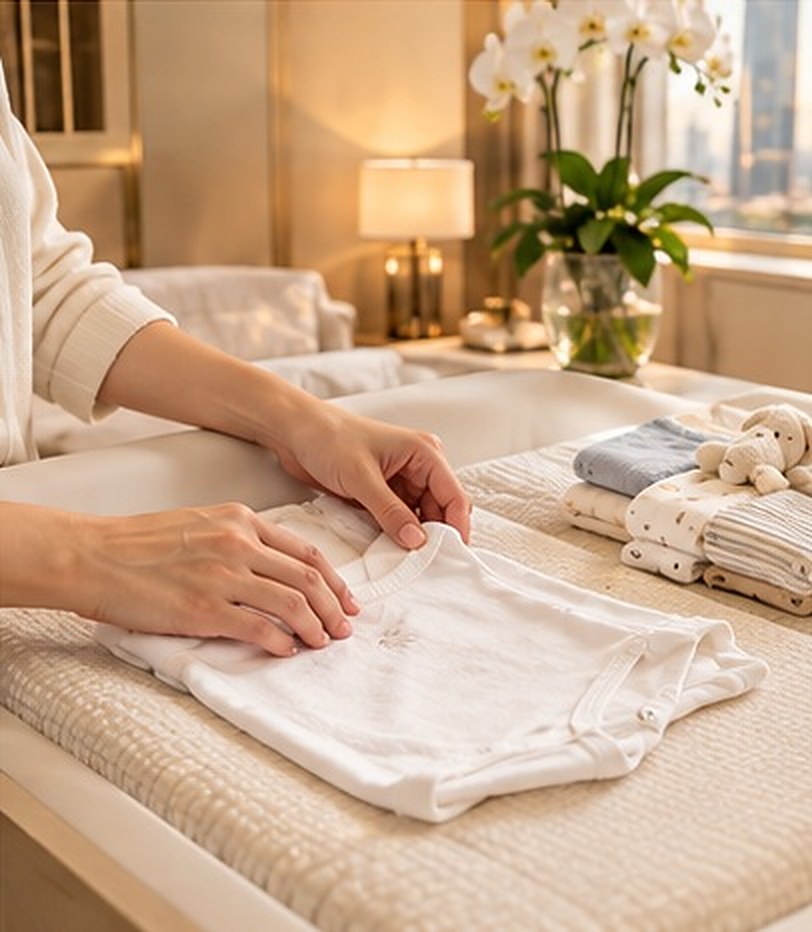
Gentle hands, a clean routine and a calm nursery: that is what safe baby laundry looks like.
Safe baby laundry is built on small, steady habits rather than big gestures: wash before the first wear, choose a mild, fragrance-free detergent, measure it, add an extra rinse, dry completely and store clean. Rinse stains in cold water straight away, skip the softener and keep your most precious pieces for expert hands.
Piing picks up, cleans and finishes every garment exactly the way its fabric demands, then delivers it back, ready to wear. Pickup & delivery across Singapore
Let Piing! handle the laundry and dry cleaning. Book a pickup and get your clothes collected, cleaned and delivered across Singapore — no store visits, no hassle.
Book a Pickup →