
There are few small discoveries more unwelcome than a faint grey bloom on the collar of a favourite shirt, or a musty note drifting from a jacket you have not worn since last season. In a well-kept wardrobe it feels almost impossible, yet in a tropical city it happens quietly, even to garments that were spotless when they were put away.
The good news is that mould stains on clothes are often treatable, particularly when caught early, and that the real solution lies less in cleaning than in controlling the conditions that let mould grow. This guide explains how to tell mould from other marks, how to remove it safely, which pieces should never be treated at home and how to keep your wardrobe dry and fresh for good.
Why Mould Loves Singapore

A humidity monitor in the wardrobe tells you what your nose will notice only too late.
Mould is a fungus, and it needs very little: moisture, a food source and still air. Cotton, linen, silk and wool are natural fibres that mould can feed on, and so are the body oils, perspiration, skincare, perfume and food traces that settle on clothing even after a single wear. Add warmth and humidity and the conditions are ideal.
Singapore supplies the moisture generously. Relative humidity regularly sits well above the 60% level at which mould begins to thrive, and a closed wardrobe, especially one on an outer wall or beside a bathroom, can hold damp air for weeks. Garments that look perfectly clean can still carry enough moisture or residue to start a colony in the dark.
Is It Really Mould? How to Tell
Before treating anything, it helps to know what you are looking at. Several different marks can look alike on fabric, and each calls for a different response.
| What you see | Likely cause | Clue | First move |
|---|---|---|---|
| Fuzzy grey, white or green patches | Active mould | Raised, powdery or velvety, with a musty smell | Take outdoors, brush off dry, then treat |
| Black, brown or green speckles | Established mould staining | Dots that sit in the weave and do not brush away | Pre-treat and wash if the fabric allows |
| Pale powdery film | Mildew, an early surface stage | Flat, wipes off, often on leather or cotton | Brush off, air out, wash or clean |
| Yellow or brown marks without fuzz | Age, sweat or oxidised residue | Smooth, no texture, often at collars and underarms | Treat as an ageing stain, not mould |
| Pink or blue tint | Dye transfer | Even colour across a panel | See our colour bleeding guide |
If a mark is fuzzy, smells musty or keeps returning in the same spot, treat it as mould. If you are unsure, treat it with the gentlest method first. Our guide to why clothes smell musty after washing is helpful if the smell is stubborn but the marks are minimal.
Before You Treat: Protect Yourself and the Fabric
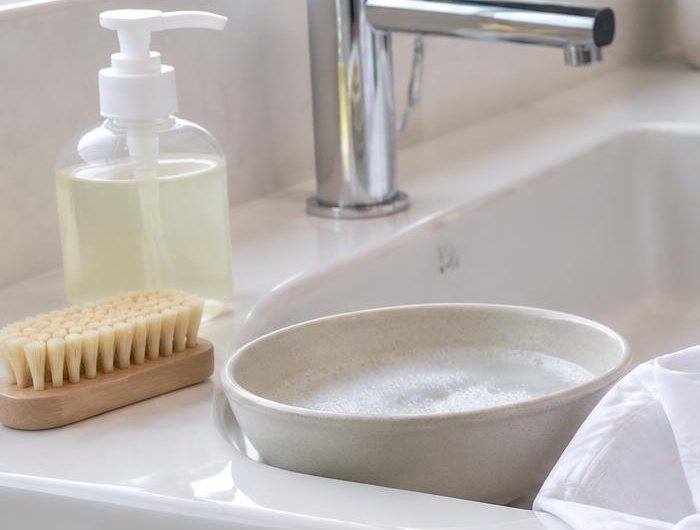

- Go outdoors or open a window. Brushing releases spores into the air, so never shake or brush a mouldy garment in a bedroom or wardrobe.
- Wear gloves and a mask. Mould spores can irritate the airways, especially for anyone with asthma, allergies or a weakened immune system. If that applies in your household, consider leaving heavily affected pieces to professionals.
- Read the care label. It sets the maximum temperature and tells you whether bleach, soaking or machine washing is acceptable.
- Test hidden areas. Try any solution on an inside seam or hem, wait ten minutes and check for colour loss.
- Isolate the garment. Seal it in a bag until you are ready to treat it, and keep it away from the rest of the wardrobe.
Removing Mould Stains, Step by Step
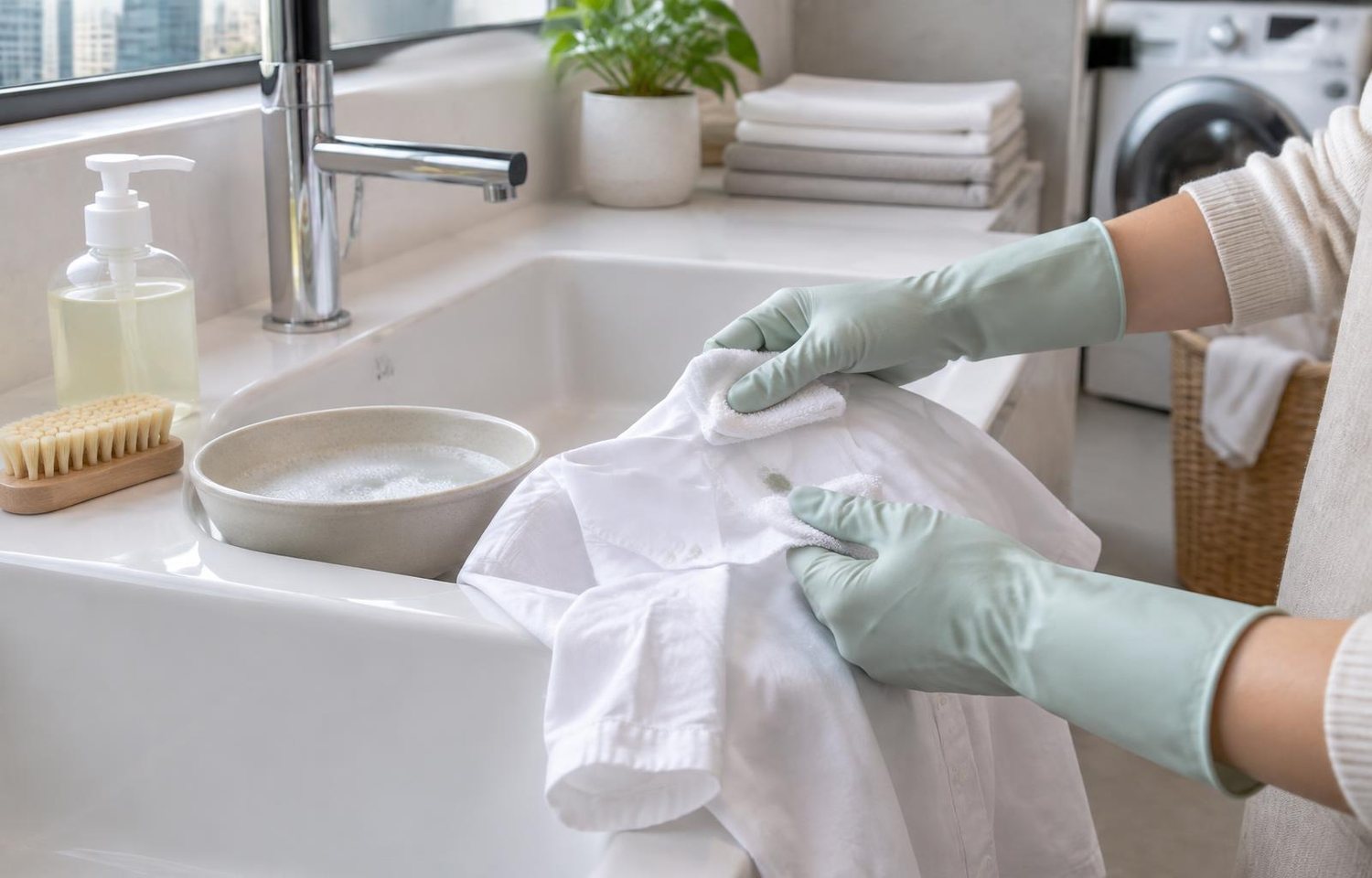
Treat the mark, not the whole garment: blot gently, never scrub.
- Brush off loose mould outdoors. Use a soft dry brush with light strokes, working away from the body of the garment. Brushing wet mould only grinds it into the weave.
- Air it in the open. Fresh air and sunlight help weaken mould and clear odour. Whites and sturdy cottons tolerate sun well, but keep colours, silk and fine fabrics in bright shade to avoid fading.
- Pre-treat washable fabrics. For colourfast cotton, linen and synthetics, soak or dab with a solution of one part white vinegar to one part water for around 30 minutes. For whites and colourfast items, an oxygen-based stain remover (sodium percarbonate) used as directed is a strong alternative.
- Wash hot, as the label allows. Use the hottest temperature the care label permits with a quality detergent, and a full rinse. Avoid overloading the drum so water can reach every fibre.
- Check before you dry. Inspect the fabric wet and in daylight. Heat will set any remaining stain, so repeat the treatment if a shadow or smell remains.
- Finish with a thorough dry. Dry completely before the garment returns to the wardrobe, as described below.
Fabric by Fabric: Where Home Treatment Ends
The steps above suit sturdy, washable fabrics. A well-considered wardrobe holds far more delicate pieces, and each has its limit.
Cotton Shirts & Poplin
The most forgiving. Vinegar soak, hot wash as the label allows and a careful dry usually lift fresh mould.
Safe to treat at homeLinen
Strong when wet and tolerant of warm washing. Treat promptly, as mould settles deep into the weave.
Home, treat earlySynthetics & Blends
Polyester resists mould but holds odour. A warm wash with a vinegar pre-soak usually refreshes them.
Warm washDenim & Heavy Cotton
Thick seams stay damp longest. Wash hot if colourfast and dry the seams thoroughly.
Check colourfastnessSilk & Satin
Acids, heat and rubbing can leave water marks and dull the sheen. Do not soak or bleach.
Professional onlyWool & Cashmere
Hot water and agitation felt and shrink the fibre. Wool is also a favourite food of mould.
Professional onlyTailoring & Blazers
Canvassing, linings and padding cannot be soaked without distorting the structure.
Professional onlyLeather, Suede & Handbags
Water and vinegar can stain or stiffen leather permanently. Mould here needs a specialist.
Professional onlyEvening wear, bridal pieces, beaded or embroidered garments and anything irreplaceable also belong in this last group. A garment that has been cleaned incorrectly cannot always be rescued, whereas one that waits a few days for expert care almost always can.
Drying Without Risk

Air, space and a dehumidifier: the safest way to finish a treated garment.
This is the step where most mould returns. A garment that feels dry on the surface but holds moisture in the seams will start again within days in a humid wardrobe.
- Dry in moving air. Use a slatted rack, space the garments apart and add a fan or dehumidifier to a closed room.
- Check the thick places. Collars, cuffs, waistbands, pockets and linings stay damp longest. Feel them before putting anything away.
- Use sunlight wisely. It helps whites and sturdy cottons, but it fades colours and weakens silk.
- Avoid a closed bedroom. Drying clothes indoors without ventilation releases moisture into the room, and into the wardrobe.
- Use heat only as the label allows. A low tumble cycle can finish sturdy cottons, but never use heat on a stain that is still visible.
Our guide to air drying versus tumble drying explains how to choose the right method for each fabric.
Preventing Mould from Coming Back
Removing a stain is only half of the job. If conditions stay the same, mould will return. The most effective prevention is to control moisture, which means a small set of consistent habits.
- Measure humidity. A small hygrometer inside the wardrobe costs very little and removes the guesswork. Aim to stay below roughly 60%, and ideally nearer 50%.
- Dehumidify the room. A dehumidifier, or air-conditioning running in dry mode, keeps the whole room below the mould threshold, which matters most when you are away.
- Add targeted absorbers. Moisture absorbers and silica gel help in a closed wardrobe, and activated charcoal bags help with odour. They support a dehumidifier but do not replace one.
- Give clothes room to breathe. Tightly packed hangers trap still air. Leave a hand’s width between garments and avoid overfilling shelves.
- Air worn clothes first. Let anything worn, even briefly, hang outside the wardrobe for a few hours before it goes back.
- Clean before long storage. Perspiration, skincare and food residue feed mould. Seasonal pieces should be professionally cleaned or washed before they are put away.
- Check for hidden moisture. Stains on walls, a damp smell or peeling paint behind a wardrobe point to a leak or condensation, and no amount of laundry will fix that.
Storing Your Wardrobe the Right Way

Breathable fabrics, space on the rail and a reading you can trust.
- Choose breathable covers. Cotton garment bags let air pass. Plastic dry-cleaning bags trap moisture and should come off before storage.
- Use proper hangers. Padded or wide wooden hangers support tailoring, while knitwear is best kept folded, as hanging stretches it.
- Protect leather and handbags. Stuff them lightly with acid-free paper, keep them in cotton dust bags and leave space around them.
- Be wary of outer walls. Walls that meet the outdoors or a bathroom are colder and damper. Keep a gap behind wardrobes where possible.
- Going away? Set the dehumidifier or air-conditioner on a timer, open wardrobe doors slightly and ask someone to check the room if you will be gone for weeks.
- Avoid mothballs. They are harsh, and unnecessary when humidity is controlled. Baby items need particular care, as we explain in our guide to washing newborn and baby clothes safely.
A Simple Routine for a Mould-Free Wardrobe
- Weekly: glance at the hygrometer and open the wardrobe doors for an hour to air the space.
- Monthly: check the corners, the backs of shelves and any lower drawers, which are damper than the rail. Empty and refill moisture absorbers.
- Each season: clean seasonal pieces before storing them, rotate the wardrobe and run a quick check on shoes and bags.
- After any wet spell: check for dampness, air the room and look closely at anything stored near an outer wall.
- Always: never put away a garment that is even slightly damp.
Frequently Asked Questions
Can mould stains be removed from clothes completely?
Often, yes, particularly when caught early on washable fabrics. Old or deeply embedded mould can leave a faint shadow, and delicate fabrics can be marked by the treatment itself, which is why professional care is safer for valuable pieces.
Does white vinegar kill mould on clothes?
Diluted white vinegar can help loosen mould and reduce odour on colourfast, washable fabrics. It works best as a pre-treatment before a hot wash, and it should not be used on silk, leather or delicate fabrics.
Is it safe to wear clothes that had mould?
Only once they have been fully treated, washed and dried, with no remaining smell. If a garment still smells musty, repeat the treatment or have it professionally cleaned, particularly if you have asthma or allergies.
Can mould spread from one garment to others?
Yes. Spores travel through the air and by contact, so remove the affected garment, clean the surrounding space and check neighbouring pieces, especially those that are stored closely or are made of natural fibres.
What humidity level prevents mould in a wardrobe?
Keep relative humidity below roughly 60%, and ideally closer to 50%. A small hygrometer shows whether your dehumidifier or air-conditioning is doing enough.
Can I put a mouldy garment in the dryer?
Not before the stain is gone. Heat sets mould stains and can make them permanent. Treat and wash first, then dry only when the fabric is clean and the label allows heat.
Should I dry clean mouldy clothes?
For silk, wool, cashmere, tailoring and other delicate pieces, yes. A professional can assess the fibre, the construction and the extent of the mould before choosing a method.
The Verdict
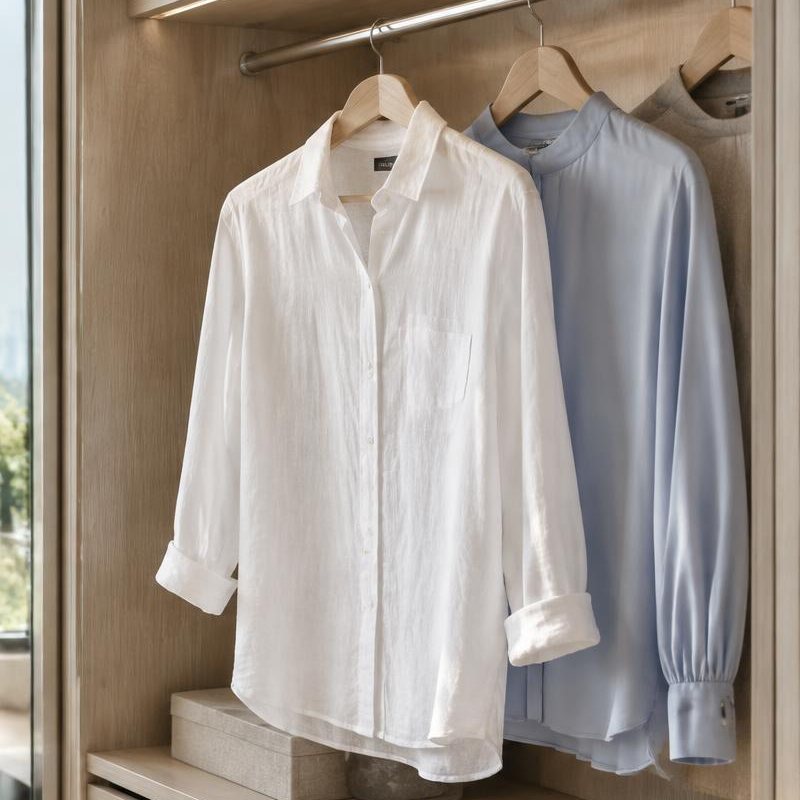
Fresh, dry and given room to breathe: a wardrobe that stays mould-free.
Mould on clothes is distressing but rarely a mystery. Treat it outdoors and gently, wash hot as the label allows, check before any heat and dry completely. Then deal with the cause: measure humidity, keep the air moving, store only dry, clean garments and leave delicate and valuable pieces to experts.
Piing picks up, cleans and finishes every garment exactly the way its fabric demands, then delivers it back, ready to wear. Pickup & delivery across Singapore
Let Piing! handle the laundry and dry cleaning. Book a pickup and get your clothes collected, cleaned and delivered across Singapore — no store visits, no hassle.
Book a Pickup →