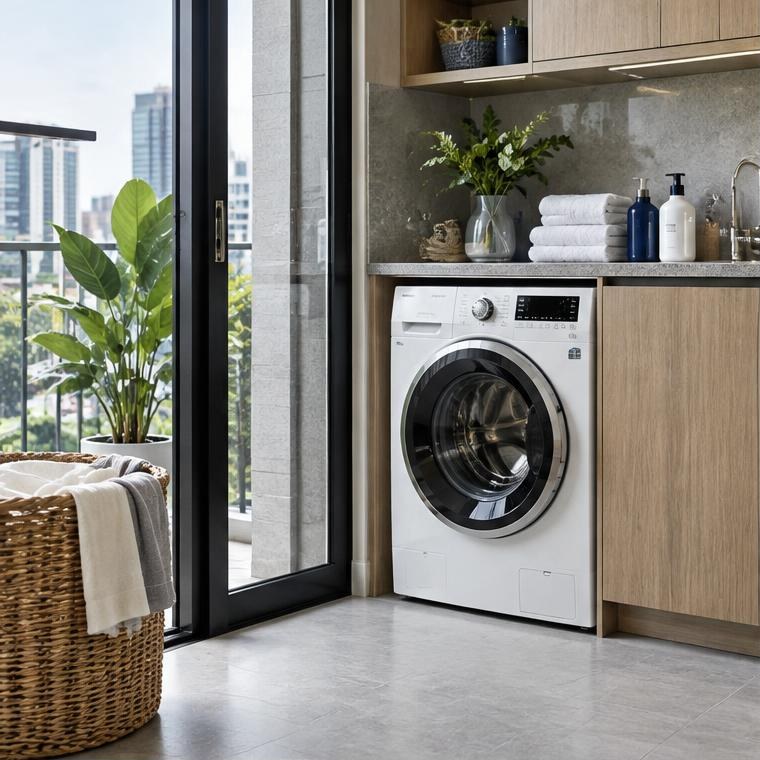
“How much does a load of laundry cost?” sounds like a simple question. In Singapore, the honest answer depends on your machine, your utility tariff, whether you tumble-dry, how much detergent you use, and how often you personally touch the process. A useful estimate counts all five—without pretending every household has the same appliances or routine.
This guide gives you a clear way to calculate your own number. The goal is not to make a household chore feel like a finance spreadsheet. It is to help you see where money actually goes, where a small change matters, and when buying back time is the more valuable decision.
The Cost Is Bigger Than the Bill
A complete household-laundry estimate has four cash components: electricity, water and wastewater charges, detergent and fabric-care products, and equipment upkeep. Add a fifth column for time: sorting, treating stains, loading, transferring, hanging, folding and putting away. The machine’s programmed cycle may last an hour, but you are not actively working for every minute of it.
There is also a wardrobe cost that rarely appears on the utility bill. Repeated high heat and rough treatment can shorten the useful life of some garments. Replacing a shirt sooner is not part of the price of one cycle, but careful washing, correct loading and gentler drying can help protect the pieces you already own.

Electricity: Wash and Dry Separately
First, check the appliance label or manual for energy use. Where the appliance shows consumption per cycle, multiply that number by the electricity rate on your current bill. Where it does not, a plug-in energy monitor suitable for the appliance can help you measure a representative cycle; follow the manufacturer’s safety instructions and do not use a meter that is not rated for the load.
Keep the washer and dryer in separate lines. A cool or eco wash may use much less energy than a heated cycle, while a vented or condenser dryer can add a substantial second draw. The actual difference depends on machine model, load size, selected programme, spin speed, room conditions and whether the dryer is vented or heat-pump based. Singapore’s household electricity tariff is reviewed quarterly, so the rate on your latest bill is the right input—not an old online estimate. Check SP Group’s current tariff information.
Water: Small Volume, Recurring Use
Find water use in litres per cycle in the machine documentation or its energy label. Convert litres to cubic metres by dividing by 1,000; multiply that number by the volume-linked water charges shown on your bill. Include the charges that apply to your home, because the household bill can include more than the headline water tariff. PUB explains the components of Singapore’s water price and the applicable domestic rates. See PUB’s current water-price guidance.
A full, correctly sorted load generally makes better use of the water already being used than several very small loads. But “full” should mean within the machine’s capacity: overpacking can prevent garments from moving freely, leaving them poorly rinsed and inviting a repeat cycle. Choose the programme for the fabric and soil level, and use the recommended dose rather than adding extra detergent in the hope that it will compensate.
Detergent: The Cost of Overdosing
For detergent, calculate what one properly dosed load costs: divide the product price by its labelled number of loads, then adjust only when the packaging tells you to use a different amount for load size, water hardness or soil level. Include specialist stain products only if you actually use them.
Overdosing is not a luxury upgrade. It can leave residue on fabric, make rinsing harder and increase the chance of running an extra rinse. The goal is the amount the product specifies for your machine and load—not the fullest cap. Keep different products out of reach of children and follow their labels.
The Most Valuable Input: Your Time
List the active steps in one ordinary laundry cycle and time yourself once: bringing items together, sorting, stain treatment, loading, starting the machine, transferring to the dryer or rack, folding and putting away. Do not count the unattended wash as paid labour unless you truly have to wait beside it. Do count the interruptions and mental overhead if they are the part you most want to remove.
You can attach a personal value to that time, but it is not a universal market price. One person might gladly spend a Sunday afternoon on a familiar routine; another may prefer to spend that hour with family, at work, or simply off duty. A sensible comparison makes the assumptions explicit and includes what is returned: your time, a predictable hand-off and a professionally finished result.

A Transparent Per-Load Framework
| Cost line | Calculation | Your input |
|---|---|---|
| Washer energy | kWh per wash × current electricity rate | Machine label, manual or measurement |
| Dryer energy | kWh per dry × current electricity rate | Separate line; zero if air-dried |
| Water | Litres per wash ÷ 1,000 × applicable volume charges | Machine specification and bill |
| Detergent | Purchase price ÷ correctly dosed loads | Actual product and use |
| Time | Active minutes × a value you choose | Your own priorities |
As a quick arithmetic illustration—not a Singapore household average—if a washer uses 0.5 kWh and a dryer uses 2.0 kWh, at an assumed S$0.30 per kWh the combined electricity is S$0.75 for that wash-and-dry. Replace both energy figures and the rate with your actual machine and bill. Then add water, detergent and any personal time value to arrive at your own total.
Seven Ways to Spend Less Without Lowering Standards
- Wash full, balanced loads. Avoid repeatedly running a half-empty drum, but follow the capacity guidance.
- Use the correct dose. Follow detergent instructions for the machine, fabric and load.
- Choose a cooler suitable cycle. Follow the care label and machine instructions; use heat only where it is useful.
- Raise spin speed only when appropriate. A higher spin can reduce moisture before drying, but check delicate-fabric instructions.
- Air-dry selectively. Shirts and suitable cottons can often dry on hangers; keep Singapore’s indoor humidity and airflow in mind.
- Clean and maintain appliances. Follow the manual for lint filters, drum care and servicing; good maintenance supports reliable operation.
- Keep a two-week record. Count loads, dryer cycles, re-washes and hands-on minutes. A small real sample beats a polished national “average”.
When Convenience Can Be the Rational Choice
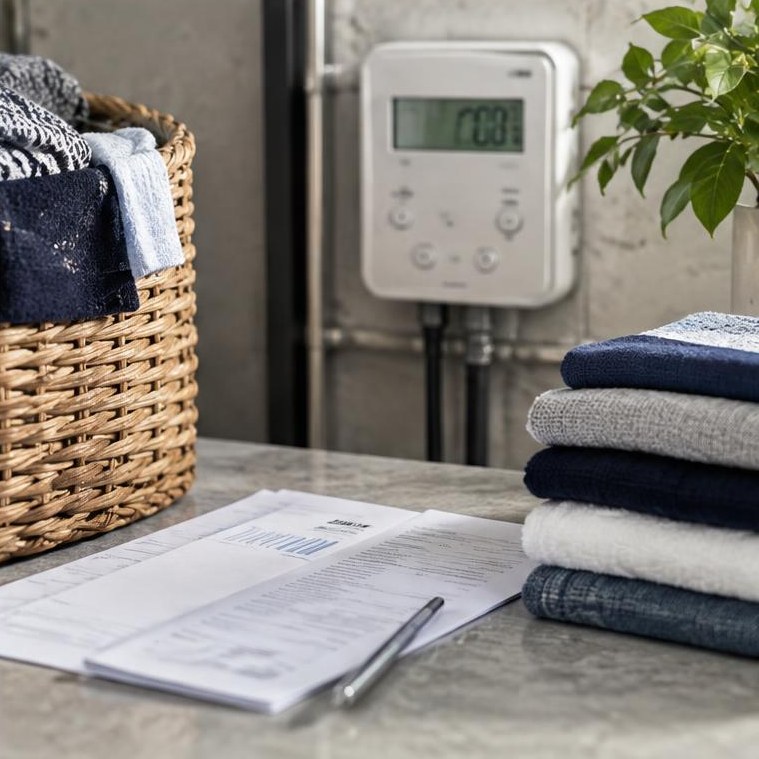
Outsourcing is not automatically cheaper, and a domestic machine is not automatically the best use of your day. The useful question is: what is the price of the result and time you get back? A collection service can be compelling when ironing has accumulated, household linens are bulky, a garment needs specialist attention, travel or work has crowded out laundry, or a dependable hand-off matters more than the lowest possible cash cost.
Piing! describes app-based pickup and delivery, everyday Wash & Fold, Wash & Iron and dry-cleaning options on its Singapore site. Review the current service and pricing details and select the treatment appropriate to each item before booking; care labels remain the guide for the garment. Explore Piing!’s services or schedule a pickup.
Frequently Asked Questions
What is the biggest home-laundry cost?
It varies by household. If you use a tumble dryer often, its electricity use is an important variable. If you value your time highly, the active handling and ironing may matter more than the water charge. Your own bill and routine settle the question.
Does air-drying make laundry free?
No. It avoids dryer electricity, but not the washer, water, detergent, equipment upkeep or time. In humid weather, allow airflow and enough drying time to avoid mustiness.
How can I estimate electricity cost?
Multiply the appliance’s kWh per cycle by the electricity rate that applies on your latest bill. Calculate washer and dryer separately, and revisit the result when your tariff or programme changes.
Is laundry pickup always more expensive?
Not necessarily on a like-for-like basis, but it is a paid service and its value depends on your items, service choice and priorities. Check current item pricing and compare the full result, including your time.
The Takeaway
There is no honest single price for “a load” that fits every Singapore home. Start with the two things you can verify—machine energy and water use—then add the detergent you actually dose and the time you actually spend. You will have a much clearer answer, and a much better basis for deciding what to do yourself and what to hand off.
Let Piing! handle the laundry and dry cleaning. Book a pickup and get your clothes collected, cleaned and delivered across Singapore — no store visits, no hassle.
Book a Pickup →