
It is a familiar scene in a Singapore home. A load comes out of the machine in the morning, goes on the rack, and by evening the shirts are still cool to the touch and faintly damp at the collar. By the next day, a trace of mustiness has started to creep in. Even in a beautifully designed home with excellent ventilation, indoor drying can feel strangely slow.
The good news is that slow drying is rarely a mystery, and almost never a sign that your washing machine is failing. It comes down to a few physical factors: how humid the air is, how much it moves, how much water the fabric still holds and how much room each garment has. Change those, and the same clothes can dry in a fraction of the time. This guide explains why it happens and exactly what to do about it.
Why Indoor Drying Is Slow: The Simple Science

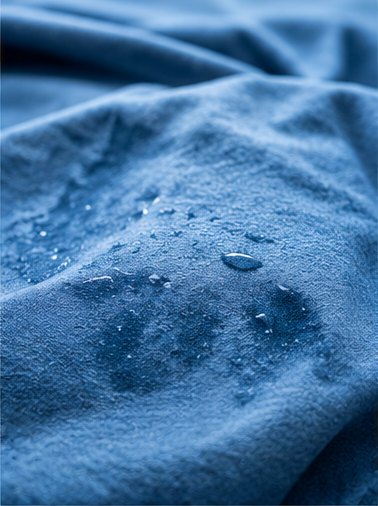
When a wet garment dries, water at its surface turns into vapour and drifts into the air around it. That air can only hold so much vapour. The closer it is to its limit, the more slowly new water can escape. Once the thin layer of air touching the fabric is saturated, drying nearly stalls, unless something moves that layer along and replaces it with drier air.
That is why a garment can feel stubbornly damp in a closed room and dry quickly in a breeze. Three things set the pace:
- Humidity. The drier the surrounding air, the more moisture it can accept.
- Airflow. Moving air carries vapour away from the fabric and brings fresh, drier air in.
- Temperature. Warmer air holds more vapour, so drying speeds up as a room warms, provided the vapour has somewhere to go.
Outdoors, sunshine and breeze do most of this work for free. Indoors, you have to create those conditions yourself, which is why a thoughtful setup matters so much.
Singapore’s Humidity Problem
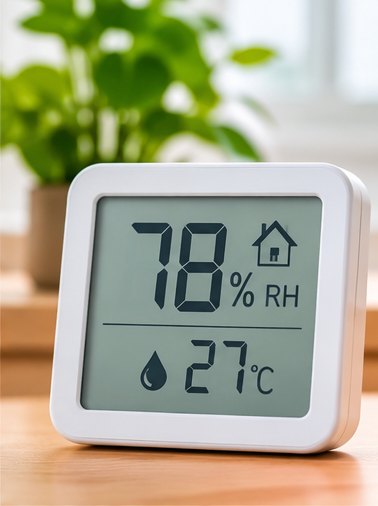

Singapore sits close to the equator, with warm temperatures and high humidity all year round. Relative humidity is commonly in the high range for much of the day and often climbs further overnight and during rain. When the air is already close to saturation, there is simply less room for your laundry’s moisture to go.
The wetter months make it more noticeable. Spells of monsoon rain mean fewer sunny hours and more days when laundry has to stay inside, and a closed apartment can hold humid air for a long time. Sealed high-rise homes are especially prone to this: lovely for cooling and quiet, but not always generous with fresh air movement.
The Hidden Culprits Behind Slow Drying
Humidity is the headline cause, but several quieter habits add hours without you noticing. Check these before blaming the weather.
- Too much water going onto the rack. The wetter a garment is when it is hung, the longer it takes. A gentle spin speed on a delicate cycle, or a machine with a weak spin, leaves far more water in the fabric.
- Overloaded drum. A crammed machine does not spin out evenly, so clothes arrive wetter and more tangled than they should.
- A crowded rack. Garments hanging touching each other create pockets of still, saturated air between them.
- A closed room. Without any air exchange or circulation, the humidity around your rack rises as the clothes release moisture.
- Heavy or thick fabrics. Towels, denim, hoodies and bedding hold a great deal of water and have more layers for it to travel through.
- Folded or bunched hanging. A shirt draped in half over a rail dries on the outside and stays wet in the fold.
- Too much detergent. Excess product leaves residue that holds on to moisture and makes fabric feel clammy. Measure rather than pour.
- The wrong location. Bathrooms, enclosed utility corners and spots against a wall have little airflow and often extra steam.
Fabric by Fabric: What Dries Fast and What Does Not
Different fibres release water at very different speeds. Knowing what to expect helps you plan the order of a load and decide what deserves extra help.
| Fabric | Drying pace | Why | Best approach |
|---|---|---|---|
| Linen | Fast | Open, airy weave releases water easily | Hang on a hanger and shake out |
| Silk and fine blouses | Fast | Thin, lightweight fibres | Hang away from heat and direct sun |
| Performance synthetics | Fast | Fibres do not absorb much water | Dry quickly, since they hold odours if left damp |
| Cotton shirts | Medium | Cotton absorbs and holds water | Hang open with buttons undone, collar and cuffs spread |
| Cotton jersey and knitwear | Medium to slow | Dense, stretchy structure | Dry flat or on a wide hanger to avoid stretching |
| Denim and chinos | Slow | Thick, tightly woven cotton | Hang from the waistband with pockets turned out |
| Towels and robes | Slow | Looped pile holds a lot of water | Hang singly, with maximum airflow, or use a dryer if the label allows |
| Duvets and bedding | Very slow | Bulk and filling trap moisture deep inside | Plan for professional cleaning and drying |
Space and Airflow: The Rack Matters More Than You Think

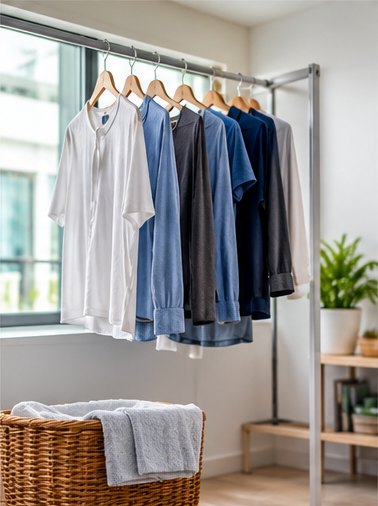
A rack packed to its limit is the single most common reason indoor laundry stays damp. Each garment releases moisture into the air immediately around it, and if the neighbouring garment is touching, that humid pocket has nowhere to go. A good rule is a hand’s width between pieces, with the garments hung so air can pass through them rather than just around them.
- Use hangers for shirts and blouses. They open the garment out and expose both sides to air.
- Do not hang in the fold. Fully extend long items instead of draping them in half over a rail.
- Keep the rack away from walls. Leave room behind it for air to circulate.
- Do not stack towels over each other. Hang them one by one or alternate with lighter items.
- Two smaller loads beat one huge one. Drying half the volume at a time is often faster overall than one overloaded rack.
How to Dry Faster Indoors
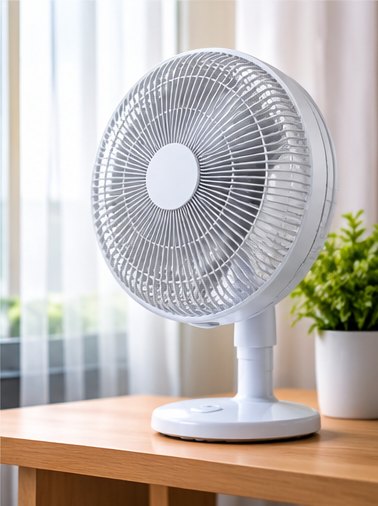
The most effective upgrades work on the physics above: remove water before drying starts, then give the air both the capacity and the movement to take the rest.
- Spin properly. Use the highest spin speed the care label allows for each fabric. Every bit of water the machine removes is water the air does not have to.
- Press out excess in a towel. For delicate knits and anything that cannot take a hard spin, lay it on a clean dry towel, roll gently and press, without wringing or twisting.
- Add a fan. A fan moving air across the rack, not just into one corner, replaces the saturated layer next to the fabric. It is one of the cheapest and most effective changes you can make.
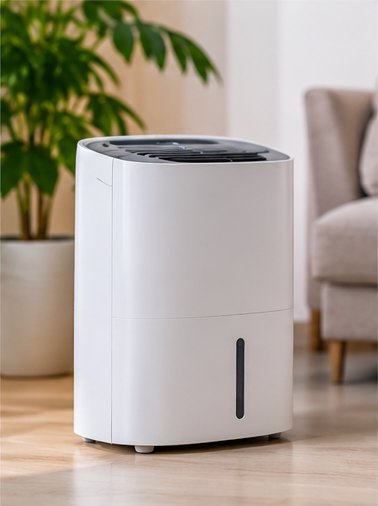
- Run a dehumidifier in the room. It pulls moisture out of the air so the clothes can release theirs. Close the door and windows of the drying room while it runs so it is not fighting the whole apartment.
- Use air-conditioning to help. An air-conditioned room is usually drier than the air outside, and a dry or dehumidify mode, if your unit has one, can speed things up. Keep the garments away from the direct blast of cold air.
- Choose the brightest, airiest spot. A spot near a window, or a balcony door that can be opened when it is not raining, brings fresher air and warmth.
- Finish in a dryer when the label allows. A short tumble dry on low heat can finish thick items like towels, though delicates and many knits should never go in.
Designing a Beautiful, Efficient Drying Corner

A slender rail by a window: airflow, light and a view, without a bulky rack in sight.
Indoor drying does not have to look like a chore. A well-chosen setup turns the corner of a home into a quiet, considered feature while performing better than a cluttered clothes horse.
- Choose an open, slim rail. A free-standing rail with proper hangers lets air reach both sides of every garment and keeps each piece wrinkle-free.
- Position it near moving air. Place it by a window or balcony door, or in line with a fan, and not in a closed corner.
- Keep a hygrometer nearby. A small humidity reading tells you at a glance whether the room is helping or hindering.
- Place the dehumidifier close. It works best in the same room as the laundry, with doors closed.
- Use a basket for the finish. Fold and store only once a garment is dry to the touch in the collar, seams and pockets.
When Slow Drying Turns Musty
Garments left damp for too long give bacteria and mildew time to settle in, and that is where the dreaded stale smell begins. In a humid climate, the longer a load stays wet, the greater the risk. If a batch smells musty after it has dried, it is usually a sign that it dried too slowly or was folded while still slightly damp.
- Do not leave a finished wash sitting in the drum. Hang it up promptly after the cycle ends.
- Check the thick parts. Collars, waistbands, seams, pockets and cuffs stay damp the longest.
- Never store clothes that are even slightly damp. Moisture sealed in a wardrobe or drawer invites mildew.
- If the smell appears, rewash. A fresh wash, a good rinse and faster drying will usually reset the fabric.
Our guide to why clothes smell musty after washing explains the causes and the fixes in full, and our comparison of air drying vs tumble drying helps you decide which method each garment deserves.
Frequently Asked Questions
Why do my clothes take so long to dry in Singapore?
The air is already very humid, so it has little room to absorb moisture from your clothes. Add a closed room, a crowded rack and fabrics that hold plenty of water, and drying can drag on well beyond a day.
How can I make clothes dry faster indoors?
Spin at the highest speed the label allows, give each garment space on a rack, add a fan for airflow and use a dehumidifier or air-conditioning to lower humidity. Hanging shirts on hangers and keeping the rack away from walls also helps.
Is a dehumidifier worth it for drying laundry?
In a humid climate, it often is. By drawing moisture out of the room’s air, it lets garments release their own moisture more quickly, particularly when paired with a fan and a closed door.
Does air-conditioning help clothes dry?
It can. Air-conditioned rooms are typically drier than the air outside, and a dry mode may help further. Keep clothes out of the direct stream of cold air and make sure there is some airflow around the rack.
Can I dry clothes in the bathroom?
It is best avoided. Bathrooms are usually humid and poorly ventilated, which slows drying and increases the risk of a musty smell.
How long is too long for clothes to stay damp?
There is no exact limit, but the longer fabric stays wet in a humid home, the greater the chance of a stale smell. If a garment is still damp after a day, increase airflow, reduce humidity or rewash it before it develops an odour.
What is the best way to dry towels and duvets indoors?
Towels dry best hung singly with plenty of airflow, or finished in a dryer when the label allows. Duvets and bulky bedding are very slow to dry at home, and are a good candidate for professional cleaning and drying.
The Verdict
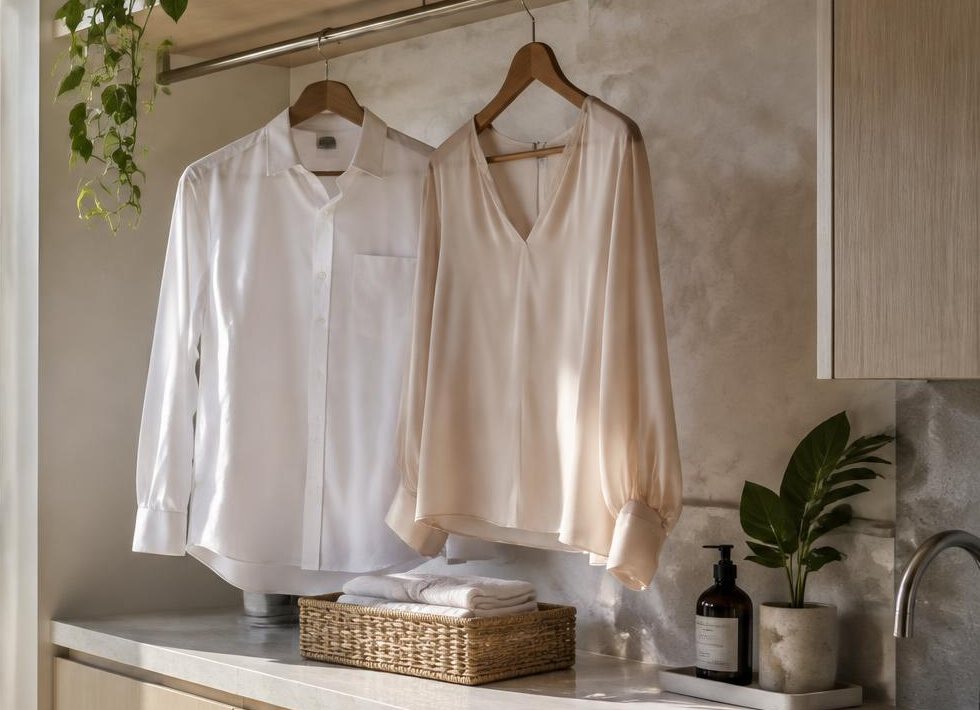
Fresh, crisp and ready to wear: the result of good air, good space and good timing.
Slow indoor drying is not about your washing machine or your clothes. It is about the air. Lower the humidity, move the air, remove more water before you hang and give every garment room to breathe. Do those four things and a load that once lingered for a day can be ready in a fraction of the time, without any mustiness.
And for the pieces that are the slowest to dry or the hardest to get right, such as duvets, bedding, large loads and delicate fabrics, Piing collects, cleans, dries and finishes everything under controlled conditions, then delivers it back crisp and ready to wear. Pickup & delivery across Singapore
Let Piing! handle the laundry and dry cleaning. Book a pickup and get your clothes collected, cleaned and delivered across Singapore — no store visits, no hassle.
Book a Pickup →