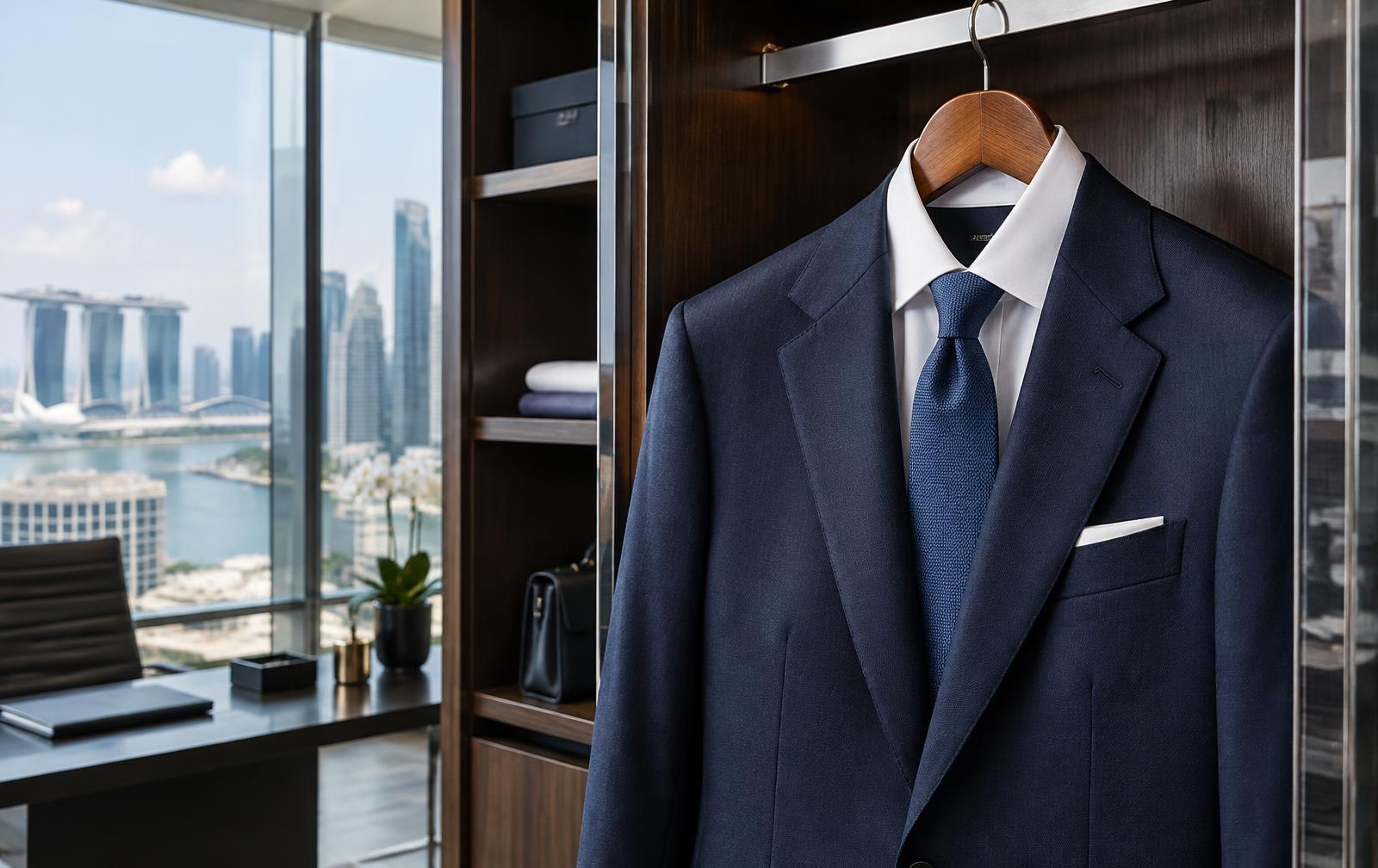
Professional clothes do their best work when they look effortless. Crisp collars, clean lines and a jacket that holds its shape are rarely the result of constant washing; they come from consistent, restrained care. The right routine removes sweat and soil without making every garment endure a full wash after every wear.
This guide covers the wardrobe behind a polished workday: tailored suits, shirts and blouses, fine knitwear, trousers, dresses and the small habits that keep them ready. Every garment is different, so the sewn-in label always outranks general advice.
The Professional Finish Starts at Home
Odour and creasing do not always mean a garment needs another wash. A jacket worn for a meeting may need to air, not a full clean. A shirt worn close to the skin generally needs washing after wear. Separating those decisions protects fabric, colour and shape while keeping your wardrobe ready for the next day.
Create a simple rhythm: air after wearing, brush off surface dust, attend to marks while they are fresh, and return each piece to its proper hanger or drawer only when it is dry. A garment that is used frequently still benefits from care that is measured rather than automatic.

A well-organised wardrobe with room to breathe keeps tailoring ready for the workday.
Start With the Care Label
Before you wash, press, steam or spot-clean, check the complete label. The fabric content tells you what the cloth contains; the care symbols tell you what the finished garment is designed to withstand. Lining, fused collars, shoulder structure, buttons and trims can change the answer.
- Washing: basin symbols indicate whether, how gently and at what temperature a garment may be washed.
- Bleaching: a triangle indicates bleach instructions; a cross means do not bleach.
- Drying: the square symbol family specifies permitted natural or machine drying.
- Ironing: the iron and dots indicate whether and how hot to press.
- Professional care: circle symbols describe professional textile-cleaning processes.
Bars beneath symbols indicate gentler treatment; a cross indicates a prohibited process. Read all five families together. If the label says “dry clean only,” do not test the garment in a home wash.
Suits, Blazers and Tailoring
A well-cut jacket contains more than its visible wool, cotton or linen. Canvassing, fused layers, lining and shoulder structure create the silhouette. Repeated water, heat, aggressive pressing or unnecessary cleaning can disturb those components, so use the sewn-in label and choose professional care when it requires it.
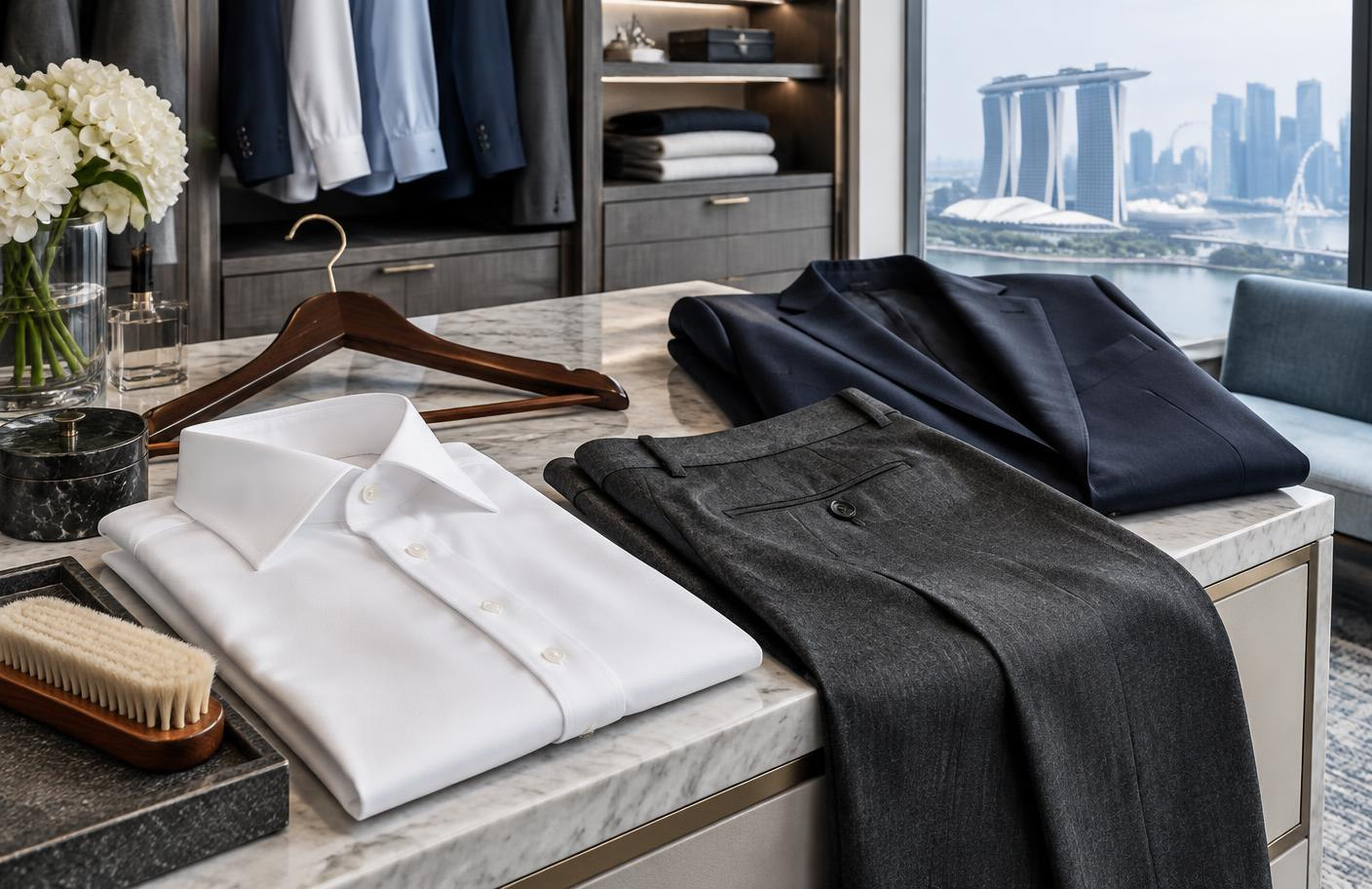
A tailored jacket’s structure is part of its fabric-care equation.
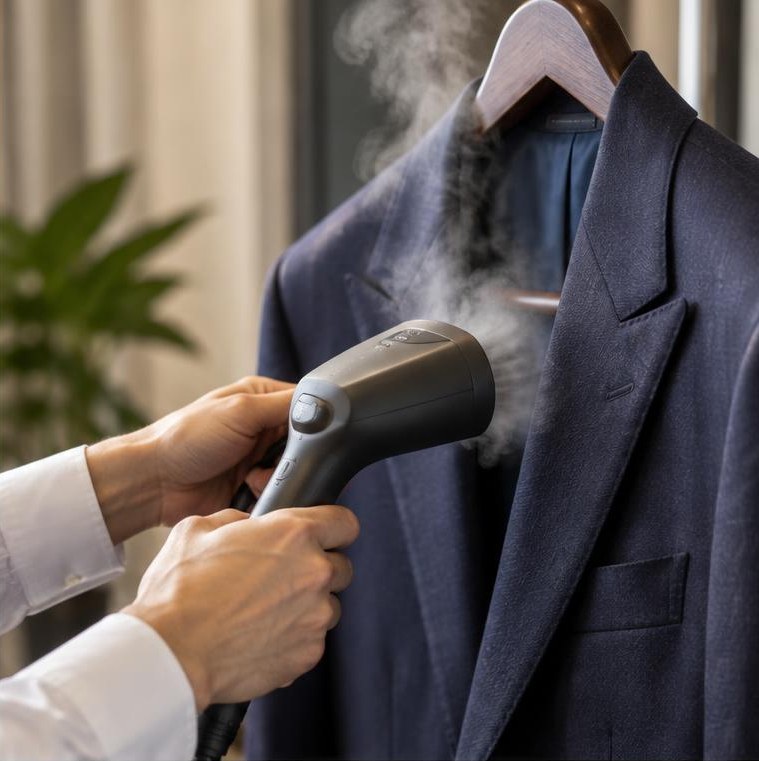
Steam gently and only where the care label allows.
- After wearing: empty the pockets, allow the jacket to air, then hang it on a broad, shaped hanger that supports the shoulders.
- Between cleans: use a soft clothes brush in the direction of the fabric to lift surface dust; avoid vigorous brushing.
- Creases: use gentle steaming only if the care instructions allow it. Keep the steamer moving and avoid direct contact with delicate surfaces.
- Stains: blot gently with a clean, dry cloth; do not scrub, soak or apply household stain remover to a tailored panel.
- Cleaning: follow the label and tell the cleaner about visible marks. Do not clean the whole suit more often than the care and condition require.
Give trousers the same label-first attention. Hang them by the hem or use the hanger design recommended for the fabric, and avoid pressing a sharp crease into a garment unless its finish calls for one.
Dress Shirts and Blouses
Shirts and blouses sit close to the skin and collect perspiration, deodorant and skincare. Wash those labelled for home laundering after wear, before marks become difficult to treat. Sort whites and colours, close fastenings that might snag, and choose the care-label temperature instead of assuming hotter means cleaner.
- Check collars and cuffs before washing; blot a fresh mark gently rather than scrubbing the weave.
- Do not leave damp shirts bunched in a hamper or washing machine.
- Air-dry when the label allows; reshape the collar and cuffs while slightly damp.
- Press on the stated setting. If uncertain, test an inconspicuous inside area and use a pressing cloth where appropriate.
- For silk, embellished, lined or structured blouses, use the specific instructions—not the cotton-shirt routine.
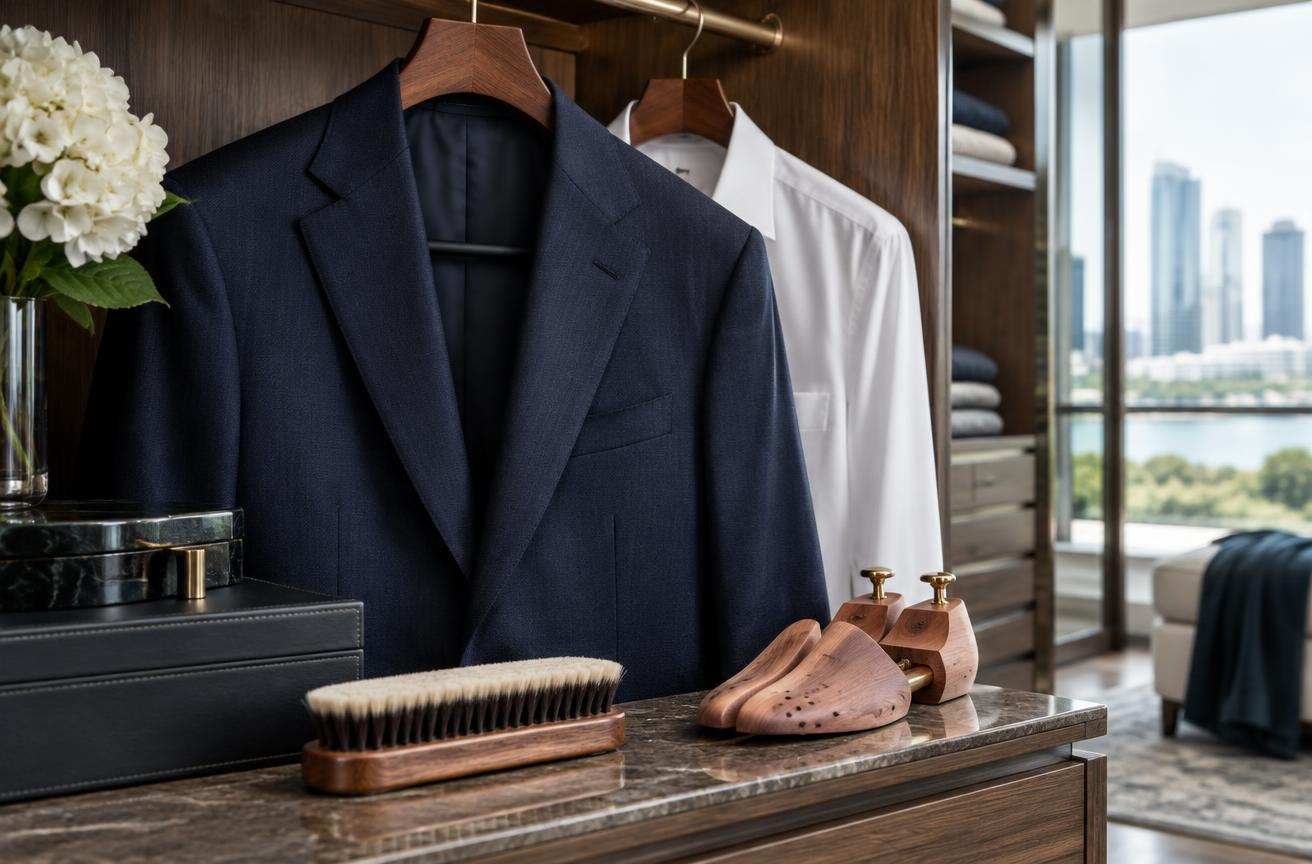
Separate the everyday washable shirt from the jacket that needs its own care plan.
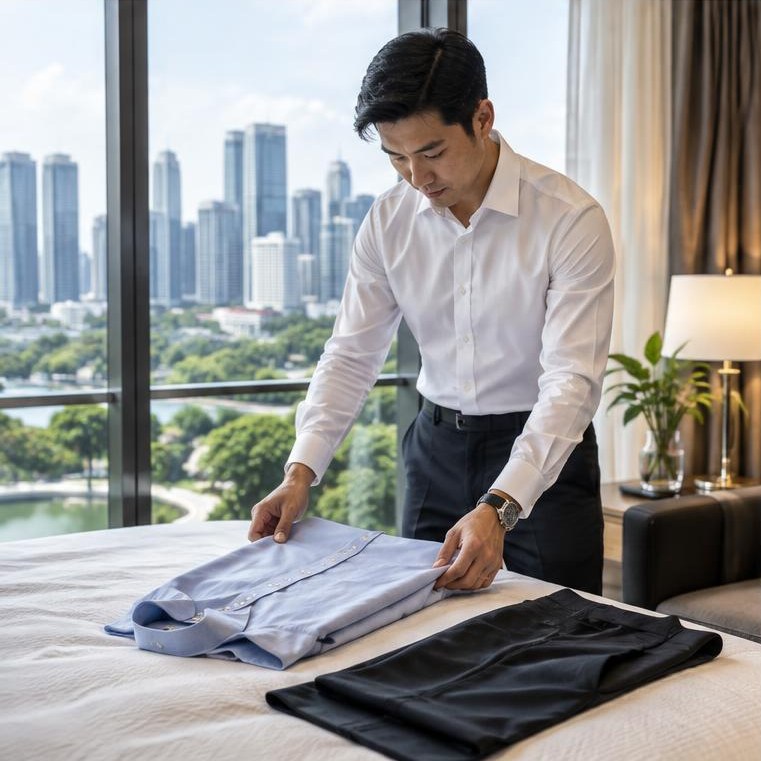
Fold shirts and trousers only once they are fully dry and pressed.
Knitwear, Trousers and Dresses
Fine knitwear
Merino, wool and cashmere may be washable if their label says so. Follow the named wool cycle or hand-wash method, use an appropriate detergent, avoid twisting, and dry flat if instructed. A knit that is still damp should be supported rather than hung by the shoulders, which can stretch it.
Trousers and skirts
Check the label for each pair; an unlined washable trouser and a tailored lined pair are not equivalent. Empty pockets, fasten closures, sort by colour, and avoid overloading the machine. For tailored trousers, observe pressing instructions so seams and creases remain intentional.
Dresses and blouses
Construction is decisive. A simple cotton dress may be washable; a lined dress with pleats, trim or a vivid print may call for professional cleaning. Protect delicate washable garments in a mesh bag only when the garment instructions allow machine washing.
Between-Wear Care
- Air, don’t immediately re-hang in a packed wardrobe. Give worn pieces breathing space away from direct sun and cooking odours.
- Brush gently. A clean soft garment brush can lift dust and surface particles from suitable woven fabrics.
- Use the right hanger. Broad shoulders support jackets; shaped trouser hangers help prevent hard creases.
- Rotate suits. Let a worn jacket rest and air before wearing it again; this gives the cloth time to recover between uses.
- Keep the wardrobe orderly. Avoid crushing pieces together, and keep clean garments separate from worn or damp ones.
- Deal with a mark promptly. Identify the likely source and blot—do not rub or use heat.
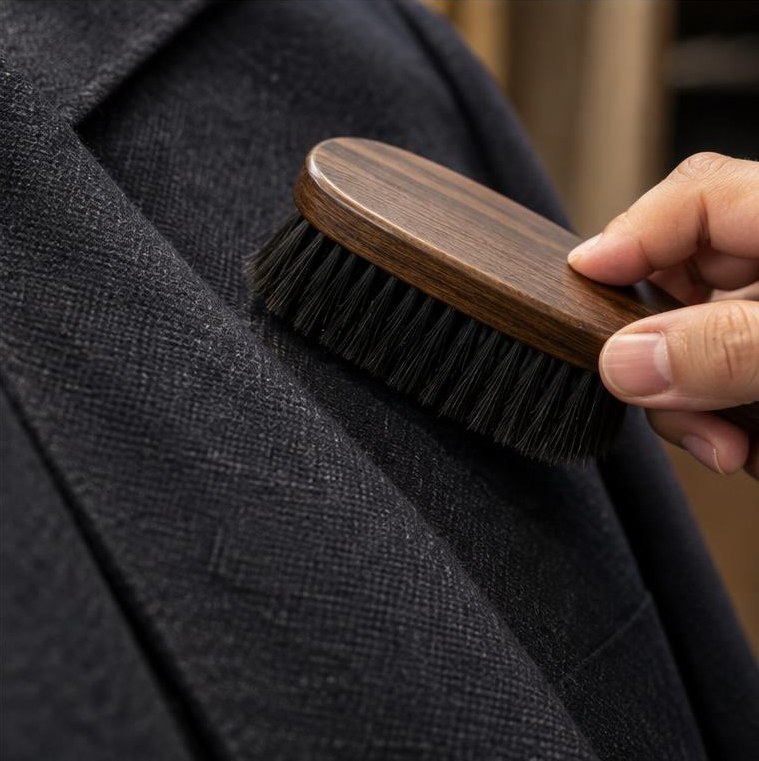
A soft brush between wears lifts surface dust without a full clean.
A Calm Stain-Response Playbook
The first response matters. A rushed treatment can spread a stain, roughen a surface or set a mark with heat. If a garment is labelled for professional cleaning, a valuable silk or a structured suit, stop after gentle blotting and tell the cleaner what happened.
| What happened | First response | Avoid |
|---|---|---|
| Water-based spill on washable shirt | Blot gently with a clean cloth; follow the shirt’s care label. | Rubbing the weave or using heat before the mark is gone. |
| Oil, makeup or unknown stain | Lift excess without spreading; note the source and seek advice for delicate items. | Adding water, powder or a solvent to a garment you cannot safely treat. |
| Mark on a suit or lined jacket | Blot lightly; tell a professional cleaner exactly where and what caused it. | Scrubbing, soaking or pressing directly over the stain. |
| Deodorant on a blouse | Use only the labelled wash method after checking colourfastness. | Chlorine bleach or abrasive rubbing unless expressly allowed. |
Wash, Dry and Press With Restraint
For washable office essentials, a simple, controlled routine is usually enough. Sort by colour and fabric weight; turn suitable garments inside out; close hooks and zips; use a modest amount of detergent; and choose the gentlest labelled cycle that will clean the load. Leave room for garments to move.
Dry using the stated method. Air-drying is a reliable low-heat choice when permitted, but leave space for airflow and check cuffs, seams and waistbands before storage. Tumble-dry only when the label allows it, using the specified temperature. Singapore’s humidity makes full drying particularly important; do not store a garment merely because its outer surface feels dry.
When pressing, match the iron setting to the care label, press on the reverse where appropriate, and use a clean pressing cloth for delicate fabrics if advised. A garment steamer can refresh some clothes, but is not a universal substitute for cleaning and should not be used on every finish.
The Singapore Wardrobe Routine
Warm, humid conditions make airflow and complete drying part of good garment care. Let shirts and jackets dry fully before hanging them close together. Avoid leaving damp laundry in a basket or sealed garment bag. Keep wardrobes ventilated and uncluttered, and follow material-specific advice when storing silk, wool and leather.
If you notice a musty smell, investigate rather than covering it with fragrance. Check the garment and wardrobe for residual moisture, air the space, and have a visibly affected or valuable piece assessed before attempting a home treatment. For long-term storage, put away items only when they are clean and thoroughly dry.
Frequently Asked Questions
How often should I clean a suit?
There is no universal schedule. Follow its label, consider how long and how often it was worn, and respond to visible soil or odour. Air and brush it between wears; avoid unnecessary cleaning.
Can I wash dress shirts in cold water?
Use the temperature on each shirt’s care label. Cool water is a gentle default when permitted, but it does not override a specific manufacturer instruction or guarantee stain removal.
Can I steam a blazer instead of cleaning it?
Steaming may help relax some creases when the label permits, but it does not remove soil and is not safe for every fabric, lining or finish.
Should work shirts be washed after every wear?
Shirts worn directly against the skin generally benefit from laundering after wear if their labels allow it. Jackets worn over a shirt often need airing and brushing rather than an automatic clean.
How do I stop workwear smelling musty in Singapore?
Make sure clothes are fully dry before storing, leave airflow around them, and avoid leaving damp garments in closed spaces or crowded wardrobes.
What about uniforms with protective properties?
Follow the garment manufacturer and employer instructions exactly. Protective, contaminated, flame-resistant, high-visibility and technical garments may require specialized laundering; ordinary home-care advice does not apply.
The Piing Verdict
A professional wardrobe is not maintained by washing everything more often; it is maintained by choosing the right treatment at the right time. Air, brush, spot and launder with intention. Reserve professional cleaning for the pieces whose label, structure or condition calls for it—and make sure every garment is completely dry before it returns to your wardrobe.
Let Piing! handle the laundry and dry cleaning. Book a pickup and get your clothes collected, cleaned and delivered across Singapore — no store visits, no hassle.
Book a Pickup →