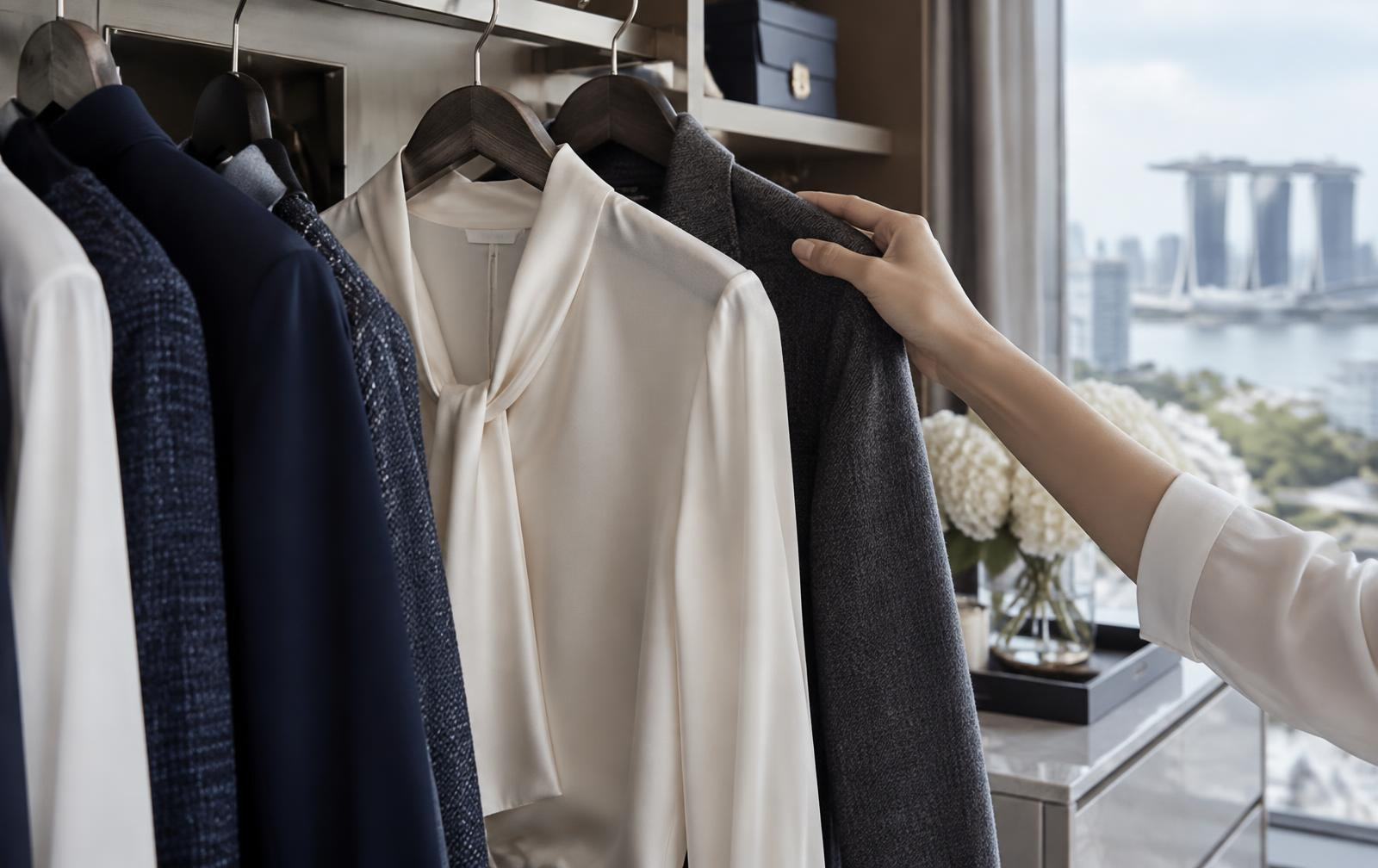
A beautiful garment rarely announces where its risk lies. The label may say silk, wool, cotton or linen; the part that needs the gentlest hand could be its dye, lining, shoulder structure, buttons or finish. The best care decision is therefore not a contest between “natural” and “synthetic”. It is a reading of the whole garment—fibre, construction, colour, soil and care label together.
Use this guide as a calm first decision, not a substitute for the instructions sewn into a particular piece. Some wool can be washed at home; some cotton tailoring should not be. Two garments in the same fabric may need different treatment.
Start With the Label, Not the Fibre
The sewn-in care label is the most useful starting point because it applies to the finished garment, not merely to a swatch of its principal fibre. It takes account of components a shopper cannot see: interlinings, shoulder pads, contrasting thread, adhesives, trims and colour treatments.
Look for the care instructions before treating a stain or putting a piece in water. The familiar symbols cover washing, bleaching, drying, ironing and professional textile care. A cross means do not use that treatment; a bar beneath a wash or dry-cleaning symbol indicates a gentler process. “Dry clean” and “dry clean only” are not the same wording—when the label is ambiguous, ask the garment maker or a professional cleaner rather than testing an expensive piece.
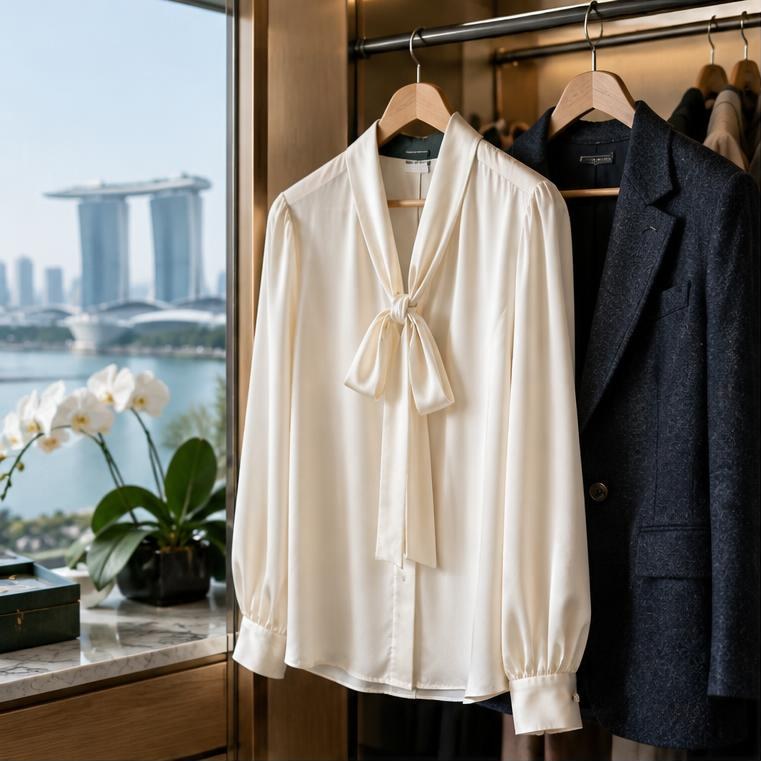
Silk and tailored wool often need different care, even when they hang side by side.
When Professional Cleaning Is the Better Choice
Professional cleaning is a considered choice for garments whose shape, surface or components could be compromised by an ordinary home wash—not a rule that every premium item must follow. Choose it when the label calls for professional care, or when several risk factors appear together.
- “Dry clean only” care instructions. This is the clearest signal not to home-wash.
- Structured tailoring. Suits, blazers, lined jackets and coats may rely on internal canvassing, shoulder support or fusible layers that can distort with water, agitation or heat.
- Delicate or unstable surfaces. Velvet, embellished pieces, beading, sequins, pleating, delicate embroidery and some textured weaves deserve individual assessment.
- Complex colour or construction. High-contrast linings, colour-blocking, prints, dark or vivid dyes, and mixed-fibre garments can bleed or behave unevenly.
- Valuable, vintage or irreplaceable pieces. A new stain or an uncertain label is a reason to ask before experimenting.
- Leather and suede. These need a cleaner with the right specialist leather process, not a home washing machine or routine textile cleaning.
- Oil-based or unknown stains. Avoid rubbing or adding heat; disclose what caused the stain, if known, and let the cleaner assess it.
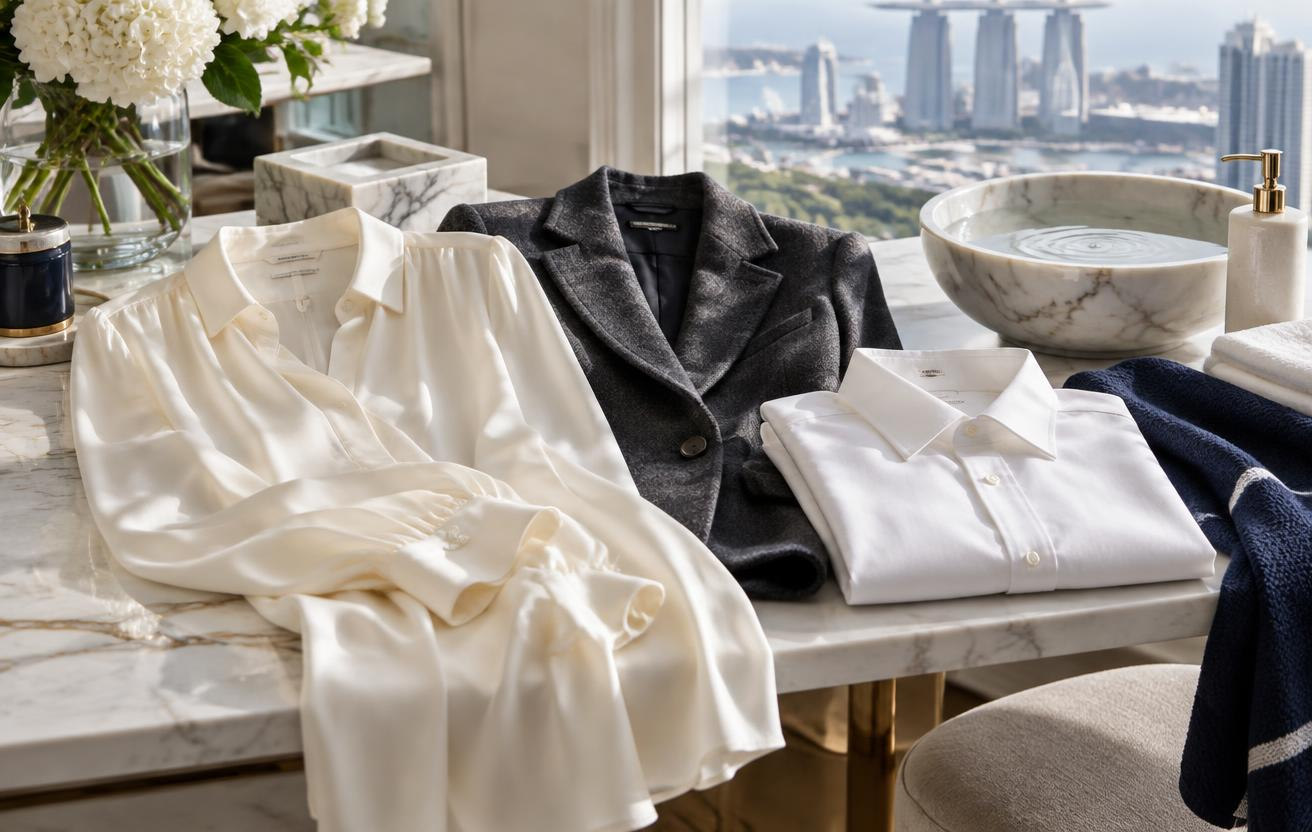
The label is the beginning of the decision; a garment’s inner structure can be just as important as its visible fabric.
What You Can Often Wash at Home
Many everyday pieces are straightforward to launder at home when the care label permits it: unlined cotton shirts and T-shirts, durable cotton bedding, simple linen, and colourfast polyester or cotton-polyester basics. A washable label does not mean every setting is suitable. Use the recommended temperature and cycle; cool water and a gentle cycle are sensible defaults for a piece you want to keep looking new.
Some wool, merino and silk garments are designed to be washed—but only if their own labels say so. Use the specified wool or delicate programme, the correct detergent, a low spin where permitted, and the drying method on the label. Do not infer machine-washability from fibre content alone.
| Garment, if the label allows | At-home approach | Pause for professional care if… |
|---|---|---|
| Everyday cotton shirt or tee | Cool wash; turn dark colours inside out; shape and air-dry. | It is lined, structured, embellished or colour-unstable. |
| Linen separates | Gentle wash; avoid overloading; smooth while damp. | The item is tailored, lined, pleated or labelled for professional care. |
| Washable wool or merino | Use the specified wool cycle or hand-wash method; dry flat if instructed. | The label says dry clean only, or the knit is shaped, embellished or delicate. |
| Washable silk | Follow the stated method exactly; cool water and a silk-appropriate detergent only when permitted. | It is printed, lined, embellished, deeply coloured or structured. |
| Polyester / activewear | Gentle cool wash; skip fabric softener where the maker advises. | It has a coating, bonded finish or technical membrane. |
| Leather or suede | Do not machine- or hand-wash. | Choose a specialist leather-cleaning service. |
The Fabric-by-Fabric Guide
Silk and satin
Silk is not automatically dry-clean-only: a plain, washable piece may be labelled for careful hand-washing. But water can mark some silk finishes, disturb dye, or reveal a colour problem between the face fabric and lining. Printed, embellished, tailored and high-contrast silk is a strong candidate for professional assessment. Never wring silk or leave it in direct sun to dry.
Wool, merino and cashmere
Wool fibres can be washable when a manufacturer has designed and labelled the garment for it. If permitted, use the prescribed wool cycle or hand-washing method, avoid twisting or agitation, and support the wet garment as it dries. Cashmere knits can lose shape easily; follow their label with particular care. A tailored wool jacket is a different proposition from a simple washable wool sweater.
Cotton and linen
Unstructured cotton and linen basics are often home-washable. Shrinkage, dye transfer and creasing remain possible, especially with heat or a crowded drum. A cotton dress shirt with fused collar pieces, a lined cotton jacket, or a shaped linen suit may need professional cleaning even though cotton itself is robust.
Polyester, nylon and blends
Many simple synthetics are practical to wash at home, but coatings and technical finishes change the rules. A blend follows the most care-sensitive part of the garment—not necessarily the fibre listed first on its tag. Check specific instructions for stretch, waterproofing, bonded seams and trims.
Velvet, suede and leather
These surfaces can crush, distort or mark when treated like an ordinary washable fabric. Use the garment label and specialist advice; do not use a home wash as a test.
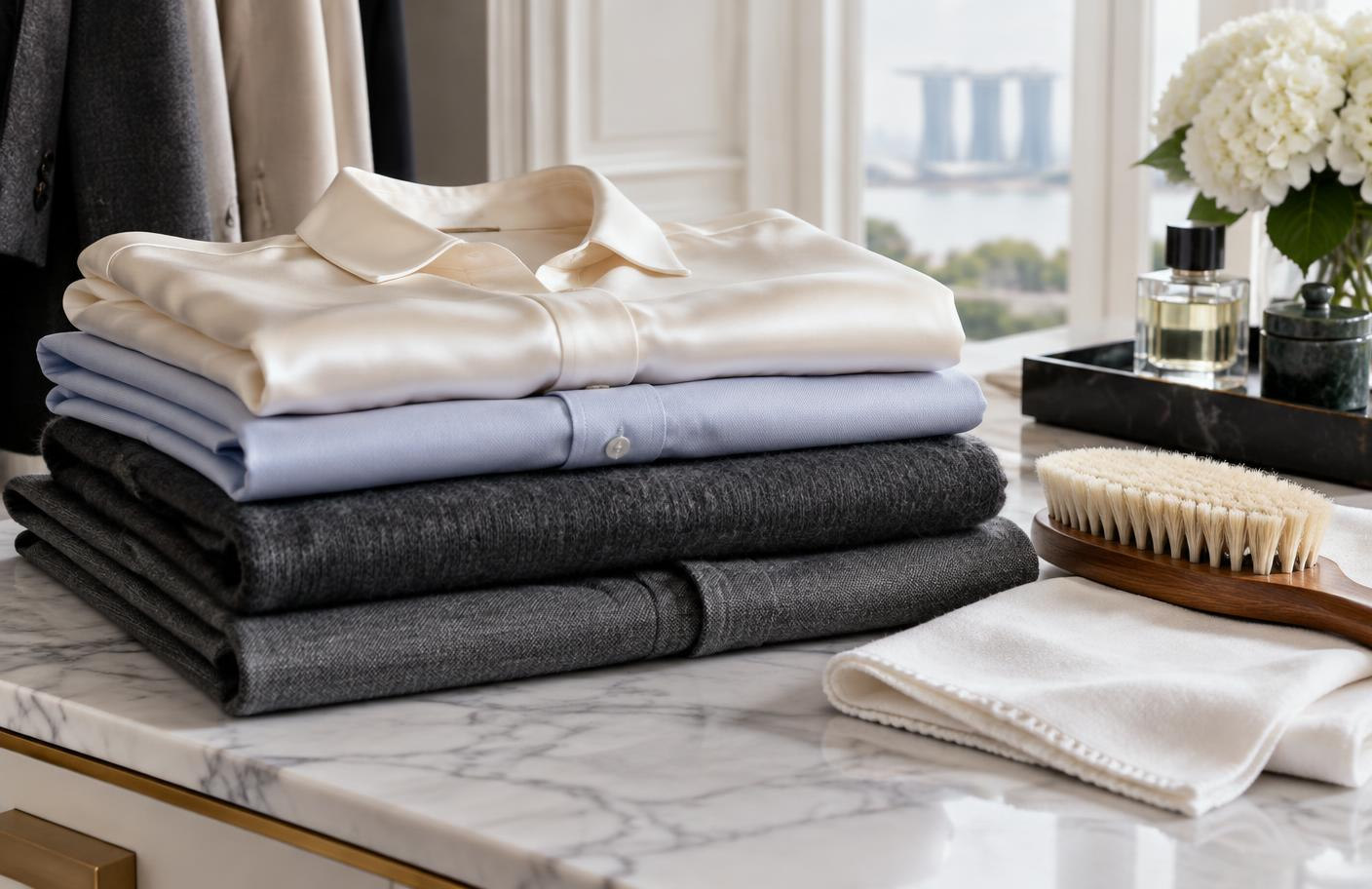
A close look at the weave and finish can change a seemingly simple wash decision.
Construction Changes Everything
Why can a cotton shirt go into the wash while a cotton blazer cannot? The shirt may be a single washable layer. The blazer may contain a lining, shoulder structure, fused canvas, shaped lapels and multiple components that react differently to water. Drying can shrink one layer more than another; heat and agitation can weaken adhesive bonds.
The same principle applies to trims, prints, embroidery, pleats and mixed-fibre linings. A garment’s care label is written for the complete piece. When a decorative detail or lining seems more delicate than the main fabric, let that vulnerable component set the care method.
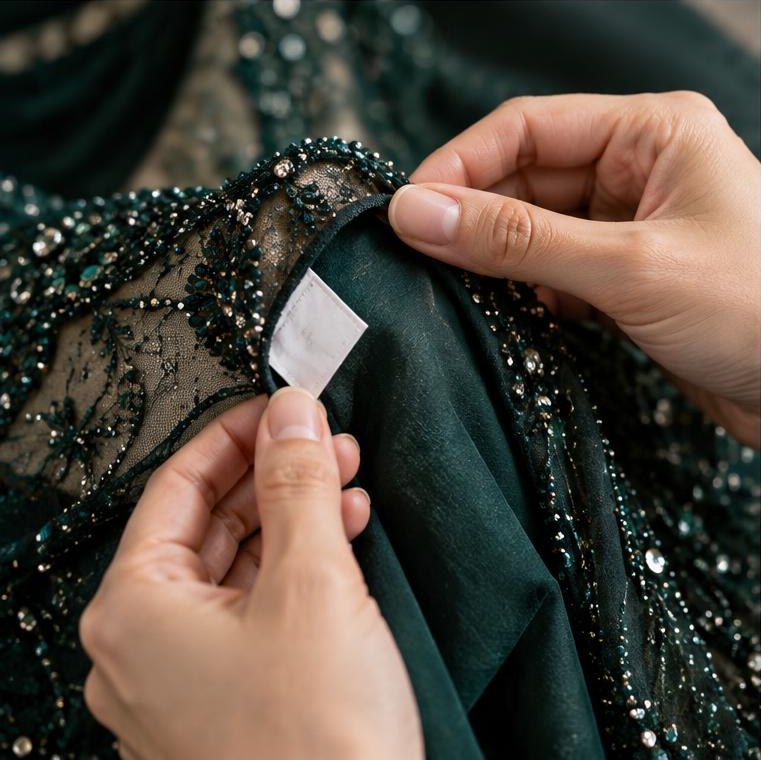
Check the label first, especially on embellished or lace-trimmed pieces.
Read the Care Symbols With Confidence
Most care labels present five families of symbols in sequence: washing, bleaching, drying, ironing and professional care. The basin describes washing; a triangle, bleaching; a square, drying; an iron, pressing; and a circle, professional textile care. Dots indicate temperature or heat levels. Crosses prohibit the treatment, and bars signal a gentler process.
- Check the whole sequence. A washable symbol does not cancel a “do not tumble dry” instruction.
- Do not bleach unless permitted. Chlorine bleach can damage fibres and colour; oxygen bleach is not suitable for every garment either.
- Use the specified drying and ironing method. High heat can shrink, shine, scorch or set a stain.
- Interpret professional-care symbols carefully. If the label’s words and symbols are unclear, consult the manufacturer or cleaner.
Care symbols are standardized; garment-specific wording remains your best guide. See GINETEX’s care-symbol guide.
Singapore’s Humidity Changes the Finish
In Singapore, a garment that feels dry on the surface may still be holding moisture in a thick seam, cuff, waistband or knit. Putting it away too soon can encourage musty odours and mildew. Give washed items room to dry in a well-ventilated space; check thick areas before storage and keep the wardrobe from becoming overpacked.
For seasonal or rarely worn pieces, store clothing clean and completely dry. Prefer a breathable garment cover to long-term sealed plastic, and follow the garment maker’s advice for its specific material. If a piece smells musty or shows spots, do not simply mask the odour—address the source and ask a professional about the right next step.
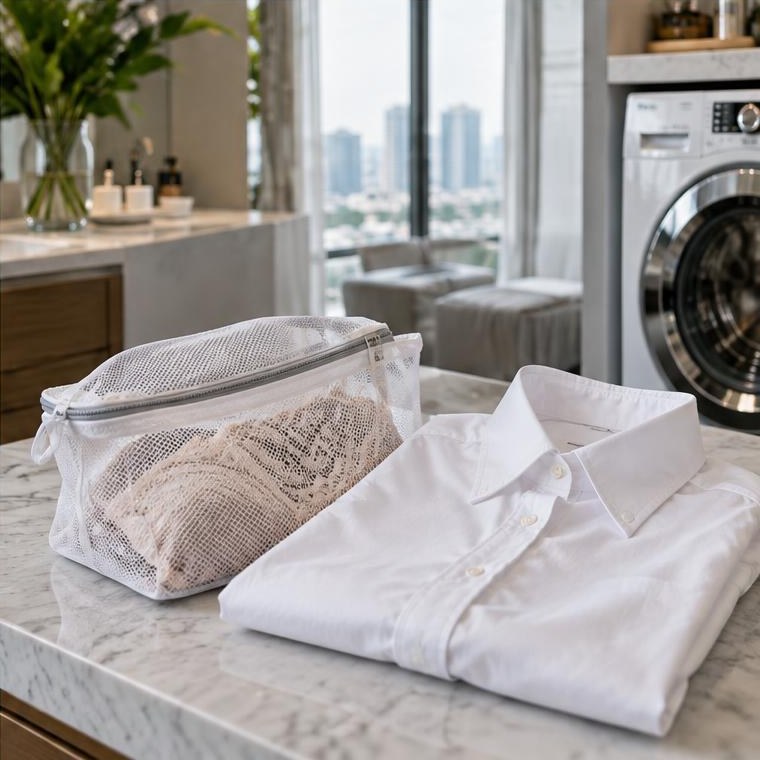
A mesh bag and a sturdy cotton shirt: protect delicates only when the label allows machine washing.
A Safer Home-Washing Routine
- Read the label first. Check wash, bleach, drying and ironing instructions as one set.
- Sort for colour and care needs. Separate whites, darks and new saturated colours; keep delicate items apart from zips and rough hardware.
- Choose a restrained cycle. Do not overfill the machine. Use the lowest temperature and gentlest cycle that the label permits.
- Measure detergent carefully. More detergent is not better; follow the product dose for the load and water conditions.
- Do not improvise on stains. Blot, do not rub; avoid hot water or a hot iron until the mark is understood.
- Dry as directed, then check thoroughly. Shape while damp and make sure seams and thicker areas are fully dry before putting the garment away.
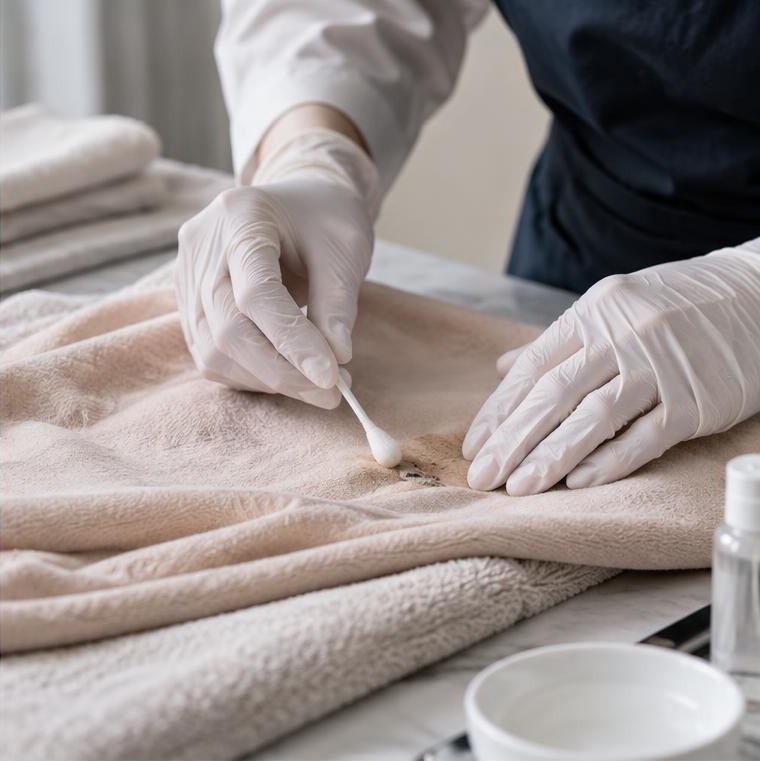
Blot gently and test first; never rub or apply heat before you know the stain.
Mistakes That Shorten a Garment’s Life
- Assuming all silk, wool, cotton or linen behaves the same.
- Reading only the fibre composition and ignoring the care label.
- Putting “dry clean only” garments in a delicate cycle to see what happens.
- Using hot water, high spin or a tumble dryer simply because it is faster.
- Rubbing a stain or applying heat before its source is known.
- Storing a piece that is still damp inside a crowded wardrobe.
Frequently Asked Questions
Is “dry clean” the same as “dry clean only”?
Not necessarily. Wording can vary by manufacturer, and construction matters. Follow the exact label; if it is unclear or the garment is valuable, ask the maker or a professional cleaner before washing it.
Can I wash wool at home?
Some wool and merino garments are made to be washed. Only use the programme or hand-wash method on that garment’s own label, and follow the recommended drying instructions.
Can silk ever be hand-washed?
Yes, if its care instructions allow it. Printed, lined, embellished, structured or colour-sensitive silk is riskier; do not rely on fibre name alone.
Does a premium price mean a garment must be dry-cleaned?
No. Price alone does not determine care. The sewn-in label, structure, finishes and condition do.
What should I do when the label is missing?
Do not perform a home wash test on the garment. Ask the maker or a cleaner to assess its fibres, construction and colour first.
The Piing Verdict
Choose home washing for garments whose labels clearly allow it, and choose professional care when the construction, finish, stain or value makes experimentation unwise. The most luxurious habit is not treating every piece the same—it is giving each one the care it was made to receive.
Let Piing! handle the laundry and dry cleaning. Book a pickup and get your clothes collected, cleaned and delivered across Singapore — no store visits, no hassle.
Book a Pickup →