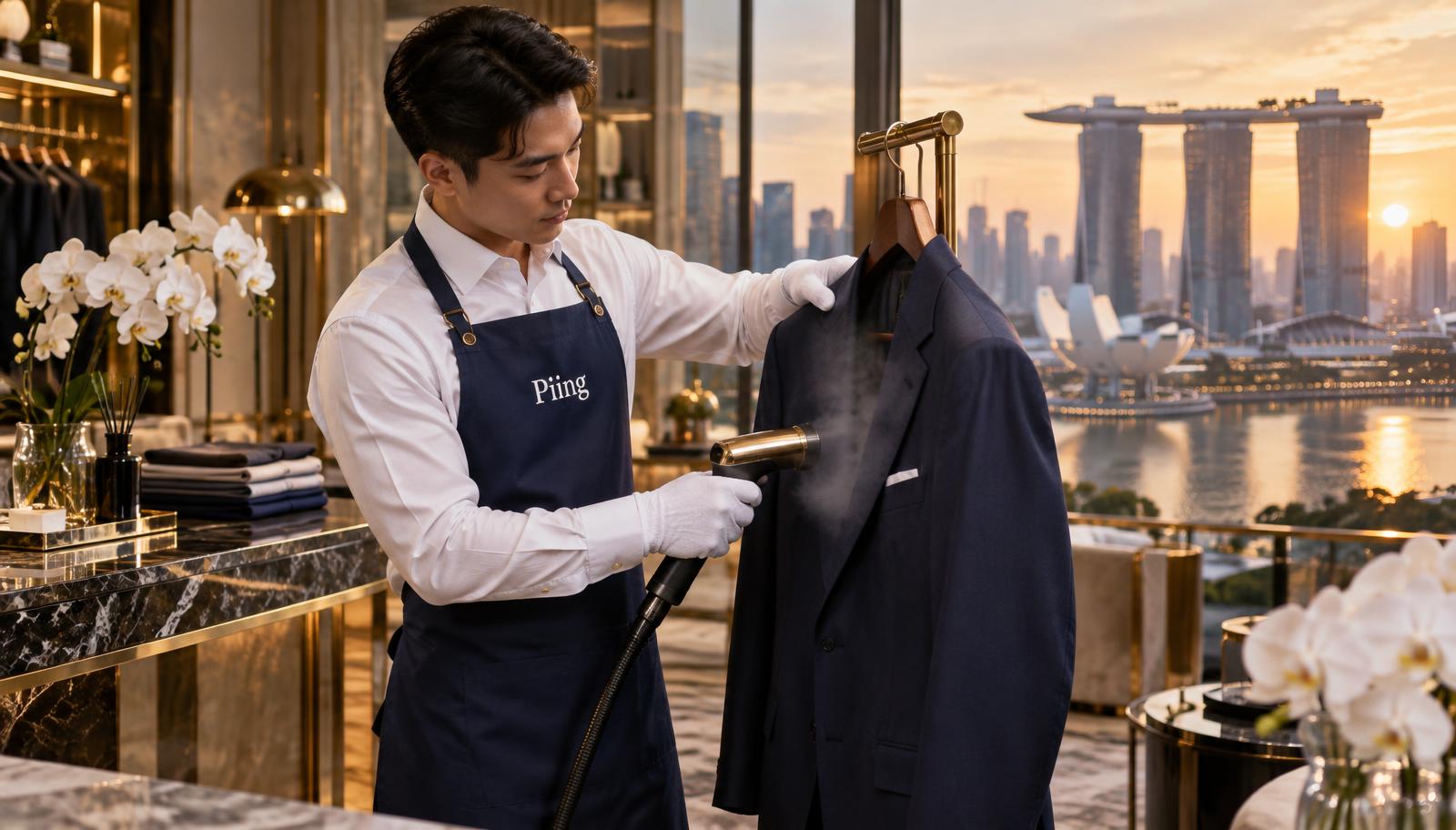
Walk into any well-kept wardrobe in Singapore and you will find two kinds of garments living side by side: the everyday pieces that survive the washing machine week after week, and the pieces their owner would never dream of putting near one — the tailored suit, the silk dress, the cashmere coat. The line between them is not price. It is chemistry.
Regular laundry and premium dry cleaning are not two price tiers of the same service. They are two entirely different processes, built on different solvents, different machinery and different expertise — each designed for a different category of fabric. Understanding the difference is the single most useful thing you can do for the life of your wardrobe.
Two Different Philosophies of Clean
Regular laundry is built for throughput: get a large volume of sturdy fabric hygienically clean, quickly and affordably. It is a brilliant system — for the fabrics it was designed for.
Premium dry cleaning is built for preservation: return each individual garment to its original condition — or better — while protecting its colour, texture, shape and structure. Where laundry treats a load, dry cleaning treats a piece. Every garment is inspected, tagged, spot-treated, cleaned in a controlled process, then finished by hand.
What Premium Dry Cleaning Actually Is
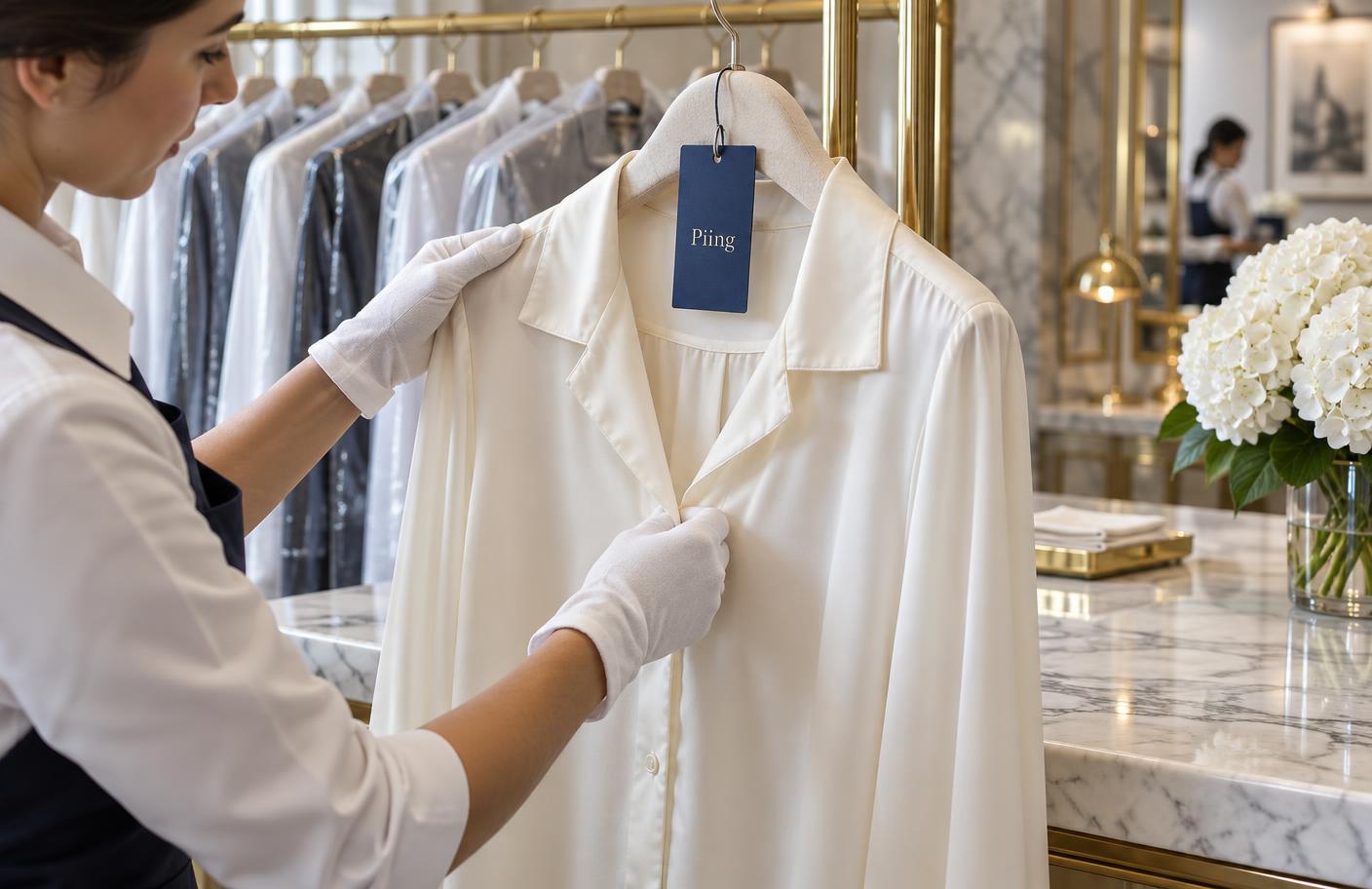
Every premium garment is inspected by hand before cleaning begins.
Despite the name, dry cleaning is not dry. Garments are immersed in a liquid solvent — modern premium services use gentle, eco-friendly solvents rather than traditional perc — that dissolves oils, grease and stains without water. That single difference changes everything:
- No water means no swelling. Water makes natural fibres like wool and silk swell, distort and shrink. Solvent cleans around the fibre, leaving its structure untouched.
- No agitation damage. The process is far gentler than a washing machine's drum — critical for tailoring, pleats, beading and delicate weaves.
- Oil-based stains actually come out. Body oils, sebum, grease and cosmetic stains dissolve in solvent far better than in water.
- Colours stay true. Dyes that bleed or fade in water remain stable in solvent, keeping blacks black and brights bright.
But the solvent is only half the story. What you are really paying for is the expertise around it: trained spotters who identify and pre-treat each stain, pressing specialists who rebuild a jacket's silhouette by hand, and quality checks at every stage.
What Regular Laundry Actually Is
Regular laundry — whether at home or a wash-and-fold service — cleans with water, detergent, mechanical agitation and heat. It is the right tool for the majority of what you wear:
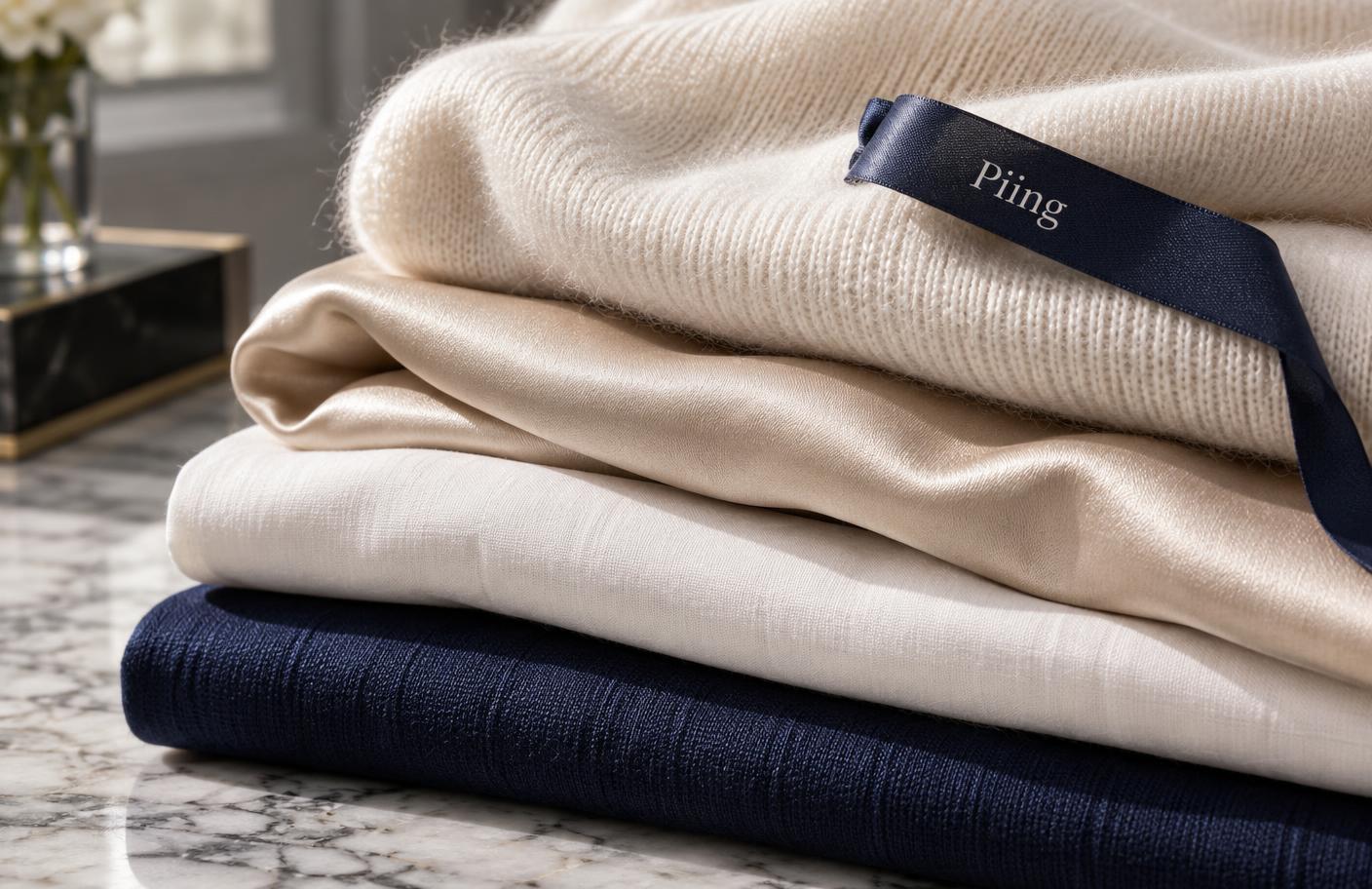
Delicate fibres like cashmere and silk are exactly what premium care is built to protect.
- Water-based stains dissolve beautifully. Sweat, mud, food and most daily grime respond best to water and detergent.
- It is hygienic at scale. Hot water and detergent sanitise towels, bedding, underwear and gym clothes thoroughly.
- It is fast and economical. A full week's essentials cleaned for a fraction of the per-piece cost of dry cleaning.
The trade-off is that water and agitation are indiscriminate. The same forces that clean a cotton t-shirt will felt a wool sweater, dull a silk blouse, bubble a suit's canvas interlining and crack a printed motif. A washing machine cannot tell the difference — which is why the choice of process has to happen before the garment goes in.
Head-to-Head Comparison
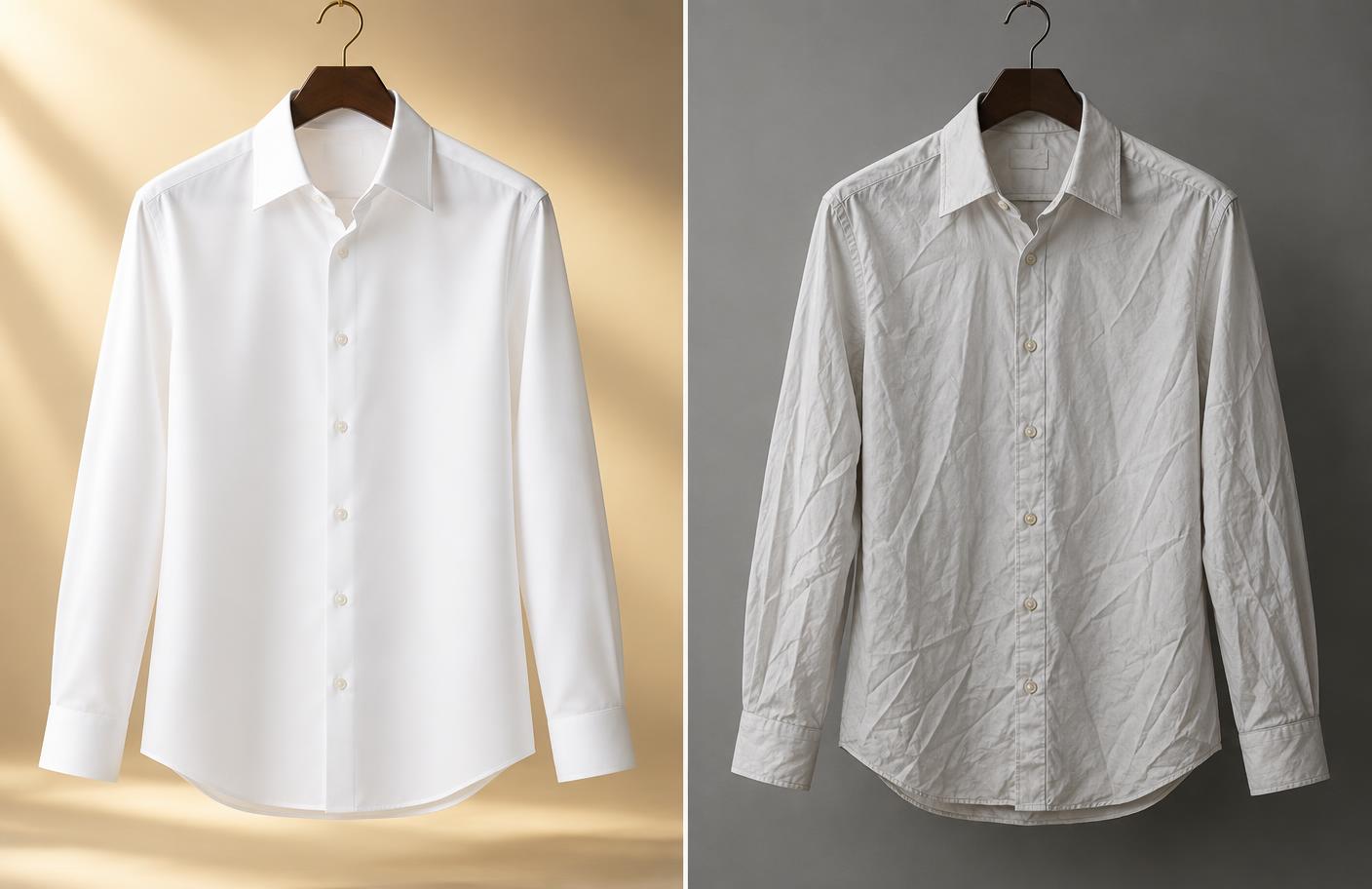
The same shirt, two different care histories — the difference is visible at a glance.
| Factor | Premium Dry Cleaning | Regular Laundry |
|---|---|---|
| Cleaning medium | Gentle liquid solvent, no water | Water, detergent, agitation |
| Best for | Silk, wool, cashmere, suits, dresses, embellishment | Cotton, linen, synthetics, towels, bedding |
| Stain removal | Expert spot treatment, oil-based stains | Water-based stains, general soil |
| Effect on fabric | Preserves colour, texture and structure | Gradual wear, fading and shrinkage over time |
| Shape & structure | Maintained — hand-finished and pressed | Not preserved — collars, pleats and canvases distort |
| Finishing | Hand pressed, hung, protective garment bag | Machine dried, folded |
| Cost | Higher per piece | Low per kg or per load |
| Garment lifespan | Extended significantly | Normal for sturdy fabrics, damaging for delicates |
Garment by Garment: Where Everything Belongs
Suits & Tailoring
The canvas, padding and structure inside a jacket cannot survive water and tumbling. Dry clean only — and not too often; every few wears is enough.
Dry clean onlySilk & Satin
Water spots, dulls and weakens silk. Solvent cleaning preserves the sheen and drape that make silk worth owning.
Dry clean onlyWool & Cashmere
Water and agitation felt and shrink knitwear permanently. Professional cleaning keeps fibres soft, lofty and true to size.
Dry clean onlyEvening & Embellished Wear
Beading, sequins, pleats and delicate linings need expert handling. One machine wash can end a gown's career.
Dry clean onlyBusiness Shirts
Either works. Laundry with professional pressing is excellent for daily shirts; dry clean your finest or most structured pieces.
Both, with careCotton Tees & Casualwear
Built for the washing machine. Cold water, gentle cycle, air dry — no need for anything more.
LaundryTowels & Bedding
Hot water and detergent are exactly what these need for hygiene. Laundry, every time.
LaundryActivewear & Synthetics
Cool machine wash, no fabric softener, air dry. Technical fabrics are tough in water but hate heat.
LaundryThe Finishing Difference
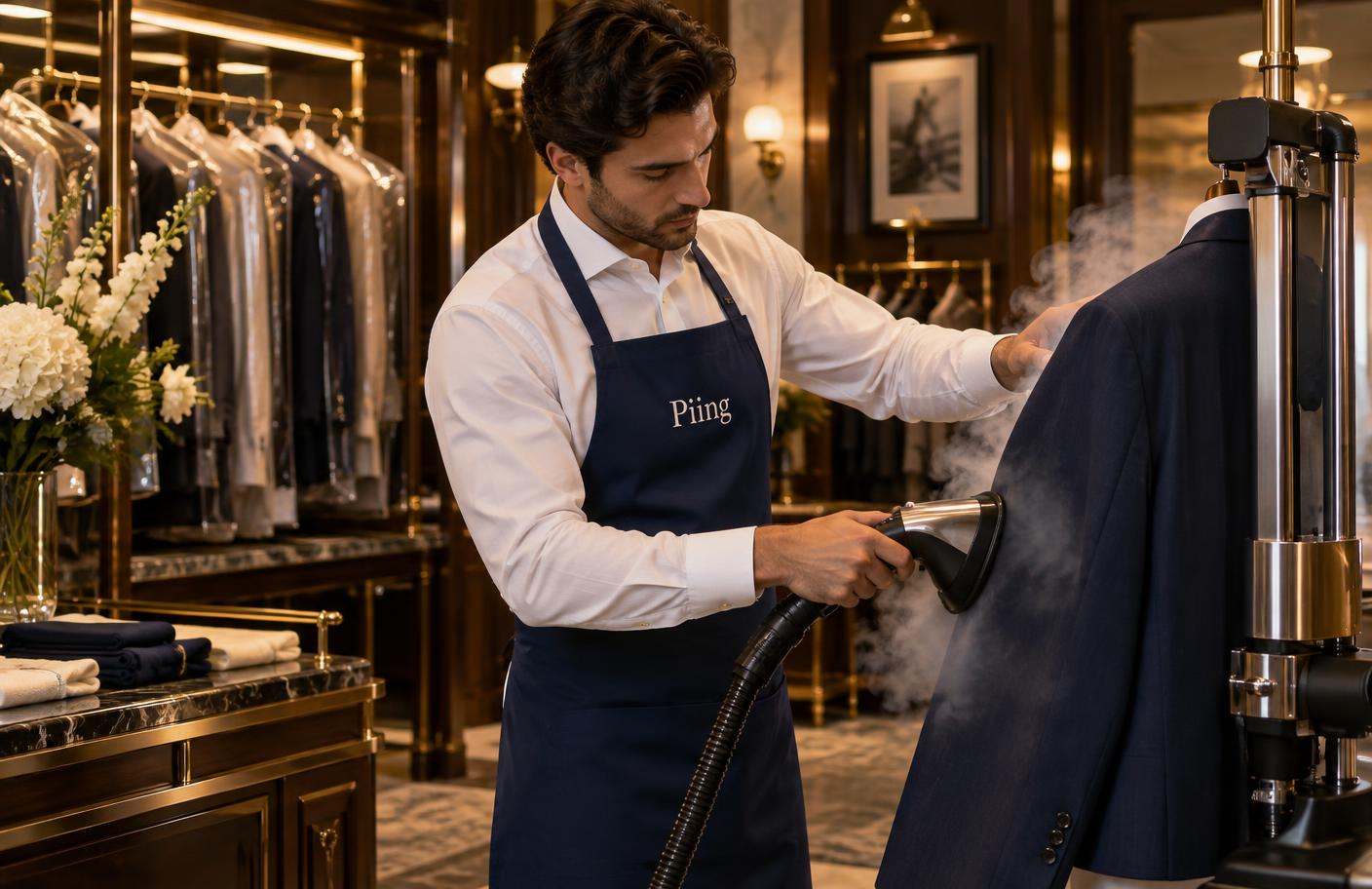
Hand finishing rebuilds a garment's shape — something no home iron can replicate.
Ask anyone who has switched to premium dry cleaning what sold them, and they rarely mention the cleaning. They mention the finish. A professionally pressed shirt has a crispness a home iron cannot produce. A suit returns with its lapels rolled, not flattened; its shoulders shaped, not creased. Dresses come back on shaped hangers in breathable garment bags, ready for the wardrobe.
This is because premium finishing is a craft: steam forms, hand irons, and pressing equipment designed for each garment type — operated by people who do nothing else. It is the difference between clothes that are clean and clothes that look newly tailored.
Cost vs Value: The Real Arithmetic
Dry cleaning costs more per piece — that part is true. But the honest comparison is not cleaning price vs cleaning price; it is cleaning price vs replacement price. A $400 blazer laundered twice in a washing machine is a $400 loss. The same blazer dry cleaned a few times a year will look sharp for a decade. A silk dress that keeps its colour and drape for years costs less per wear than a "saved" cleaning fee that ruins it in an afternoon.
Premium care is not a luxury tax on nice clothes. It is the maintenance plan that makes nice clothes worth buying.
The Singapore Wardrobe Rule
Singapore's climate makes the split even more important. Heat and humidity mean sweat and body oils soak into garments daily — exactly the stains water handles poorly and solvent handles best. Meanwhile, air-drying delicate pieces indoors risks the musty smell that slow drying brings. A simple rule serves most wardrobes well:
- Anything structured, tailored, silk, wool or embellished — professional dry cleaning, always.
- Business shirts and workwear — professional wash and press for a polished finish.
- Casual cottons, activewear, towels and bedding — regular laundry, cold and gentle.
- When in doubt, read the care label — and when the label says dry clean only, believe it.
- Never experiment on a piece you love — the first wash is where irreversible damage happens.
Frequently Asked Questions
Is dry cleaning actually better than washing?
For delicate, structured or tailored garments, yes — it cleans without the water and agitation that damage them. For everyday cottons, towels and bedding, regular laundry is genuinely the better tool. Neither is universally superior; each is right for its fabrics.
How often should I dry clean a suit?
Less often than most people think — every three to five wears, or when it is stained or smells. Between cleans, air it after wearing, brush it down and use a steamer for light wrinkles. Over-cleaning wears fabric too.
Can I hand wash "dry clean only" items instead?
Occasionally, with great care, for simple silk or knit pieces — but never for tailoring, pleats, linings or embellishment. The label exists because the garment's construction, not just its surface fabric, cannot handle water.
Why do my shirts look better from the cleaner than from my iron?
Professional pressing uses steam forms, vacuum boards and commercial presses that shape fabric rather than just flatten it. A home iron presses a shirt flat; a professional press rebuilds it.
Is dry cleaning safe for sensitive skin?
With a premium provider using modern eco-friendly solvents, yes — garments are thoroughly dried and aired before return, leaving no residue. If you have sensitivities, mention them when booking so extra care can be taken.

A wardrobe cared for by Piing is always ready for the room you walk into.
The Verdict

A wardrobe that lasts decades is built on choosing the right care for every piece.
So what is the real difference? Regular laundry cleans clothes. Premium dry cleaning preserves them. One keeps your everyday essentials fresh and hygienic; the other protects the pieces that carry your wardrobe — and your image. The smartest approach is not choosing one over the other, but giving every garment the care its fabric demands.
Piing handles both under one roof: expert dry cleaning for your finest pieces, professional wash and press for the everyday — collected from your door, tracked live, and returned perfectly finished. Pickup & delivery across Singapore
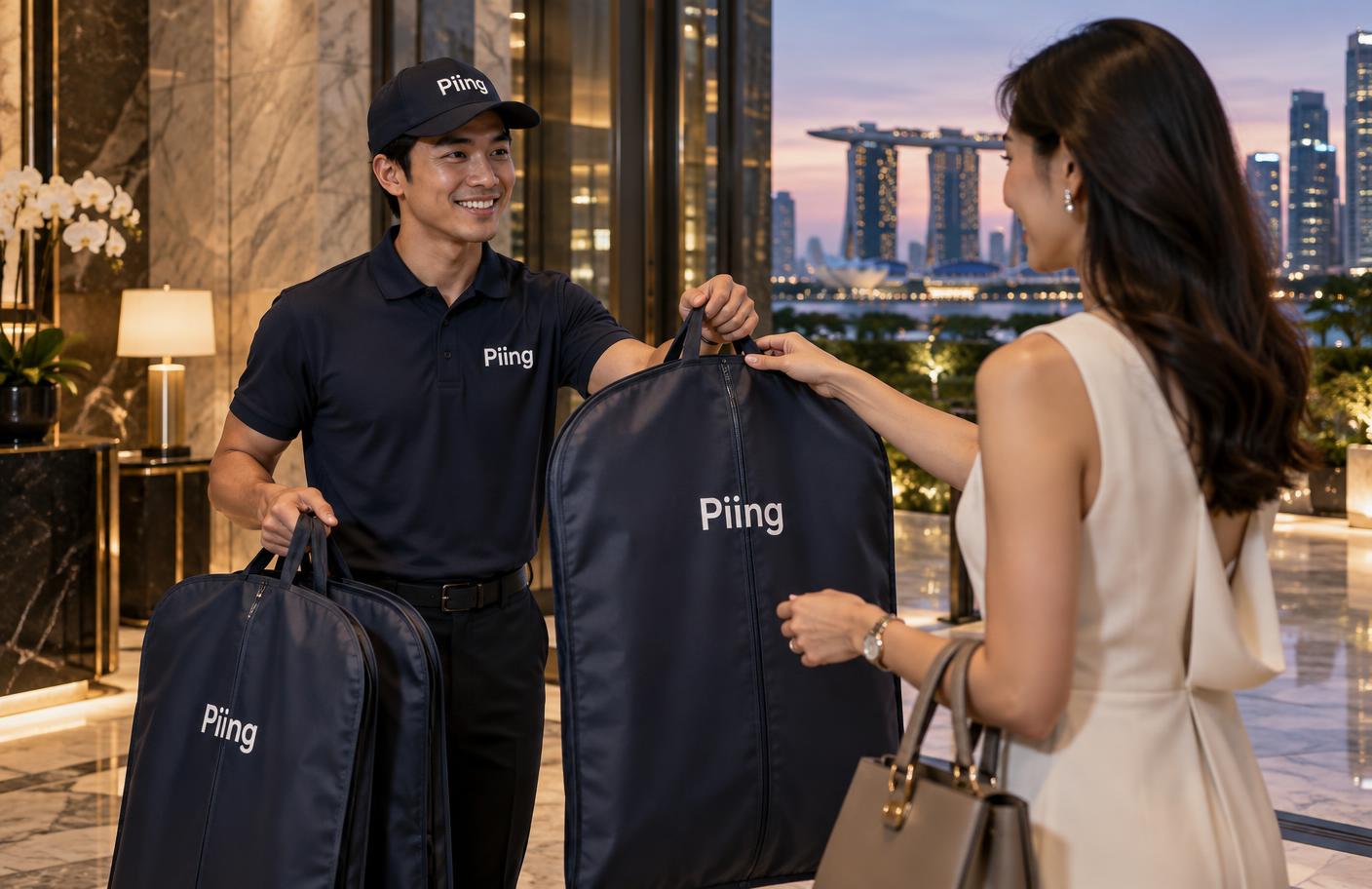
From your door to our facility and back — without you lifting a finger.
Let Piing! handle the laundry and dry cleaning. Book a pickup and get your clothes collected, cleaned and delivered across Singapore — no store visits, no hassle.
Book a Pickup →