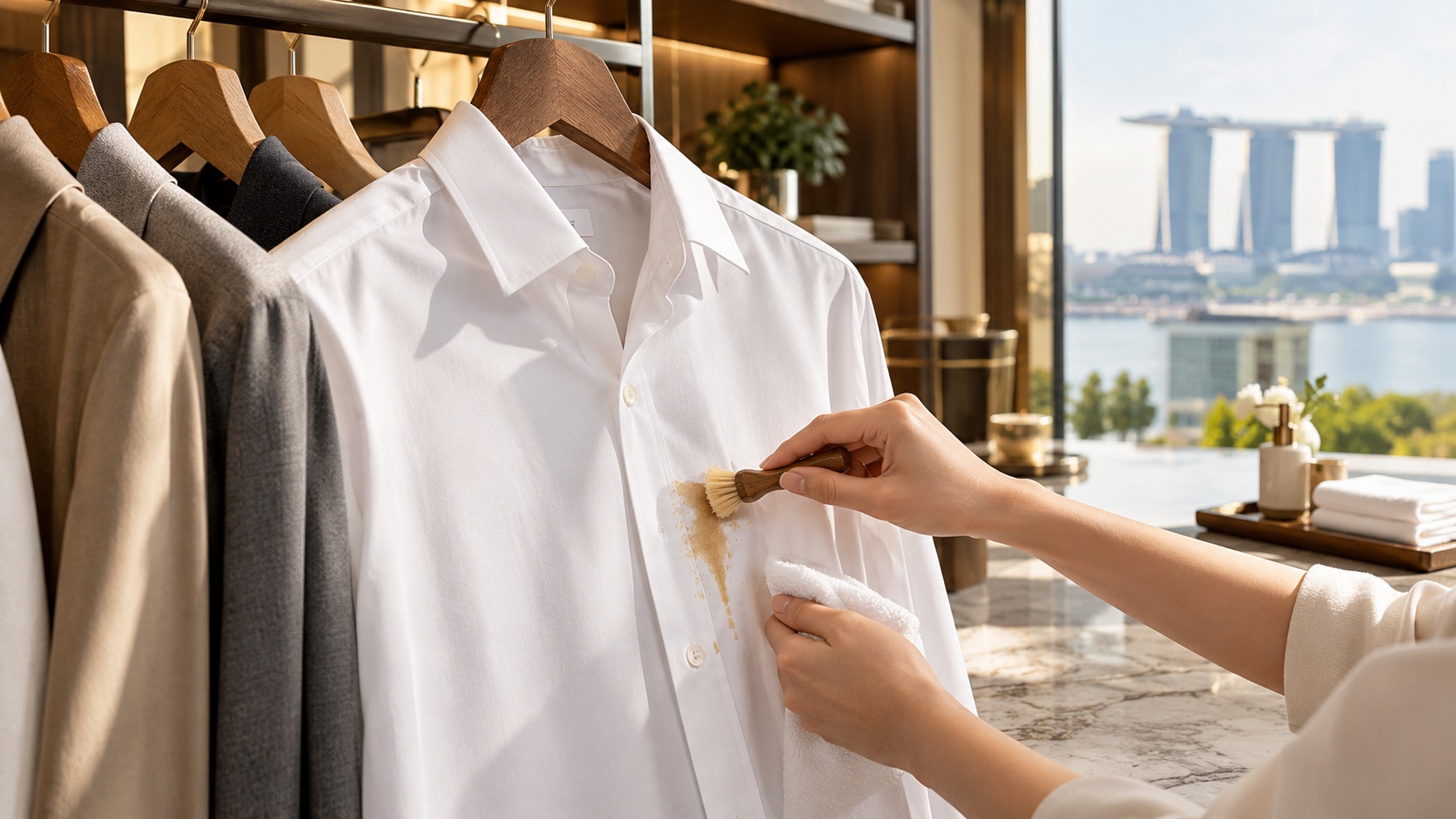
One coffee splash, a drop of red wine or a swipe of foundation can change the look of a beautifully finished outfit in seconds. In a polished Singapore wardrobe—where silk, linen, tailored pieces and occasionwear may sit alongside everyday favourites—the goal is not to scrub harder. It is to respond intelligently before the stain settles into the fibre.
Coffee on a crisp white shirt, lipstick on a collar, curry on linen, ink on a cuff or red wine on an evening outfit each calls for a different approach. The safest first move is to identify the stain, protect the fabric and choose the gentlest effective treatment the garment can tolerate.

This guide covers the stains most likely to appear in a refined everyday wardrobe, from coffee and wine to makeup, blood, ink, oil, food and perspiration. It also explains when a home treatment should stop—especially for silk, cashmere, tailoring, embellishment and other high-value pieces.

Before You Touch the Stain
Resist the instinct to reach for the strongest cleaner you own. Start with these quiet checks:
- Lift solids gently. Use the edge of a spoon or a blunt card for food, wax or dried residue. Do not scrape aggressively.
- Blot liquids. Use a clean white cloth or paper towel and press from the outside toward the centre. Avoid rubbing.
- Read the care label. If the piece says dry clean only, contains delicate embellishment, or has a structured construction, home experimentation can be risky.
- Remember what you already used. Tell a professional cleaner whether you applied soap, bleach, alcohol, vinegar or another product. Residues can change what happens next.
The Universal Stain-Removal Method
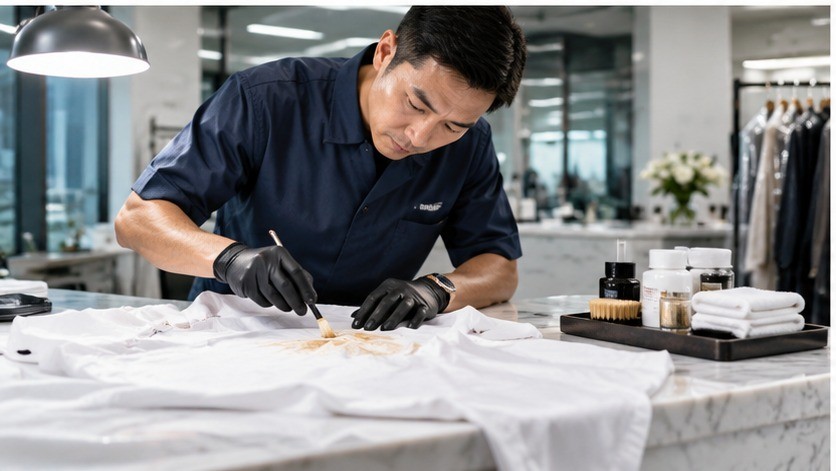
For many washable garments, a calm four-stage process is safer than a cupboard full of stain removers.
1. Remove excess.
Lift anything sitting on the surface before adding liquid.
2. Blot.
Use a clean white absorbent cloth. Change to a clean area as the stain transfers.
3. Treat according to the stain.
Water-based spills, oils, cosmetics and protein stains do not all respond to the same chemistry.
4. Wash only after the mark has improved.
Follow the garment label and inspect the stain before tumble-drying or applying heat.

Common Stains, One by One
The right response depends on what caused the mark. Here is a practical starting point for common wardrobe stains.
Coffee & Tea
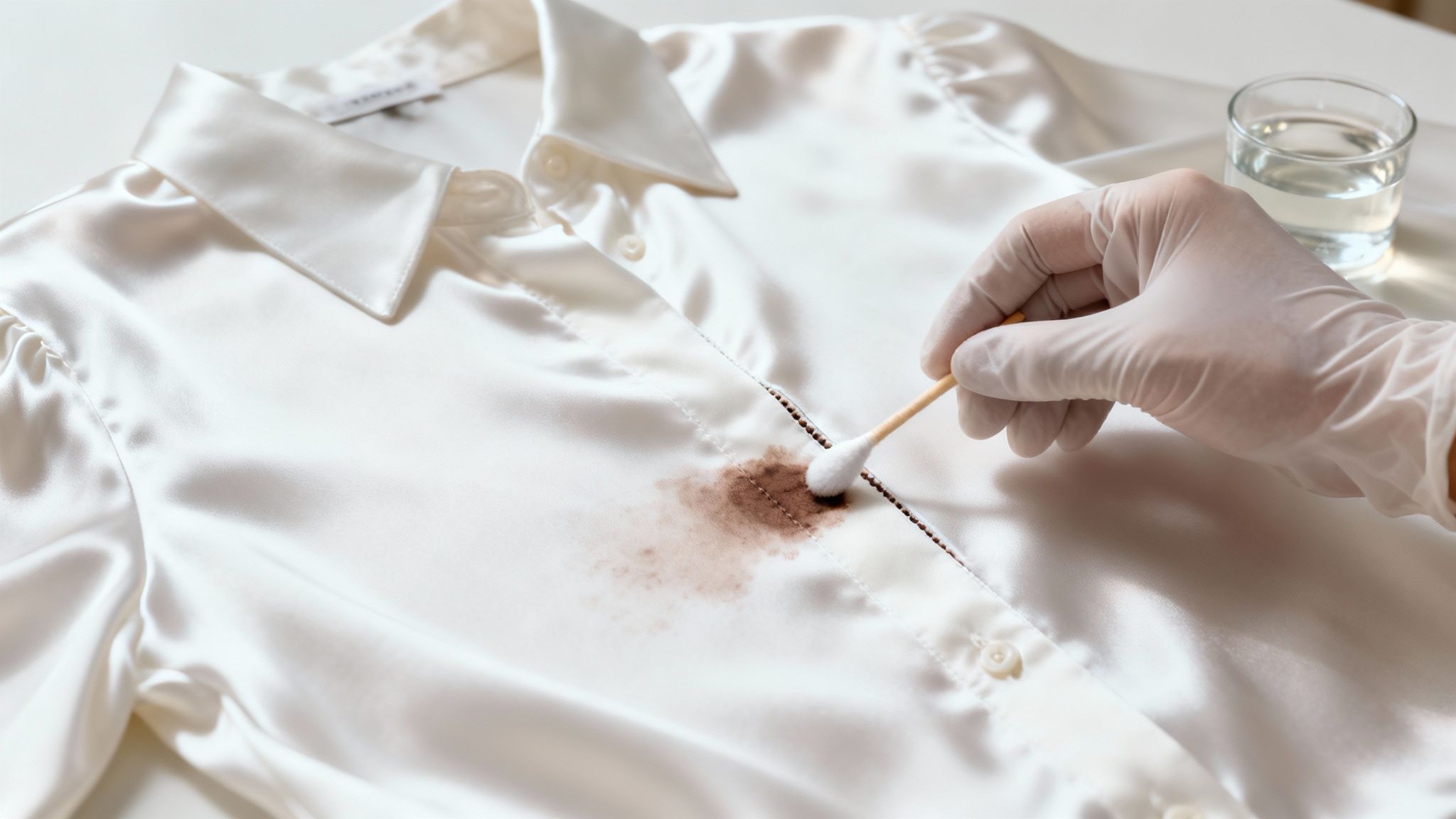
Blot quickly. For a washable, colourfast garment, rinse with cool water from the reverse side and use a small amount of liquid detergent if the label permits. Avoid heat until the mark is gone.

Red Wine
Blot rather than rub. Avoid experimenting with salt, bleach or hot water on valuable garments. For silk, tailored pieces or dry-clean-only items, professional treatment is the safer route.

Makeup & Foundation
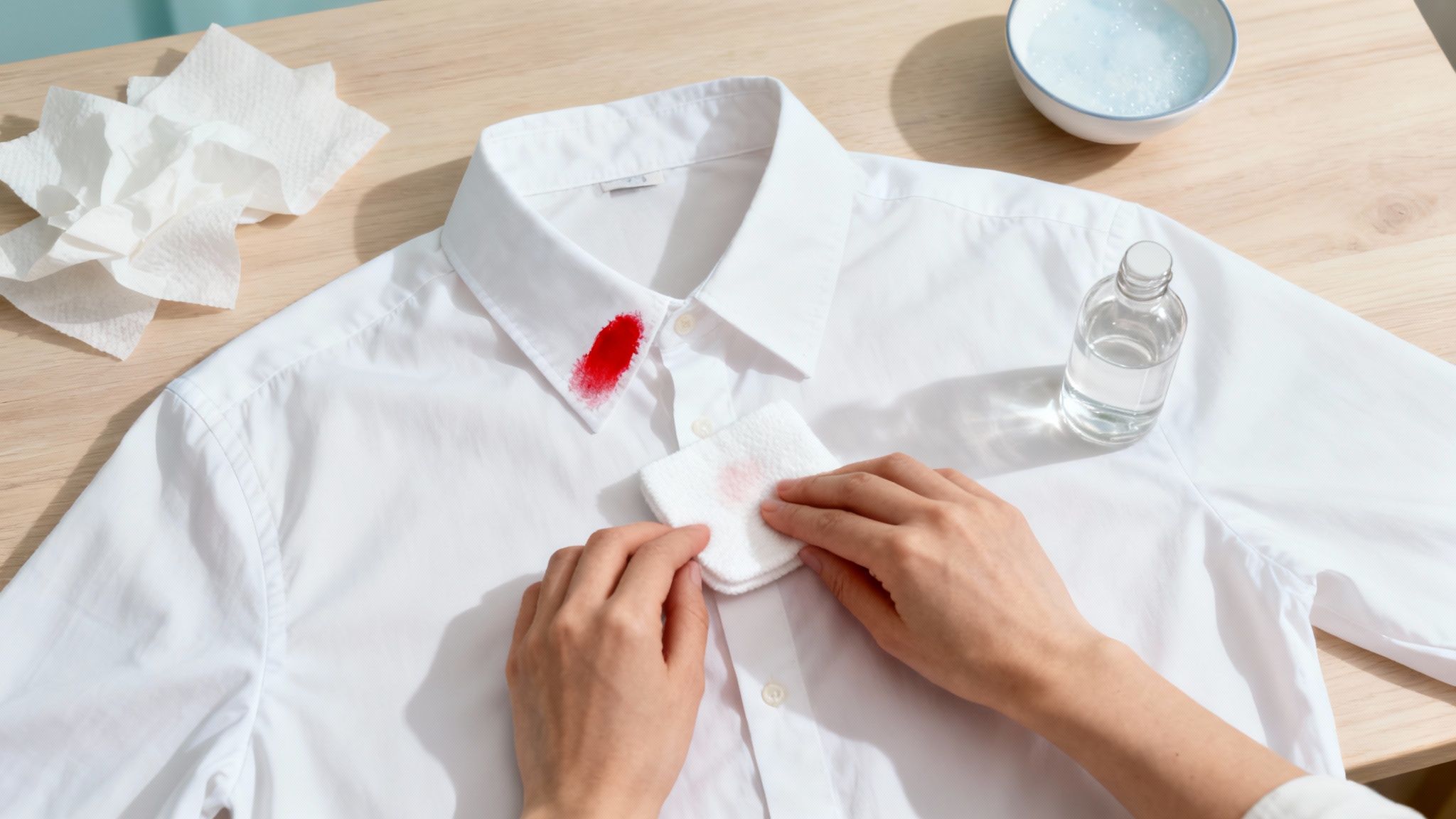
Cosmetics often contain oils and pigments. Lift excess product first, then use a small amount of suitable detergent or a professional stain treatment according to the fabric label. Do not grind makeup into the fibres.
Blood
For washable fabrics, use cool water and avoid hot water, which can set protein-based stains. If the garment is delicate, valuable or colour-sensitive, stop and seek professional care.
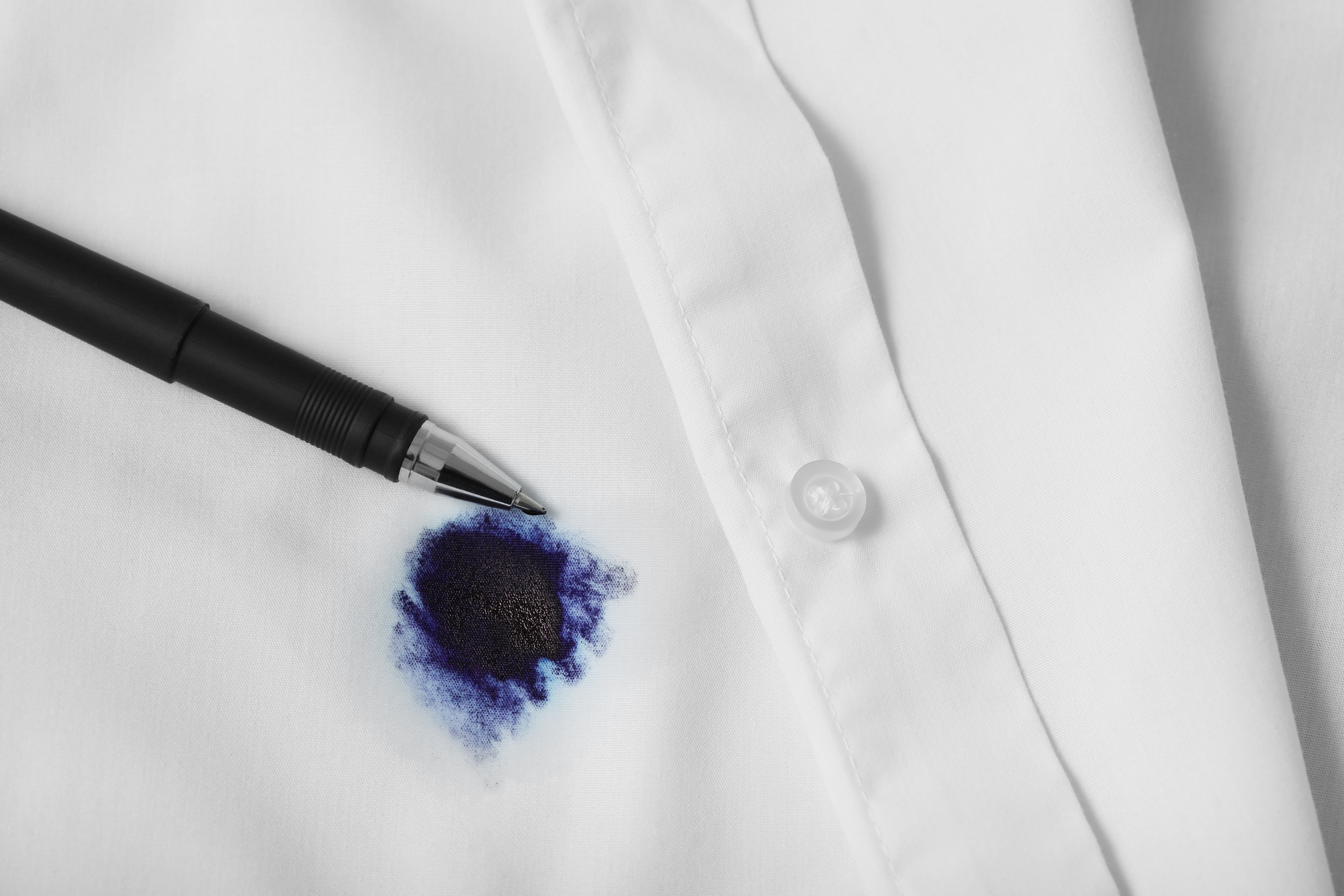
Ink
Ink chemistry varies considerably. Blot and isolate the stained area; avoid spreading it with vigorous rubbing. Test any solvent treatment only where the care instructions and fabric allow it, or use professional stain treatment.
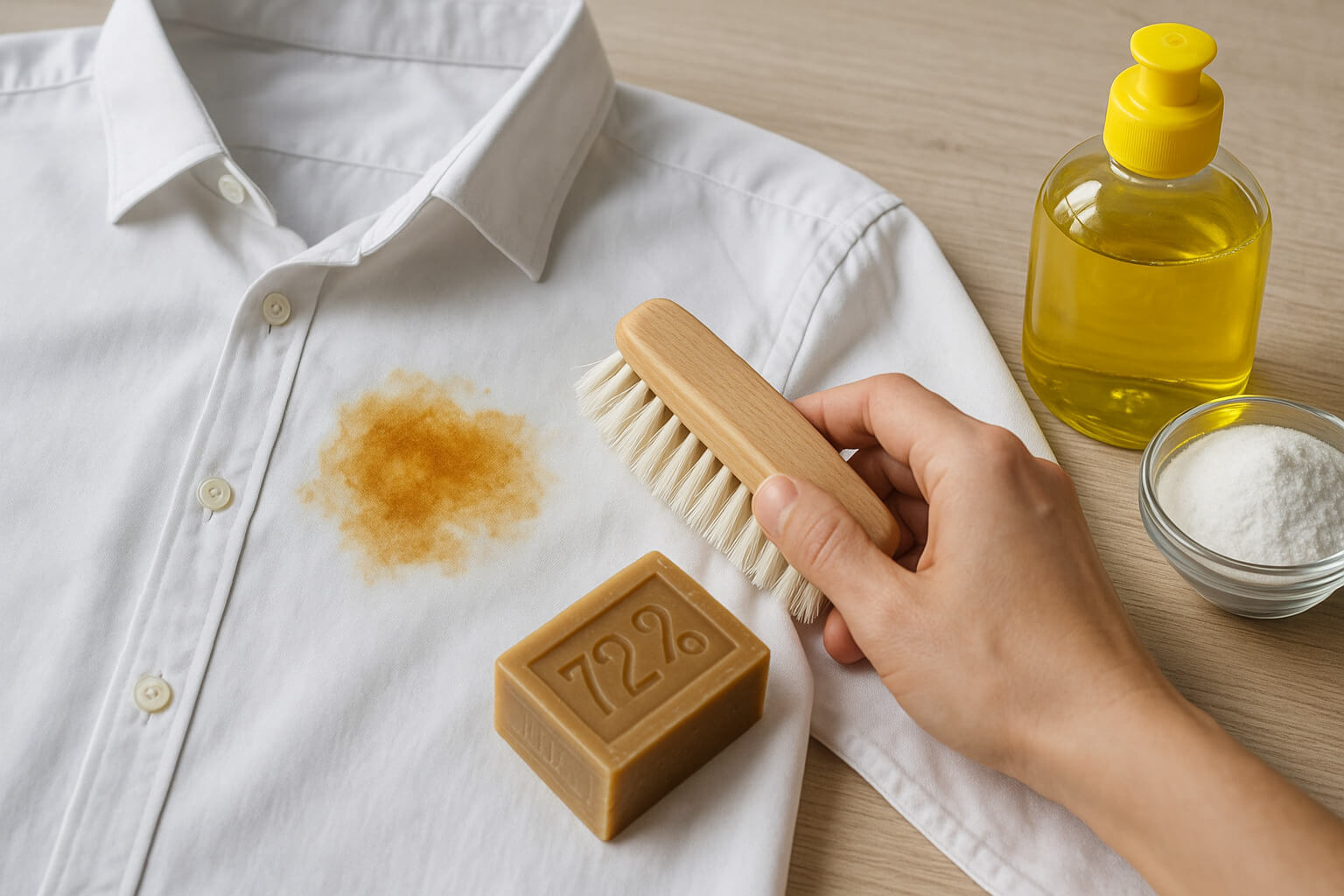
Oil & Grease
Lift excess oil without rubbing. A suitable detergent can help on washable, colourfast fabrics, but oily marks on silk, wool, tailoring and other sensitive garments are better assessed professionally.
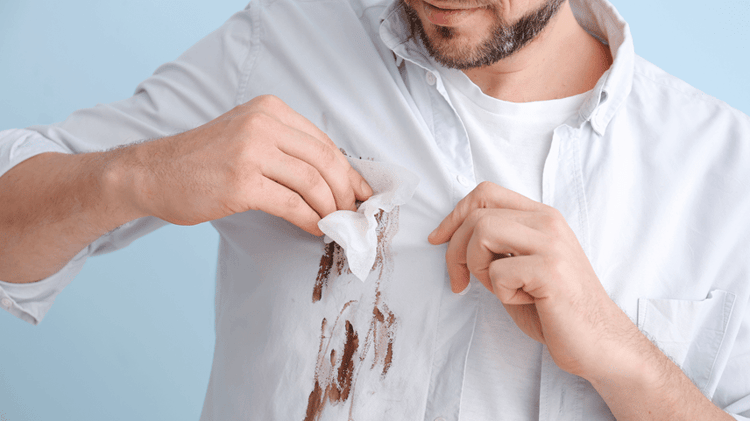
Food & Curry
Remove solids, blot moisture and treat promptly. Strong pigments can be stubborn, so do not keep escalating the chemicals if the first gentle treatment does not work.

Sweat & Deodorant
Treat yellowing before heat. Use a label-approved laundry treatment and wash according to the garment instructions; persistent discolouration may need professional stain care.
When Fabric Changes the Rules
A stain is only half the problem. The same mark can be straightforward on cotton and risky on silk, wool, satin or a structured jacket. The garment construction and care label always come first.

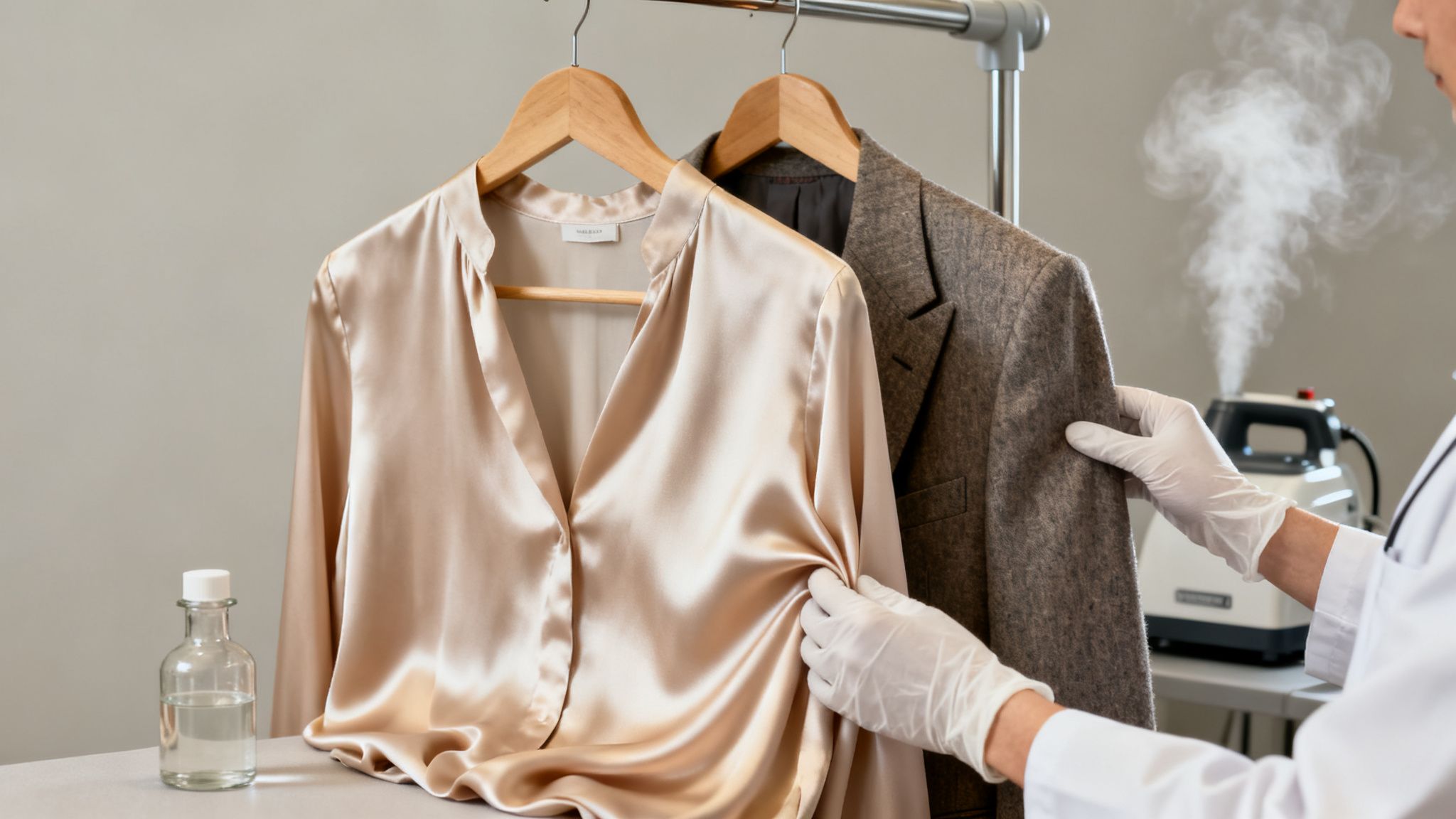
Silk & Satin
Avoid aggressive rubbing and uncontrolled water. A ring or colour change can be more visible than the original stain.

Wool & Cashmere
Keep heat and agitation under control. If the label calls for professional care, follow it rather than testing a home remedy.

Cotton & Linen
Usually more forgiving, but colourfastness, finish and stain chemistry still matter. Treat the mark before the normal wash.
Tailoring & Embellishment
Lining, interfacing, shoulder structure, glued trims and embellishments can react differently from the outer fabric. Professional assessment is often the sensible option.
What Not to Do
Most stain disasters are not caused by doing too little. They happen when several aggressive treatments are layered together.
Do not scrub hard.
Friction can spread pigment, roughen fibres and create a visible worn patch.
Do not pour bleach on an unknown fabric.
Bleach can damage dyes, fibres and finishes. Use only when the care label and product instructions explicitly allow it.
Do not mix cleaning chemicals.
Combining products can create unwanted reactions and makes professional diagnosis harder.
Do not iron over a stain.
Heat can set some marks and make future removal more difficult.
Do not keep repeating a failed home treatment.
If the stain is not improving, more product is not necessarily more effective.
Singapore Humidity & Stains
Singapore’s warm, humid conditions can make a small stain more troublesome. Perspiration, sunscreen, body oils and moisture can sit in fabric during a long day, while a damp garment left in a closed laundry basket can develop odour before you even notice the original mark.
A simple habit helps: treat visible marks early, allow worn garments to air when appropriate, and never assume a quick hot cycle will solve a stain that needs targeted treatment.
Frequently Asked Questions
Should I use hot water on stains?
Not automatically. Cool water is safer for many fresh marks, and heat can set some protein-based stains. Always follow the garment and stain-specific guidance.
Can I use dish soap on clothes?
A tiny amount may be suitable for some washable, colourfast oily stains, but it is not a universal fabric treatment. Rinse thoroughly and avoid improvising on delicate or dry-clean-only garments.
Should I use bleach on a white shirt?
Only when the garment and bleach product instructions permit it. White does not automatically mean bleach-safe.
What if the stain has already dried?
Do not panic, but do not attack it aggressively. Identify the stain, check the fabric label and use a controlled treatment or professional stain service.
When should I send a stained garment to Piing?
Piing says customers can flag stains during collection and the team will do its best to remove them, while noting that some stains cannot be guaranteed. Its FAQ also advises special care for delicate fabrics such as silk and embellished garments.
The Piing Approach to Stain Care
The best stain routine is not about owning more products. It is about making fewer mistakes: identify the mark, protect the fabric, avoid unnecessary heat and friction, and know when professional treatment is the better choice.
Piing’s current garment-care guidance says customers can flag stains during collection, while delicate fabrics such as silk and embellished clothing receive extra caution. Its FAQ also notes that dry cleaning is designed for fabrics that need extra care and cannot be washed or tumble-dried.
Let Piing! handle the laundry and dry cleaning. Book a pickup and get your clothes collected, cleaned and delivered across Singapore — no store visits, no hassle.
Book a Pickup →