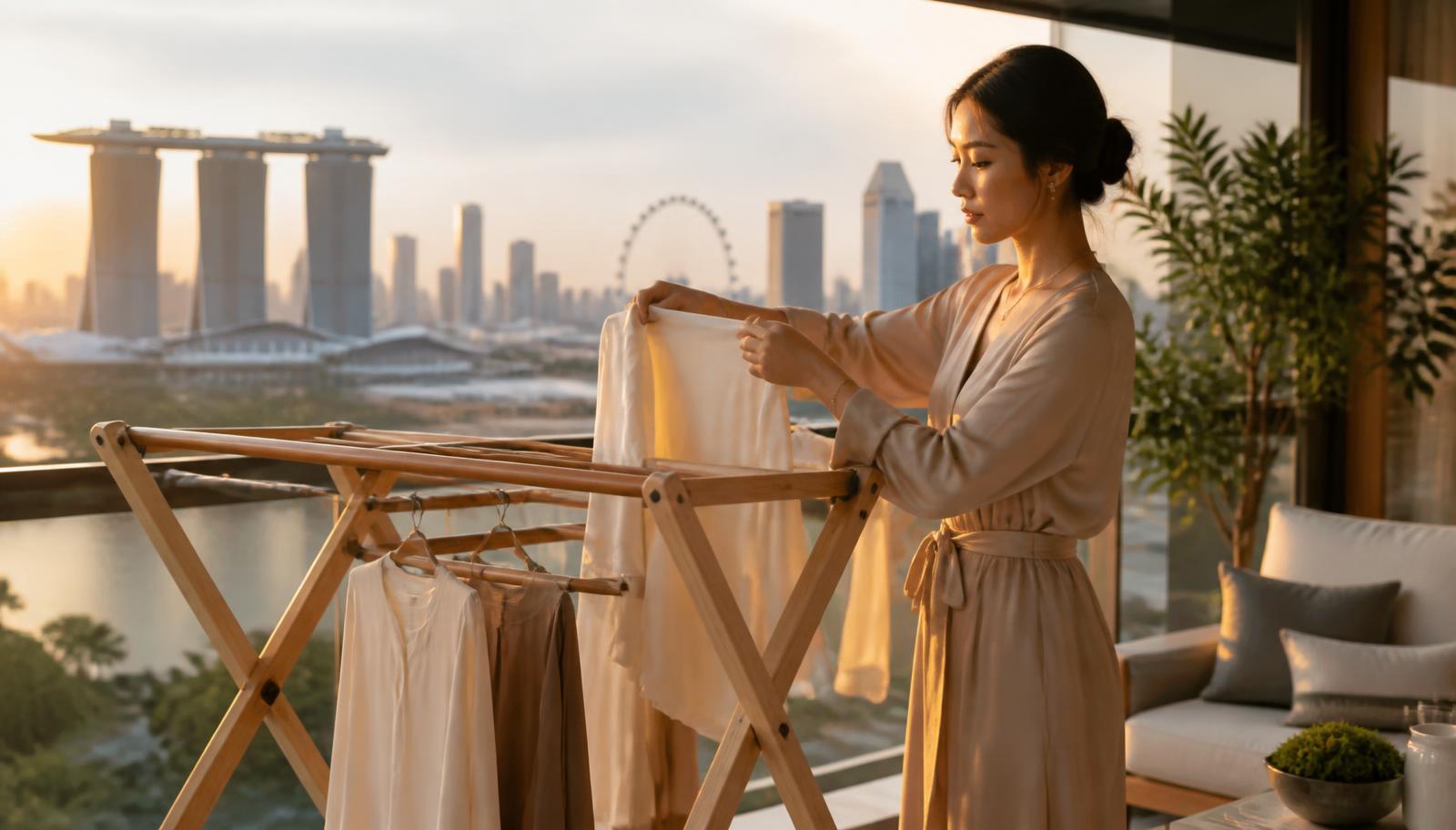
Here is a quiet truth the laundry industry rarely mentions: most garments do not wear out — they dry out. That cashmere sweater that lost its softness, the crisp shirt that went thin at the elbows, the black dress that faded to charcoal long before its time. In nearly every case, the washing machine was innocent. The damage happened afterwards, in forty-five minutes of tumbling heat.
Every load you dry is a choice between two very different futures for the same garment. One is fast, warm and convenient — and quietly taxes the fibres. The other is slow, gentle and nearly free — but demands a little patience and, in Singapore, a little strategy. This guide breaks down exactly what each method does to your clothes, which fabrics belong where, and how to get the best of both.
The Hidden Cost of Drying
Think about the lint filter in your dryer. That soft grey fluff you peel away after every cycle is not dust from the air — it is your clothing, physically stripped away fibre by fibre. Studies of tumble drying have shown that a single cycle can remove measurable mass from cotton garments, and that tumble-dried items can wear out up to twice as fast as air-dried equivalents.
Heat is the second tax. Elastane — the stretch fibre in everything from jeans to activewear to underwear — begins to degrade at dryer temperatures. Collar and cuff interlinings can bubble. Prints crack. Seams pucker. None of it is dramatic in one cycle; all of it compounds over fifty.
What Happens Inside the Dryer
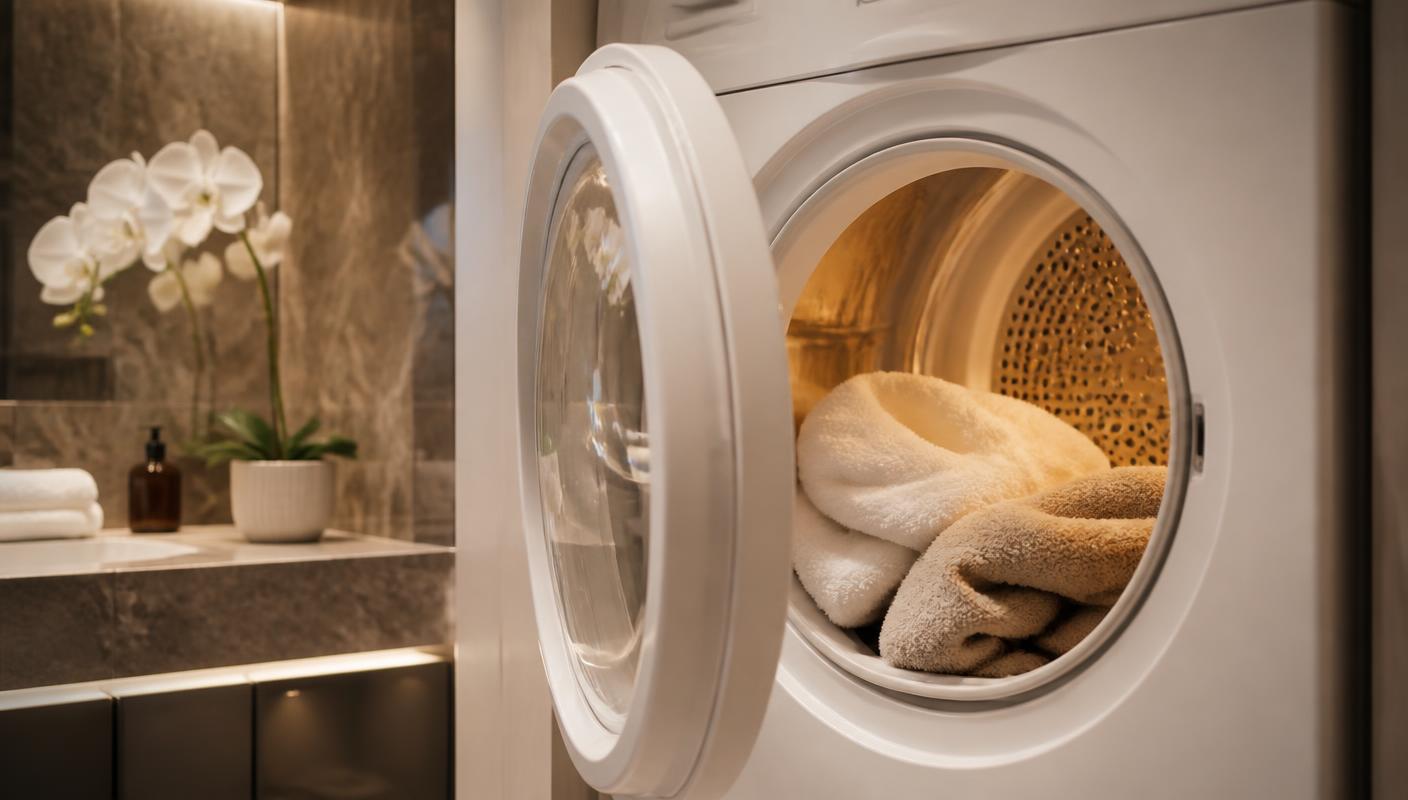
Convenient and fast — but every cycle costs your fabric a little of itself.
A tumble dryer attacks fabric from three directions at once:
- Heat. High temperatures weaken natural fibres, melt or distort synthetics, and permanently set any stain that survived the wash.
- Friction. Garments rub against each other and the drum for up to an hour. This is what causes pilling, surface fuzz and that thin, tired look on older t-shirts.
- Tumbling stress. Zips, buttons and seams catch and pull. Knitwear stretches, then the heat locks in the distortion.
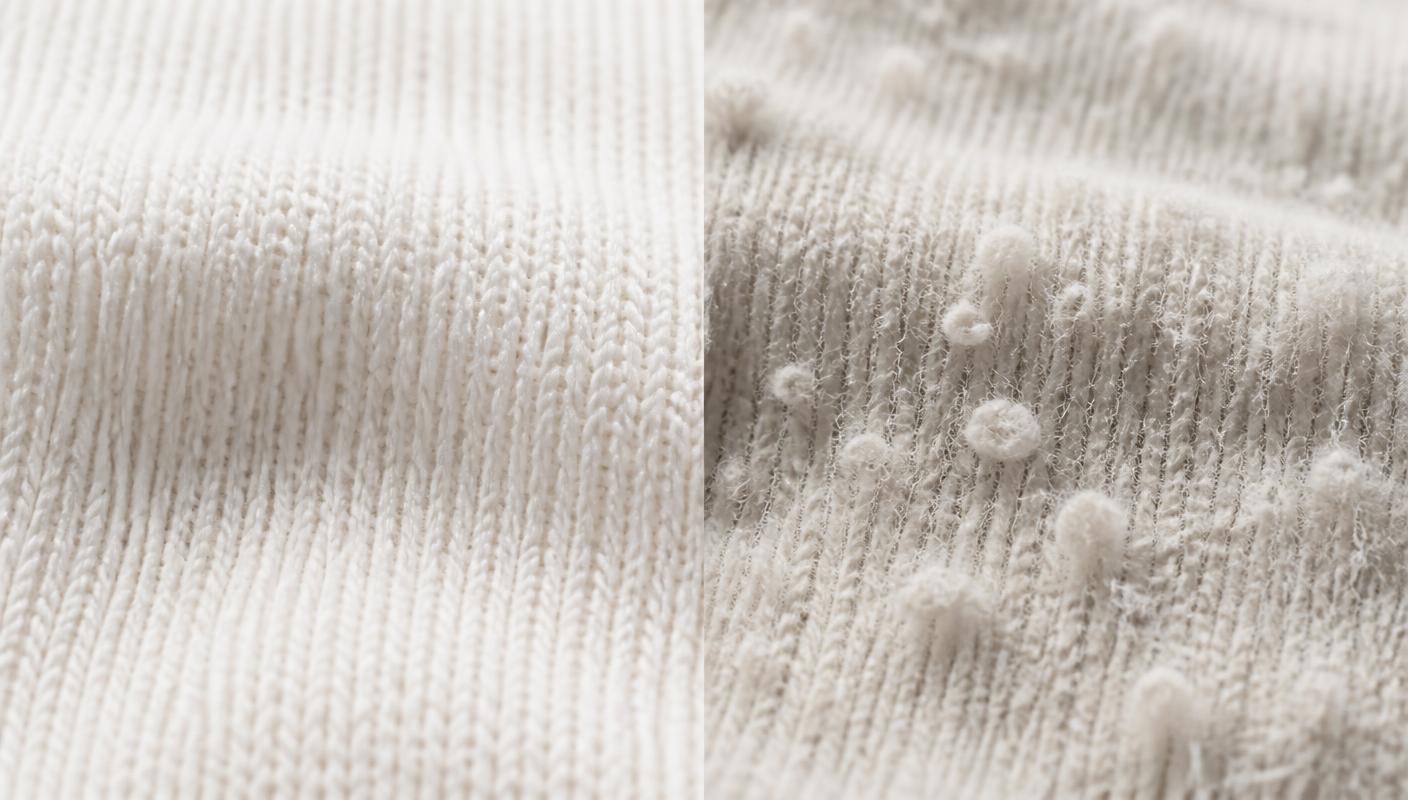
The same fabric, two different drying histories: pristine fibres on the left, dryer-worn pilling on the right.
The Case for Air Drying
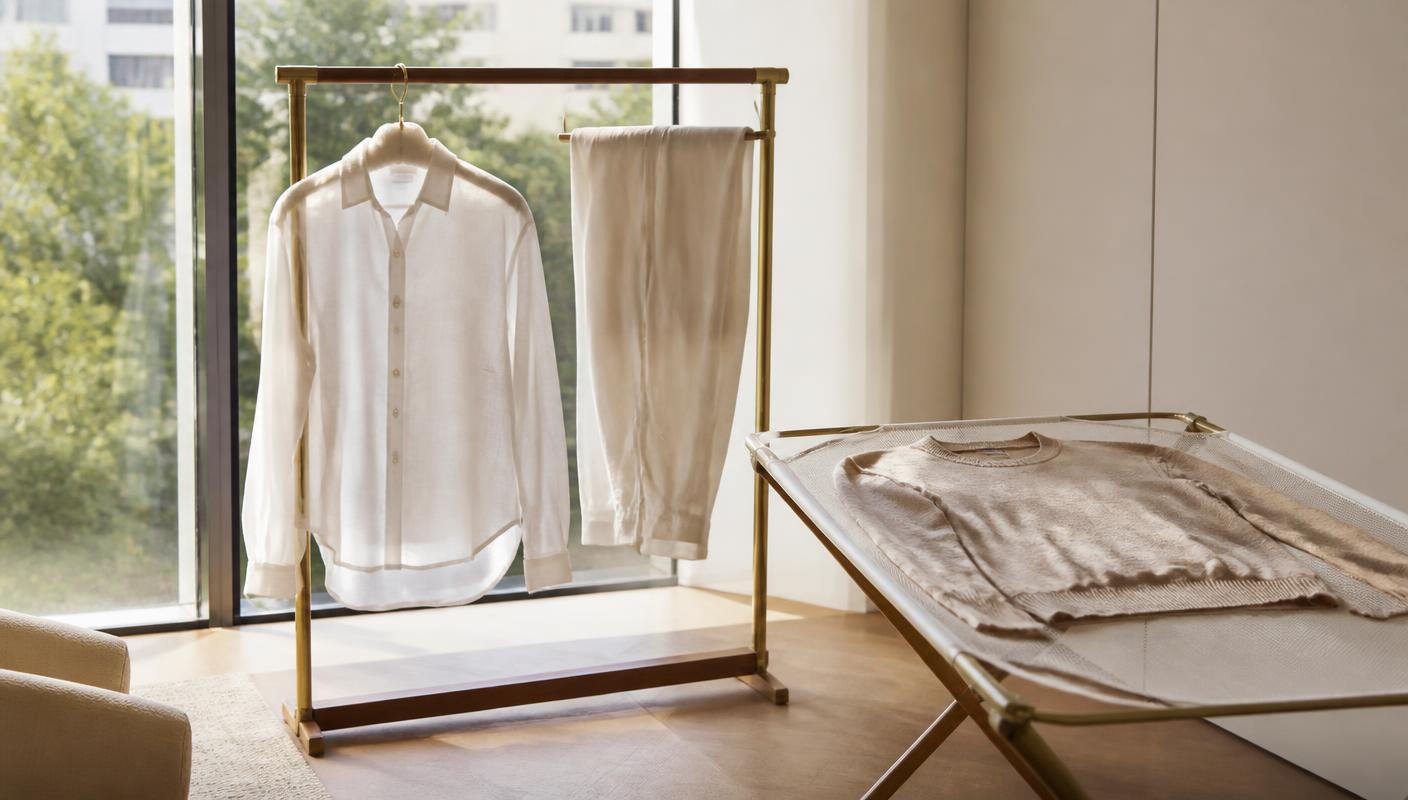
Hangers for shirts, flat mesh for knits — the two shapes of a good air-drying setup.
Air drying is the closest thing to a free lunch in garment care. No heat, no friction, no energy bill — just evaporation doing quiet work. The benefits are real:
- Garments last dramatically longer. Colours stay deep, fibres stay intact, and elastane keeps its snap.
- Shape is preserved. A shirt dried on a proper hanger keeps its shoulders; a sweater dried flat keeps its silhouette.
- It costs nothing. A dryer is one of the most energy-hungry appliances in the home. Air drying removes that cost entirely.
- Fewer wrinkles than you think. Hung promptly and smoothed by hand, many fabrics need little or no ironing.
The honest downsides: it is slower, it takes space, heavy items can stretch if hung badly, and in humid weather slow drying can invite a musty smell — which we will solve below.
Head-to-Head Comparison
| Factor | Air Dry | Tumble Dry |
|---|---|---|
| Fabric lifespan | Longest — minimal wear | Shorter — lint loss, pilling, fibre fatigue |
| Colour retention | Excellent, especially in shade | Fading accelerates with heat |
| Shrinkage risk | Very low | High for cotton, wool and blends |
| Softness (towels, bedding) | Can dry stiff | Fluffy and soft |
| Speed | Hours to a day | 30–60 minutes |
| Energy cost | None | One of the highest in the home |
| Humidity control | Adds moisture to the room | Removes it (vented) or collects it (condenser) |
| Wrinkles | Few if hung promptly | Many if left sitting in the drum |
Fabric by Fabric: Where Everything Belongs
Silk & Satin
Heat is silk's enemy — it dulls the sheen and weakens the fibre. Roll in a towel, then air dry in shade, away from direct sun.
Air dry onlyWool & Cashmere
Tumbling felts and shrinks knitwear irreversibly. Dry flat on a mesh rack, reshaped by hand, never hung.
Air dry flatCotton Shirts & Tees
Air drying keeps them looking new far longer. If you must tumble, use low heat and remove while slightly damp.
Air dry preferredTowels & Bedding
The dryer's natural home. Tumbling restores loft and softness that air drying cannot match. Medium heat, fully dry.
Tumble friendlyActivewear & Elastane
Dryer heat destroys stretch fibres. Air dry always — technical fabrics are thin and dry quickly anyway.
Air dry onlyLinen
Either works. Air dry for maximum life and crispness, or tumble on low and remove damp for a softer, relaxed finish.
Both, with careDenim
Air dry to preserve fit, colour and stretch. Turn inside out and hang by the waistband. Tumble only if you want shrinkage.
Air dry preferredTailoring & Suits
Never machine wash or tumble. Professional cleaning and finishing only — the structure inside a jacket cannot survive a drum.
Professional onlyWhen Tumble Drying Genuinely Wins
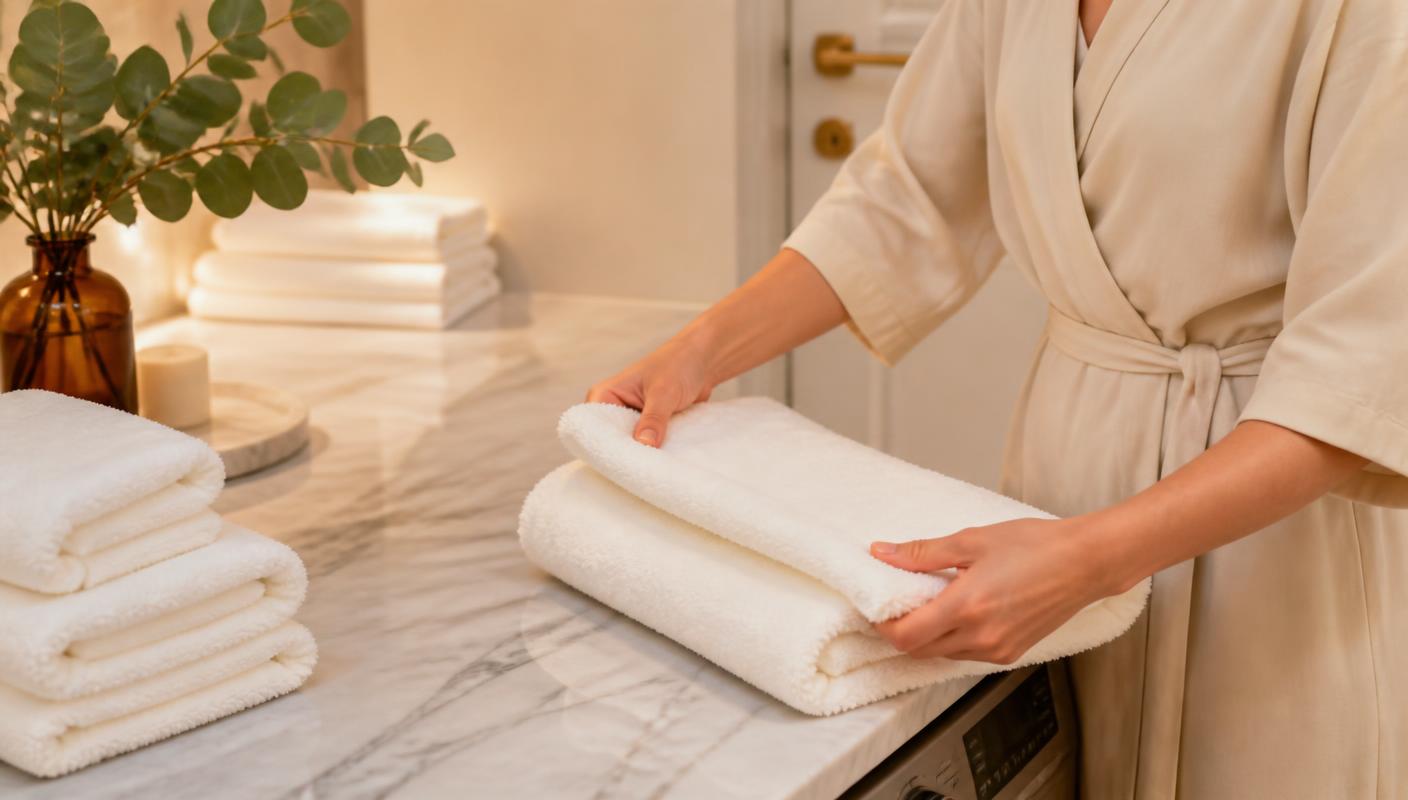
For towels and bedding, the tumble dryer earns its place — nothing else restores that loft.
The dryer is not the villain of this story — it is a specialist. Used deliberately, it is the right tool for:
- Towels and bath mats. Tumbling lifts the pile; air-dried towels turn stiff and scratchy.
- Bedding and doonas. Bulky items dry unevenly on a rack and can smell musty before they finish. The dryer finishes the job properly.
- Humid weeks. When the air is saturated and nothing dries indoors, the dryer prevents mildew and odour.
- Tight timelines. Sometimes tomorrow's shirt simply has to be ready tonight.
The Singapore Humidity Factor
In Singapore, air drying has one genuine adversary: the weather. With humidity routinely above 80%, a load that would dry in four hours elsewhere can still be damp at bedtime — and damp fabric is where that unmistakable musty smell is born. The fix is not the dryer; it is airflow:
- Spin twice. Run an extra spin cycle so clothes leave the washer as dry as possible.
- Dry near a window, fan or dehumidifier. Moving air matters more than heat.
- Give everything space. Garments touching each other dry at half the speed.
- Never dry in a closed bathroom. It is the most humid room in the home.
- Bring it in fully dry. "Almost dry" becomes "musty" overnight in this climate.
Seven Drying Habits of People Whose Clothes Last
- Read the care label first — the square-with-circle symbol is the drying instruction, and it outranks every habit.
- Shake everything out before drying — thirty seconds of snapping fabric saves twenty minutes of ironing.
- Hang shirts from the hem, knits flat, trousers folded over the bar or clipped by the cuff.
- Keep colours out of direct sun — UV fades dyes faster than any dryer.
- Use low heat as the default on the dryer; high heat is for towels and bedding only.
- Remove clothes the moment the cycle ends — wrinkles set in a cooling heap.
- Hand the precious pieces to professionals — silk, cashmere and tailoring deserve expert care.
Frequently Asked Questions
Does air drying make clothes stiff?
It can, especially towels and denim, because the fibres dry without being agitated. A five-minute no-heat tumble at the end, or a quick shake and hand-smooth before hanging, removes most stiffness.
Is tumble drying always bad for clothes?
No — it is simply a trade. For sturdy items like towels, bedding and basic cottons, low-to-medium heat is perfectly reasonable. It is heat plus time plus delicate fabric that does the damage.
How do I dry clothes fast without a dryer in Singapore?
Extra spin cycle, maximum spacing, and a fan or dehumidifier pointed at the rack. Most lightweight pieces dry in three to four hours with moving air.
Why do my air-dried clothes smell musty?
They dried too slowly, so mildew began before the water left. Speed up drying with better airflow, and never leave wet laundry sitting in the machine.
Can I tumble dry "dry clean only" items on air-fluff?
We would not. Even without heat, tumbling stresses seams, linings and embellishments. Silk, suits and structured pieces should go straight to a professional.
The Verdict

A wardrobe that lasts is built one careful drying decision at a time.
So which is actually best? Air drying is best for your clothes; tumble drying is best for your schedule. The winning strategy is not choosing one — it is assigning each garment to the method it deserves. Everyday cottons and delicates go on the rack. Towels and bedding go in the drum. And the pieces you truly love — the silk, the cashmere, the tailoring — go to people who do this for a living.
Piing picks up, cleans and dries every garment exactly the way its fabric demands — then delivers it back, ready to wear. Pickup & delivery across Singapore
Let Piing! handle the laundry and dry cleaning. Book a pickup and get your clothes collected, cleaned and delivered across Singapore — no store visits, no hassle.
Book a Pickup →