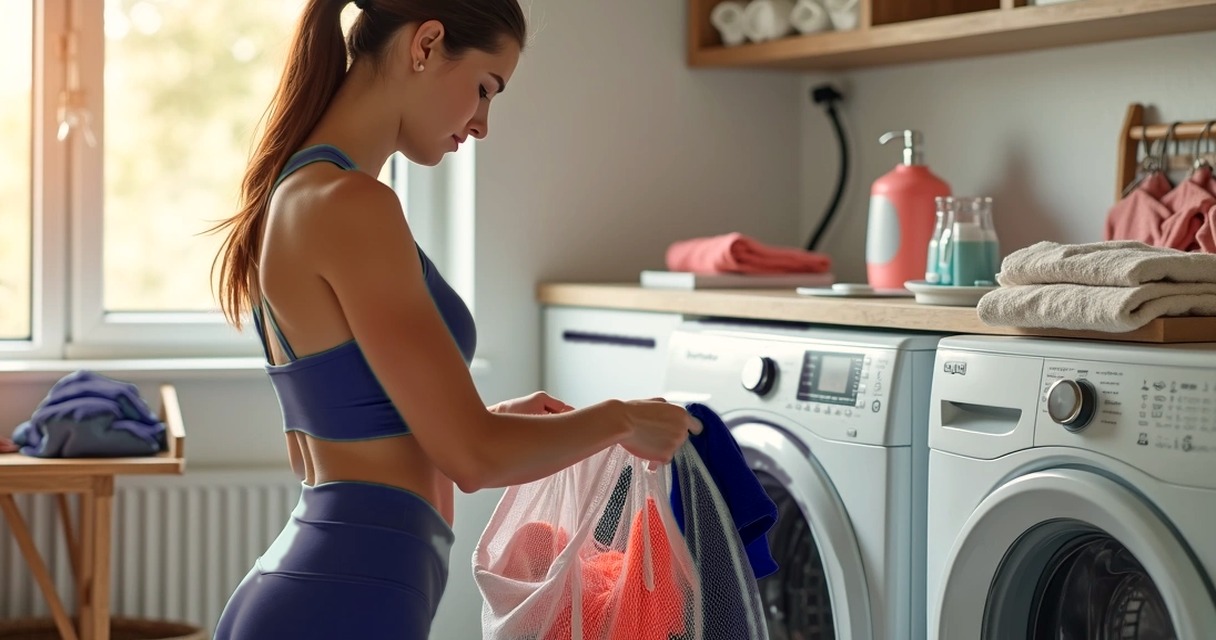
There is a particular kind of embarrassment in lifting a gym top out of the wash and finding it still smells of the last session. You have used good detergent and a proper cycle, and yet the moment you sweat again the odour returns, as if the garment had been storing it up for the occasion.
The reassuring part is that this is almost always fixable. Sweat smell is a build-up problem rather than a cleanliness problem, and build-up responds well to the right sequence: act early, soak, wash gently and dry completely. This guide explains why activewear holds odour, the method that releases it, which fabrics can be treated at home and which belong in expert hands.
Why Activewear Holds Odour
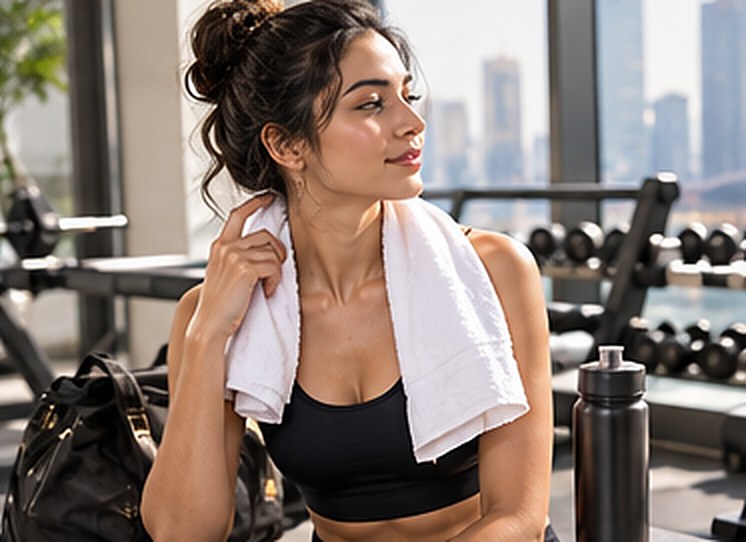
Heat, humidity and a closed gym bag: the conditions odour loves.
Fresh sweat is mostly water and salts and has very little smell of its own. The odour appears when bacteria on the skin and fabric feed on sweat and body oils and release smelly by-products. The longer a damp garment sits, the more they multiply, and the harder the smell is to wash out.
Fabric makes a difference. Most performance wear is polyester or another synthetic, which repels water but attracts oils. Body oils settle into the fibres where an ordinary wash struggles to reach them, and the smell is released again as soon as the garment becomes warm and damp. That is why a top can seem fine when dry and smell unmistakably once you start to sweat.
Singapore adds its own variables. In constant heat and humidity, you sweat more, kit dries more slowly, and a gym bag zipped shut on a damp towel is practically an incubator.
Know the Smell Before You Treat It
Different smells point to different causes, and the right first move follows from the cause. Use this table as your starting point.
| The smell | Likely cause | First move | Avoid |
|---|---|---|---|
| Sour or musty | Stored or bagged while damp | Wash today; add a vinegar soak | Drying the smell in |
| Sharp, almost ammonia-like | Sweat proteins broken down by bacteria | Cool detergent pre-soak, then wash | Skipping the pre-soak |
| Returns once you sweat again | Body oils or residue held in synthetic fibres | Vinegar or baking-soda soak; no softener | Fabric softener; too much detergent |
| Stiff or yellowed underarms | Antiperspirant and sweat residue | Detergent paste and a soft brush | Chlorine bleach |
| The gym bag itself | Damp items, towels and shoes | Empty, wash as labelled, air thoroughly | Zipping it shut while damp |
Your Odour Kit: Five Things Worth Keeping
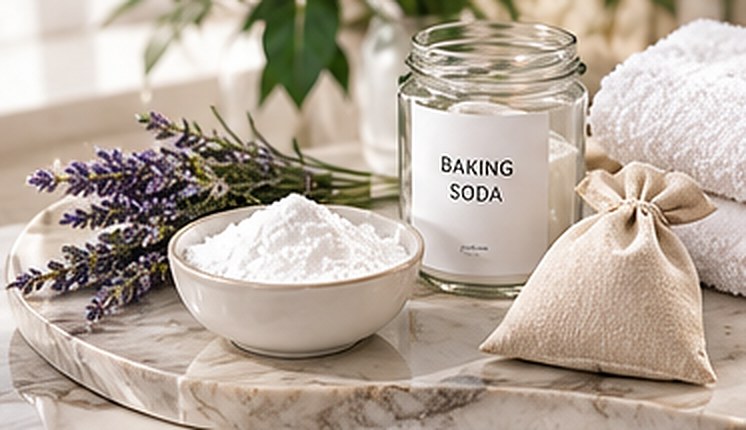
Baking soda, a soft brush and a few simple staples handle most gym-kit odours.
You do not need a cupboard of specialist products. A small, deliberate kit handles the vast majority of sweat-smell problems:
- A mild sports or enzyme-based detergent. It breaks down sweat proteins and body oils. Choose one that is suitable for technical fabrics.
- White vinegar. A gentle acid that helps loosen odour-causing residue. Use it diluted and occasionally, and rinse well.
- Baking soda. A mild alkali that is an alternative to vinegar, never an addition to it.
- A soft-bristle brush. Soft enough to work detergent into underarms and bands without roughing the fabric.
- Odour-absorbing sachets and a breathable bag. For prevention rather than cleaning: they keep kit fresh between sessions.
The Wash Method: Soak, Scrub, Wash
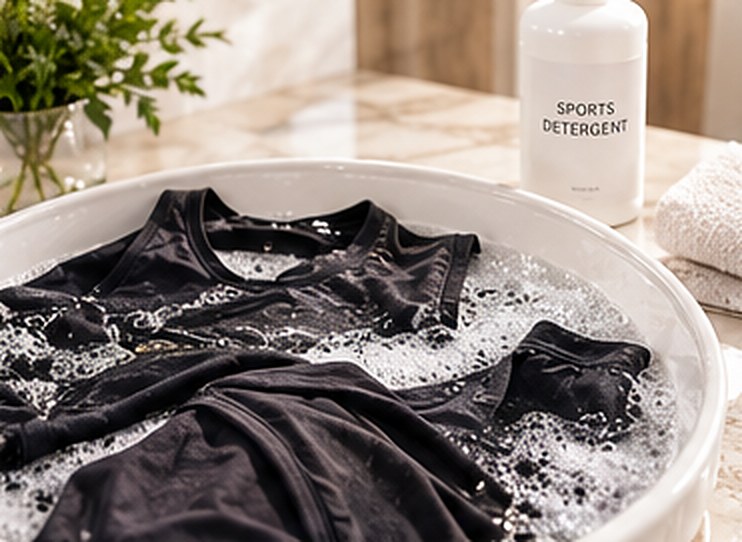
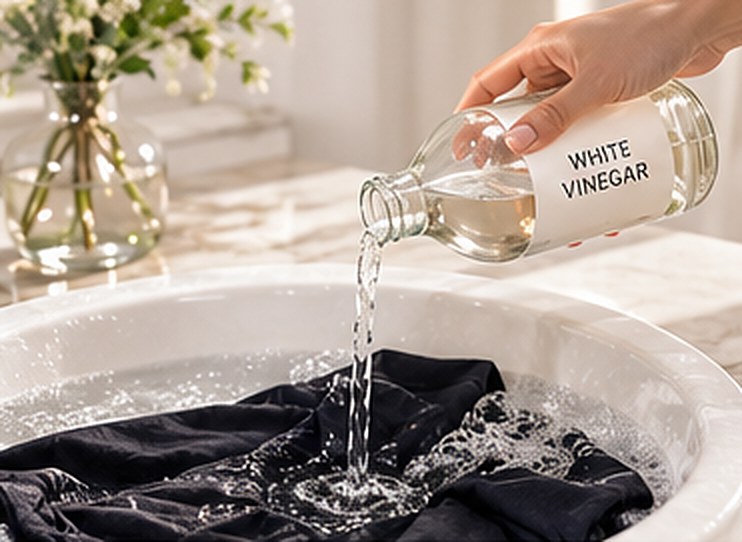
The principle is to release the odour from the fibres before the wash, rather than hoping the cycle will do it all. Work in this order:
- Air it out straight away. Take the kit out of the bag the moment you get home, turn it inside out and hang it somewhere with airflow until it goes in the wash.
- Pre-soak in cool water with detergent. Thirty to sixty minutes in a basin lets the detergent reach sweat proteins and oils. Swirl gently once or twice.
- Work the hot spots. With a soft brush, gently work a little detergent into underarms, necklines, waistbands and sports-bra bands.
- Add a vinegar or a baking-soda soak. Choose one. About a cup of white vinegar, or about half a cup of baking soda, in a fresh basin of cool water for around thirty minutes.
- Wash inside out. Follow the care label (often 30 to 40°C), measure the detergent, do not overload the drum and add an extra rinse. Skip fabric softener.
- Smell-test before drying. Sniff the garment while damp. If any odour remains, repeat the soak before heat can set it.
- Dry completely with good airflow, as described in the drying section below.
When the Smell Returns After Washing
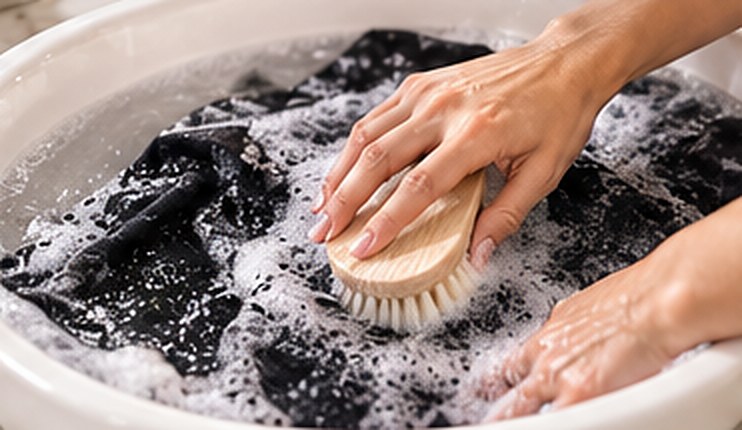
A soft brush and patience lift what a quick cycle leaves behind.
If a garment still smells after two rounds, the cause is usually build-up: body oils, antiperspirant and detergent residue layered into the fibres over many washes. Try this reset:
- Stop using fabric softener. It coats fibres, traps odour and reduces the moisture-wicking that performance fabrics are designed for.
- Check your dose. Too much detergent leaves residue that feeds bacteria. Measure carefully.
- Soak for longer. A longer cool soak in an enzyme-based detergent, followed by a vinegar soak and a normal wash, often resolves stubborn cases.
- Clean the machine. A drum with residue or mildew can re-contaminate a clean load. Run a drum-clean cycle and wipe the door seal.
- Know when to let go. If elastic has perished or the fabric is worn thin, no wash will restore it.
Drying in Singapore’s Humidity
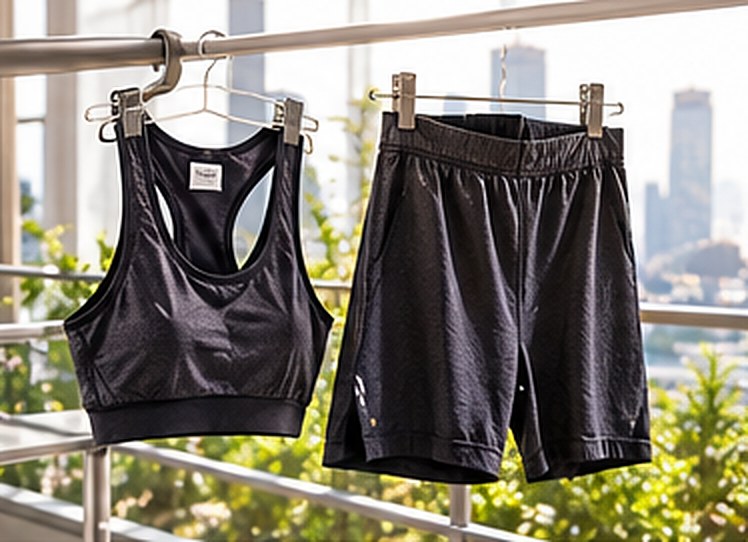
Open air and space between garments: the fastest route to a fresh, dry finish.
Drying is where humid climates test activewear. The goal is simple: dry quickly, completely and with air moving around every piece.
- Hang, do not bundle. Space garments so air reaches every side, and turn them inside out to protect prints.
- Use airflow. A fan or an open window dries kit far faster than still, humid air.
- Keep sun brief. A little sunshine helps freshen, but long exposure fades dark colours and degrades elastic.
- Tumble dry low only if the label allows. High heat damages elastane and can bake residual odour into the fabric.
- Check seams and bands. Waistbands and padded areas stay damp longest. Feel them before you fold.
If a load still smells musty after drying, it was probably stored while slightly damp. Our guide to why clothes smell musty after washing explains how to reset it.
Fabric by Fabric: Where Home Treatment Ends
Everything above assumes standard performance fabric. Activewear comes in many forms, and each has its own limit.
Polyester Performance Tops
The classic odour-holder. It tolerates the full method: pre-soak, a vinegar or baking-soda soak and a cool wash.
Safe to treat at homeCotton Tees & Towels
Absorbent and forgiving, but slow to dry. Wash warm as labelled and dry them completely and quickly.
Home, dry thoroughlyNylon & Elastane Leggings
Heat and chlorine degrade stretch. Use cool water, an occasional vinegar soak, and hang to dry.
Cool wash, no heatMerino Activewear
Naturally resistant to odour, but felts with heat and agitation. Use a wool detergent and dry flat.
Wool cycle, dry flatBamboo & Modal
Soft but weaker when wet. Use a gentle cycle and never wring or twist.
Gentle cycle onlyPadded Sports Bras
Foam cups lose their shape with heat and agitation. Use a mesh bag, a gentle cycle and air dry.
Mesh bag, air dryTechnical Shells & Waterproofs
Coatings and membranes can break down with the wrong detergent. They need specialist products and care.
Professional onlyPrinted & Embellished Pieces
Heat and friction can crack prints and loosen trims. Wash inside out in cool water, or hand it over.
Spot-test, or professionalSeven Mistakes That Lock the Smell In
- Leaving kit in the bag or basket. Damp fabric left overnight is when bacteria multiply fastest.
- Using fabric softener. It coats technical fibres, traps odour and reduces moisture-wicking.
- Using too much detergent. Excess leaves residue that holds on to sweat and oils.
- Reaching for chlorine bleach. It damages stretch and finishes, and mixing it with other products is dangerous.
- Drying on high heat. Heat degrades elastic and can set any remaining odour into the fabric.
- Combining vinegar and baking soda. They cancel each other out. Choose one.
- Forgetting the bag, towel and shoes. Washing the kit but not what carries it is how smells return.
The Singapore Factor: Heat, Humidity and the Gym Bag
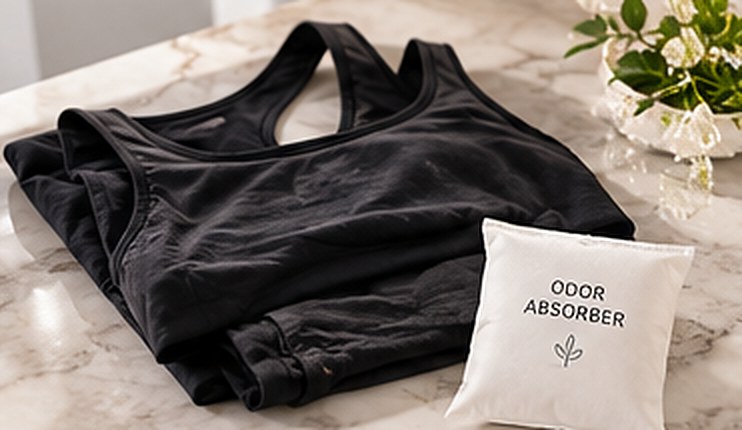
Prevention is easier than rescue: dry, folded kit and a sachet in the drawer.
In this climate it is worth building a few small habits into your routine. They keep odour from taking hold in the first place:
- Unpack the bag the moment you get home. Do not leave it zipped overnight.
- Use a breathable mesh or wet bag. Keep damp kit apart from clean items.
- Own enough sets. Rotation gives each piece time to dry fully between wears.
- Wash close-fitting pieces after every wear. Sports bras, leggings and base layers sit against the skin and hold the most.
- Wash the bag and towels regularly. They collect the same bacteria as the kit.
- Air your shoes. Rotate pairs and let them dry between sessions.
- Use sachets in drawers only. They freshen clean, dry kit; they do not fix damp garments.
Frequently Asked Questions
Why do my gym clothes smell even after washing?
Usually because body oils and detergent residue remain in the fibres, particularly in polyester. They release the smell once you warm up and sweat again. A pre-soak, a vinegar or baking-soda soak and no fabric softener typically resolve it.
Does white vinegar really remove sweat smell?
It helps. Diluted vinegar loosens residue that holds odour, but it is not a miracle product. Use it occasionally, rinse well, never combine it with bleach or baking soda, and pair it with the right detergent.
Can I use fabric softener on activewear?
We would avoid it. Softener coats technical fibres, traps odour and reduces the moisture-wicking that performance fabrics are designed for.
How often should I wash gym clothes?
Wash close-fitting pieces such as sports bras, leggings and base layers after every wear. Looser tops and shorts can occasionally be re-worn if they are fully dry and fresh, but in Singapore’s humidity washing after each session is the safest rule.
Is it safe to tumble dry activewear?
Only on low and only if the label allows. High heat damages elastane and can set odour. Air drying with good airflow is gentler and usually just as quick in warm weather.
How do I get the smell out of my gym bag?
Empty it completely, wash it as the label directs, or wipe it down if it is not washable, then air it with the zips open until it is fully dry. A breathable lining and an odour-absorbing sachet help keep it fresh.
The Verdict
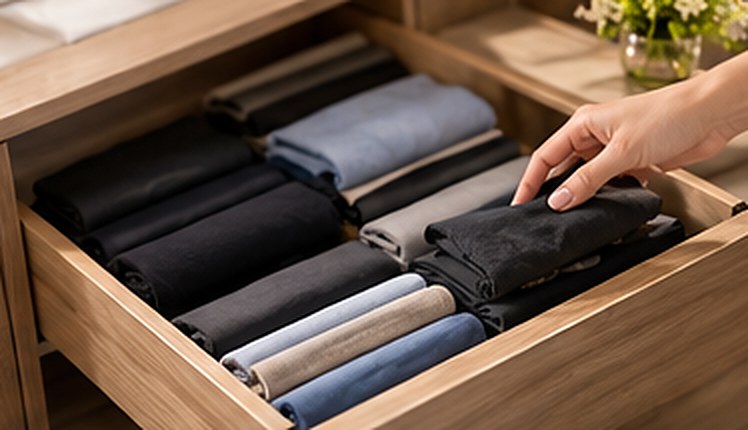
Clean, dry and folded: kit that is ready for the next session.
Activewear stays fresh through speed and sequence rather than strength: air it at once, pre-soak, soak with vinegar or baking soda, wash gently, skip the softener and dry completely. Keep the bag and towels clean, rotate your sets and keep chlorine bleach for another day. And for the technical shells, padded pieces and anything delicate, let someone with the right tools take over.
Piing picks up, cleans and finishes every garment exactly the way its fabric demands, then delivers it back, ready to wear. Pickup & delivery across Singapore
Let Piing! handle the laundry and dry cleaning. Book a pickup and get your clothes collected, cleaned and delivered across Singapore — no store visits, no hassle.
Book a Pickup →