
It always happens at the worst possible moment. A glass of Burgundy tips at a rooftop dinner above Marina Bay. A drop of chilli oil lands on a cream silk blouse halfway through lunch. A pen leaks into the breast pocket of a bespoke jacket somewhere between the office and the airport lounge.
And then comes the reflex that ruins more expensive clothing than the stain ever could: scrubbing hard, with hot water, and hoping. That single instinct is why so many beautiful garments end up faded, fuzzy, ringed or permanently marked — not because the wine was strong, but because the rescue was wrong.
Stain removal is not brute force. It is chemistry, temperature and patience, applied in the right order. Get that order right and almost every everyday stain comes out — even from silk, cashmere, wool and fine linen. Get it wrong, and you set the stain into the fibre forever.
This guide walks through the stains that ruin good clothes most often, the exact method for each one, and — just as importantly — the moments when the smartest move is to stop and hand the garment to a professional.
The 7 golden rules of safe stain removal
- Blot, never rub. Press a clean white cloth straight down to lift the stain out. Rubbing pushes it deeper and roughens the fibre surface, which shows as a permanent dull patch on silk and wool.
- Cold water first, always. Heat cooks protein stains — blood, egg, dairy, sweat — permanently into the fabric. Start cold and only consider warm water once the stain is gone.
- Work from the reverse side. Place the stain face-down on a clean towel and treat from behind so the stain pushes out of the fabric instead of through it.
- Test on a hidden seam. Inside a hem, cuff or waistband. Wait two minutes and check for colour lifting before touching the visible area.
- Read the care label before the recipe. "P", "F" or "dry clean only" means water and home remedies are a risk, not a solution.
- Work inwards, in a ring. Treat from the outer edge towards the centre to avoid creating a halo — the faint ring that outlives the stain itself.
- Never tumble dry a treated garment until the stain is fully gone. Dryer heat is what turns "almost out" into "in there for life".
The five-item kit that handles 90% of stains
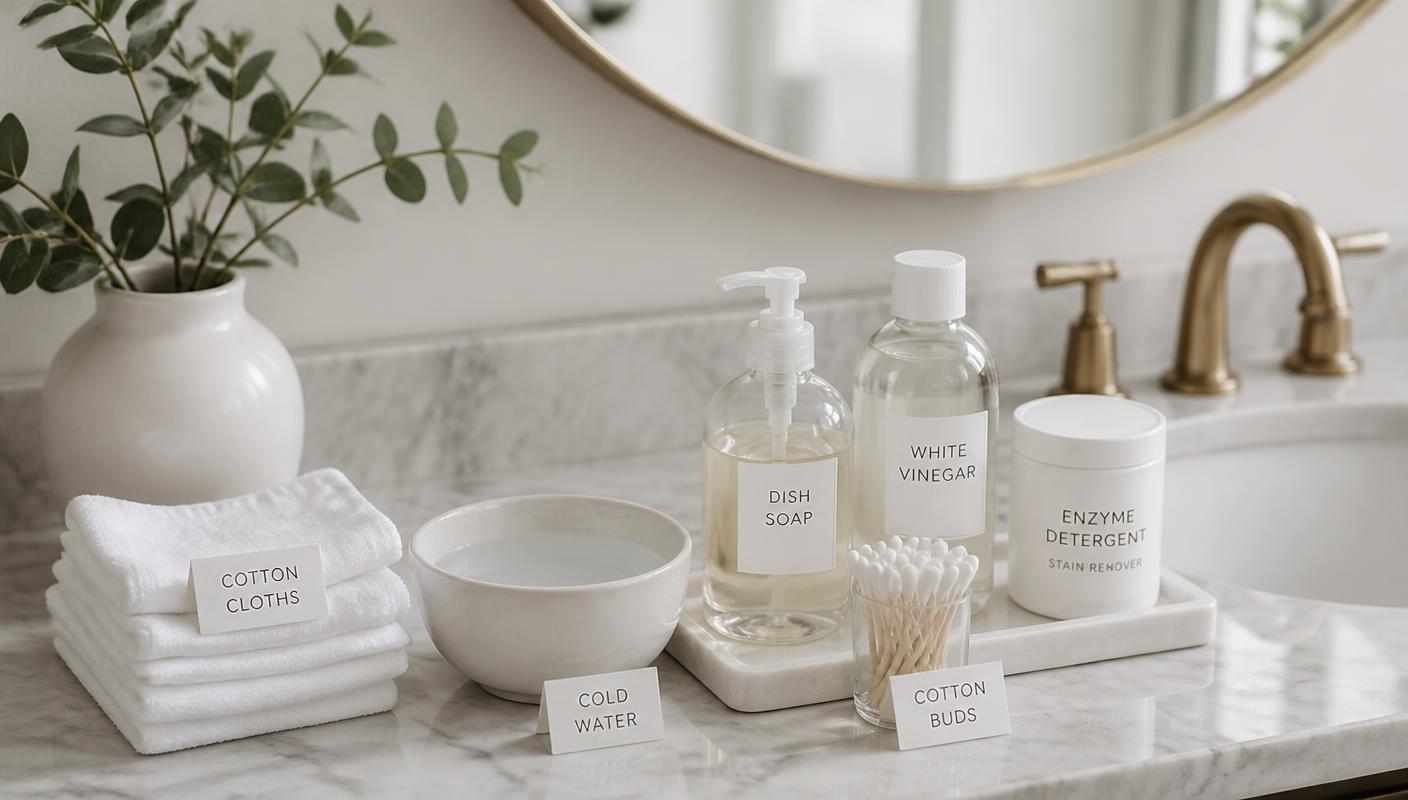
You do not need a cupboard of products — five basics, used correctly, outperform most specialist sprays.
- White cotton cloths or kitchen towel. White only — coloured cloths transfer dye into wet fabric.
- Cold water. The first and most underrated tool you own.
- Clear dish soap. A surfactant that lifts oil and grease without dye or bleach.
- White vinegar. Cuts through tannins (wine, coffee, tea) and deodorant residue.
- Enzyme laundry detergent. Breaks down protein and food stains at low temperatures.
Optional but useful: cotton buds for precision work, an eye dropper, cornflour or talc for absorbing fresh oil, and 3% hydrogen peroxide for whites only.
Red wine: act fast, cold and gently

Red wine is a tannin stain — cold water and time matter far more than any miracle product.
- Blot immediately with a dry white cloth. Do not press hard enough to spread the wine outward.
- Sprinkle salt generously over the damp area to draw the liquid out while you finish the evening.
- At home, flush from the reverse side with cold water until the water runs clear.
- Mix one part white vinegar with two parts cold water, dab it on and leave for ten minutes.
- Work a little enzyme detergent in with your fingertips, rest for 15 minutes, then rinse cold.
- Air dry and inspect in daylight before considering the wash.
Oil, grease and salad dressing
Oil does not dissolve in water, which is why rinsing a grease mark usually just spreads it into a larger, greyer patch. Oil needs to be absorbed first, then broken down by a surfactant.
- Blot away any surface oil — no water at this stage.
- Cover the mark thickly with cornflour, talc or baby powder and leave for 20–30 minutes so it draws the oil out.
- Brush the powder away gently with a soft brush.
- Apply a drop of clear dish soap directly, work it in with a fingertip, and leave for 10 minutes.
- Rinse with the warmest water the care label allows and check before drying.
Coffee, tea and kopi
Another tannin stain, with a twist: milk and sugar add protein and sticky residue, so a rinse alone rarely finishes the job.
- Flush the back of the fabric with cold running water as soon as possible.
- Dab on a solution of one teaspoon white vinegar in a cup of cold water.
- Follow with enzyme detergent worked in gently, and let it sit for 15 minutes.
- Rinse cold. If a faint shadow remains on white cotton, a 30-minute soak in cool water with oxygen-based (not chlorine) bleach usually clears it.
Makeup, foundation and lipstick
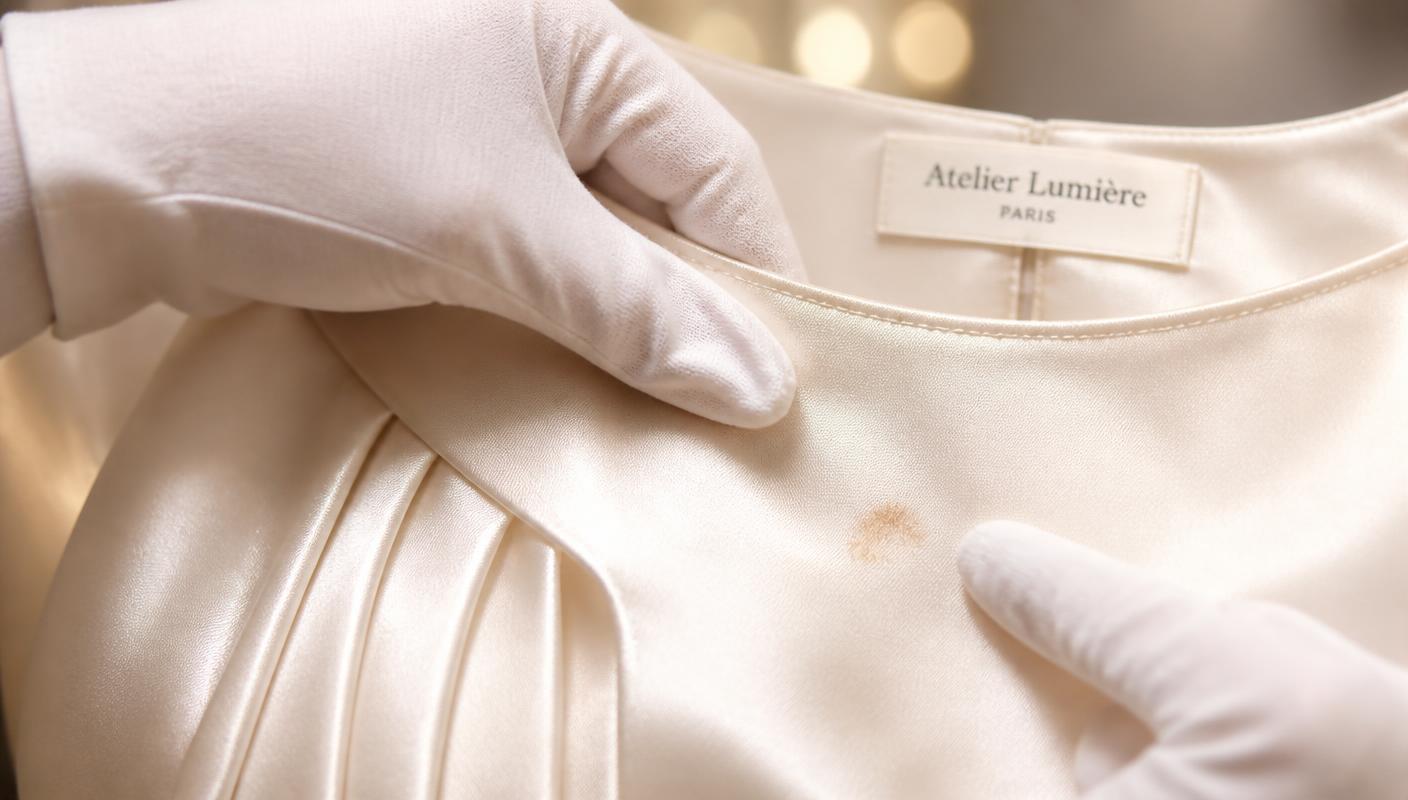
Foundation on silk is oil plus pigment plus a delicate protein fibre — the classic case for professional cleaning.
Modern foundation is engineered to be long-wearing and transfer-resistant, which is exactly what makes it stubborn on a collar. It combines oil, silicone and pigment.
- Scrape off any solid excess with the edge of a card — never a fingernail on the fabric.
- Apply a drop of clear dish soap or micellar water to the mark and dab, do not rub.
- Blot with a damp white cloth, working from the outside inwards.
- Repeat patiently. Three light passes beat one aggressive one.
Ink and ballpoint pen
- Slide a folded white cloth or paper towel inside the garment, directly under the stain.
- Dab isopropyl alcohol (or an alcohol-based hand sanitiser) onto the mark with a cotton bud.
- Keep replacing the cloth underneath as ink transfers into it — this is what actually removes the stain.
- Once no more ink lifts, wash with enzyme detergent at the label temperature.
Sweat, deodorant and yellow underarm marks
Singapore's humidity makes this the most common stain of all. Yellowing is a reaction between sweat salts, deodorant aluminium salts and heat — which is why hot washing makes it worse, not better.
- Soak the area in cool water with enzyme detergent for 30–60 minutes.
- For white cotton or linen, make a paste of bicarbonate of soda and water, apply, wait an hour, then rinse.
- For coloured shirts, use one part white vinegar to two parts cool water instead of bicarb.
- Wash on the warmest cycle the label allows and air dry — never tumble dry a shirt that still shows yellowing.
- Prevention: let deodorant dry fully before dressing, and switch to an aluminium-free formula for pale shirts.
Blood and other protein stains
- Rinse under cold running water immediately, from the reverse side.
- Soak in cool water with enzyme detergent for at least 30 minutes.
- For stubborn marks on white cotton, dab 3% hydrogen peroxide, wait five minutes and rinse.
- Repeat as needed and only wash once the stain is invisible.
Chocolate, sauces and chilli oil
These are combination stains — oil, pigment and often protein together — so they need a two-stage approach.
- Let chocolate harden (ten minutes in the freezer helps) and lift the solids off with a card.
- Flush the reverse side with cold water.
- Treat the oil with a drop of dish soap, then the pigment with enzyme detergent.
- Rinse, inspect, repeat once if a shadow remains — then wash normally.
Fabric-by-fabric: what you can safely do at home

🧺 Cotton & linen
Durable and forgiving. Cold flushing, dish soap and enzyme detergent are all safe. Watch for dye lifting on deep colours.
Home treatment OK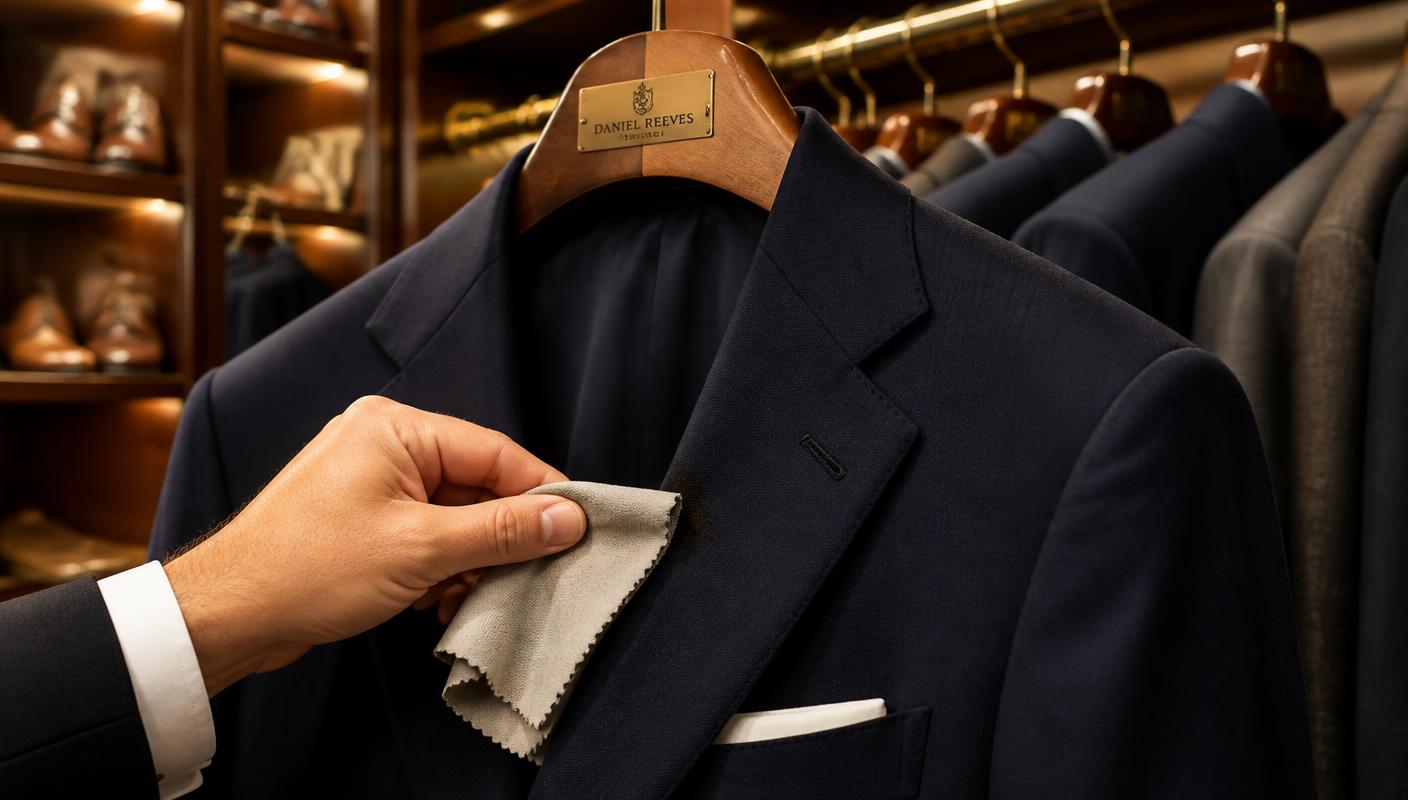
🧥 Wool & tailoring
Structured jackets have canvassing, padding and interlinings that water distorts. Blot only, then send it out.
Professional clean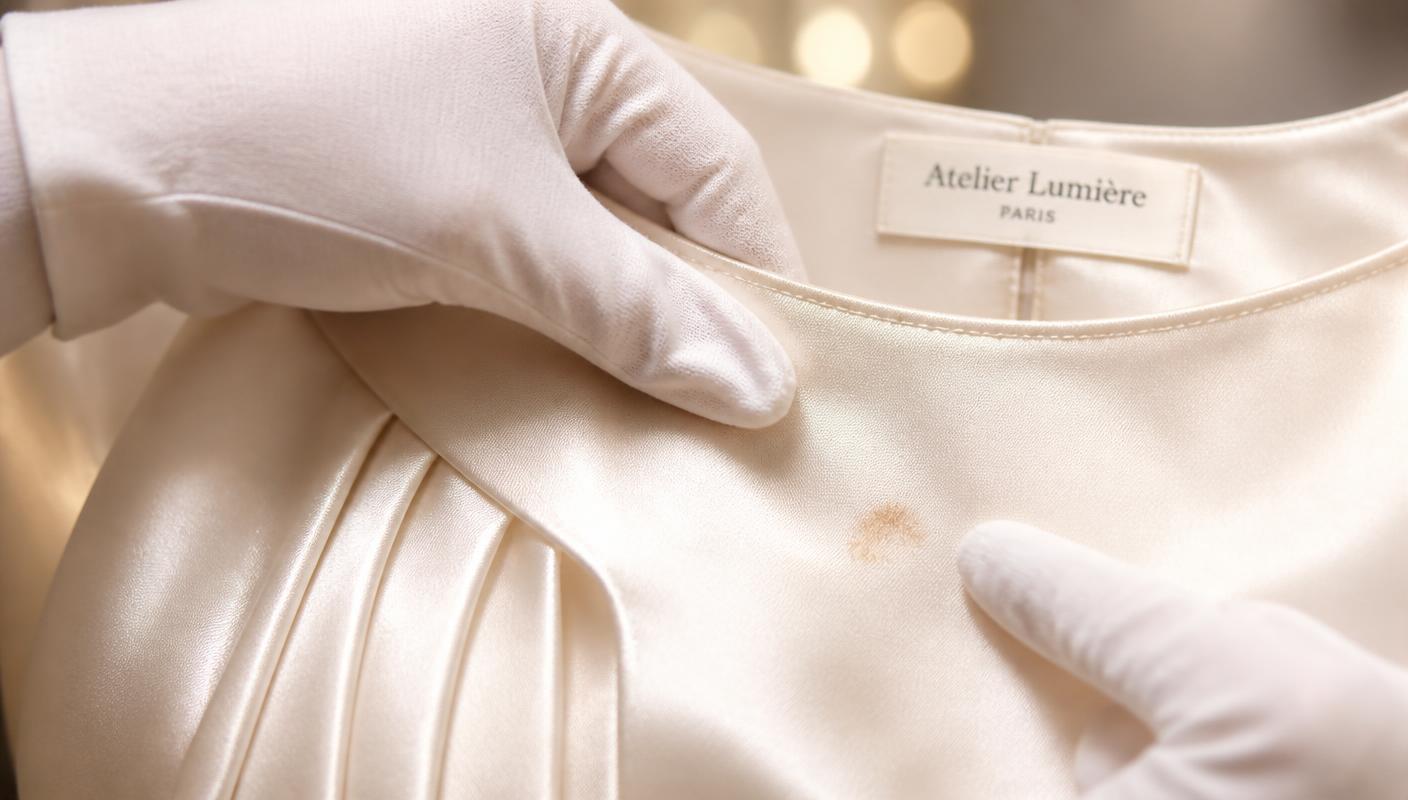
👗 Silk, satin & viscose
Water rings, loses lustre and can shrink. Never rub. Blot dry, do not wet, and get it treated quickly.
Professional clean
🧶 Cashmere & knits
Hand-wash cool at most, and never wring or hang wet. Oil and wine on cashmere are a professional job.
Depends on the stainQuick reference: stain → first move → what to avoid
| Stain | First move | Never do this |
|---|---|---|
| Red wine | Blot, salt, cold flush, vinegar solution | Hot water or scrubbing |
| Oil & grease | Absorb with cornflour, then dish soap | Rinsing with water first |
| Coffee & tea | Cold flush, then vinegar and enzymes | Letting it dry untreated |
| Makeup | Lift solids, dab with dish soap | Rubbing pigment into the weave |
| Ink | Cloth underneath, alcohol on top | Dragging the pen mark sideways |
| Sweat & deodorant | Cool enzyme soak, then bicarb or vinegar | Hot wash or tumble drying |
| Blood | Cold rinse, cool enzyme soak | Any warm or hot water |
Six things that damage clothes more than the stain
- Hot water on unknown stains. It sets protein and tannin marks permanently.
- Vigorous scrubbing. It breaks fibres and creates a permanently dull, fuzzy patch.
- Chlorine bleach on colours or delicates. It yellows silk and wool and can dissolve fibres outright.
- Mixing remedies. Vinegar plus bleach releases chlorine gas; layering products can set colour changes.
- Tumble drying a treated garment. Heat locks in whatever is left behind.
- Waiting weeks, then trying everything at once. Aged, over-treated stains are the hardest for even a professional to reverse.
Frequently asked questions
Does an old, set-in stain still come out?
Often, yes — but slowly. Soak in cool water with enzyme detergent for several hours, then treat as if fresh. Repeat gentle cycles rather than escalating to harsh chemicals, and accept that some aged tannin marks will only fade.
Are commercial stain removers better than dish soap and vinegar?
Sometimes, for specific stains. But most damage comes from the technique, not the product. A good enzyme detergent plus correct blotting outperforms an aggressive spray used the wrong way.
Can I treat a "dry clean only" garment at home?
Blotting away excess liquid is safe and helpful. Anything beyond that — water, soap, soaking — risks rings, shrinkage and distortion. Note the cause of the stain and let a professional treat it.
Why does a faint ring remain after the stain has gone?
That is a water or residue mark from treating only the stained spot. Feathering the moisture outwards, or having the whole panel cleaned professionally, evens it out.
What about sunscreen marks on white shirts?
Sunscreen combines oil and avobenzone, which yellows on contact with hard water. Treat it as an oil stain first with dish soap, then soak in cool water with oxygen bleach for whites.
The bottom line
Master the basics and you will save nearly everything you spill on. For the pieces where the risk is not worth it — the tailored jacket, the silk dress, the cashmere coat, the linen shirt you actually love — professional cleaning is the sensible answer. Piing collects, treats and returns your garments cleaned the way each fabric needs, so a spilled glass never costs you a favourite piece.
Let Piing! handle the laundry and dry cleaning. Book a pickup and get your clothes collected, cleaned and delivered across Singapore — no store visits, no hassle.
Book a Pickup →