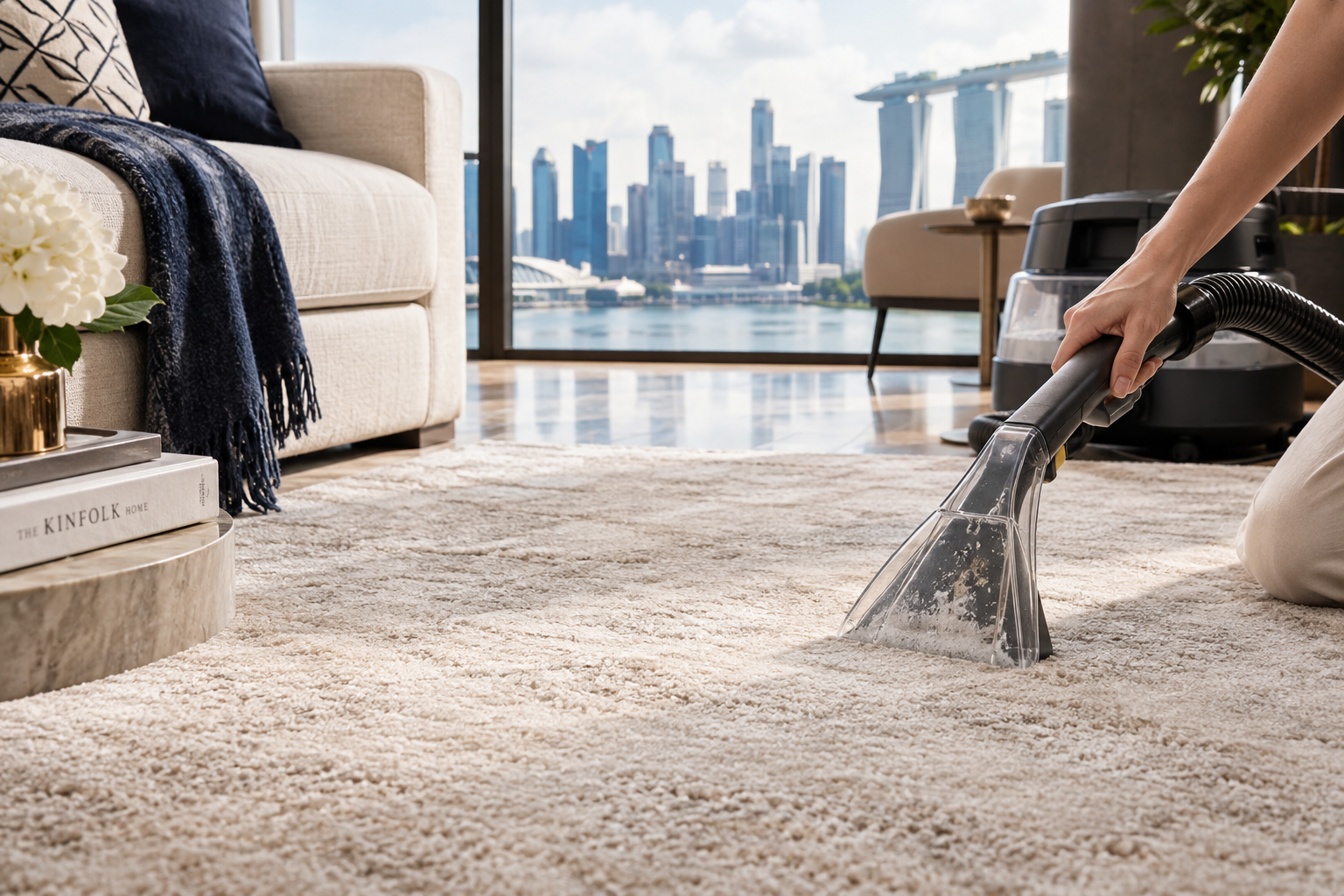
One coffee spill on a pale designer rug can change the feel of an entire room in seconds. In a beautifully finished Singapore home, carpets are more than flooring—they bring softness, texture and character to carefully curated interiors. The good news? A stain does not automatically mean the carpet is ruined.
The trick is knowing what has been spilled, what the carpet is made from and how much moisture it can safely take. From coffee and red wine to grease, mud, pet accidents and ink, this guide shows you how to respond quickly without turning a small mark into a bigger problem.

Why stain timing matters
Fresh stains are usually easier to manage because there is less time for the spill to spread, dry or bond with the fibres. That does not mean every old stain is permanent, but waiting can make treatment more difficult.
The first rule is simple: do not rub. Rubbing can spread a liquid stain outward, work particles deeper into the pile and disturb delicate fibres. Instead, use gentle blotting pressure and replace the cloth as it becomes damp or dirty.

Before you start: identify the carpet and the stain
Before reaching for a cleaner, look at the carpet label or manufacturer guidance. A hard-wearing synthetic carpet may tolerate a different approach from wool, silk, viscose, jute or an antique hand-knotted rug.
- Identify the spill. Knowing whether you are dealing with coffee, wine, grease, mud, ink or a pet accident helps you choose the right treatment.
- Remove solids first. Lift food, dirt or other semi-solid material with a spoon or dull edge. Avoid grinding it into the pile.
- Use a clean white cloth. A white absorbent cloth makes it easier to see what is being lifted and reduces the risk of transferring dye.
- Test before treating. Apply a small amount of the chosen product to an inconspicuous area and check the carpet once dry.
- Keep moisture controlled. Use only as much liquid as the method requires. Over-wetting can make drying difficult and may affect carpet backing.

The basic carpet-cleaning method
Step 1: Vacuum the area thoroughly
Start with dry cleaning. Vacuum slowly, using overlapping passes to remove loose dust, grit, crumbs and hair. Pay extra attention to entrances and high-traffic areas, where abrasive particles can accumulate.
Step 2: Blot the spill or lift the solids
For a liquid spill, place a clean cloth over the area and press gently. Work from the outside towards the centre so the stain does not spread. For thicker spills, lift the material first and then blot what remains.
Step 3: Apply a suitable spot cleaner
Choose a product designed for your carpet and follow its label instructions. Apply a small amount to a cloth or as directed rather than flooding the carpet. Work gently and give the product only the recommended contact time.
Step 4: Blot and remove residue
Use a fresh cloth to lift the loosened stain and cleaning solution. If the product instructions call for rinsing, use a lightly damp cloth and then blot again. The goal is to remove residue without saturating the backing.
Step 5: Dry the carpet completely
Press with dry towels to absorb remaining moisture, then improve airflow with a fan or open windows where appropriate. Keep traffic off the area until it is completely dry.

How to clean different types of carpet stains
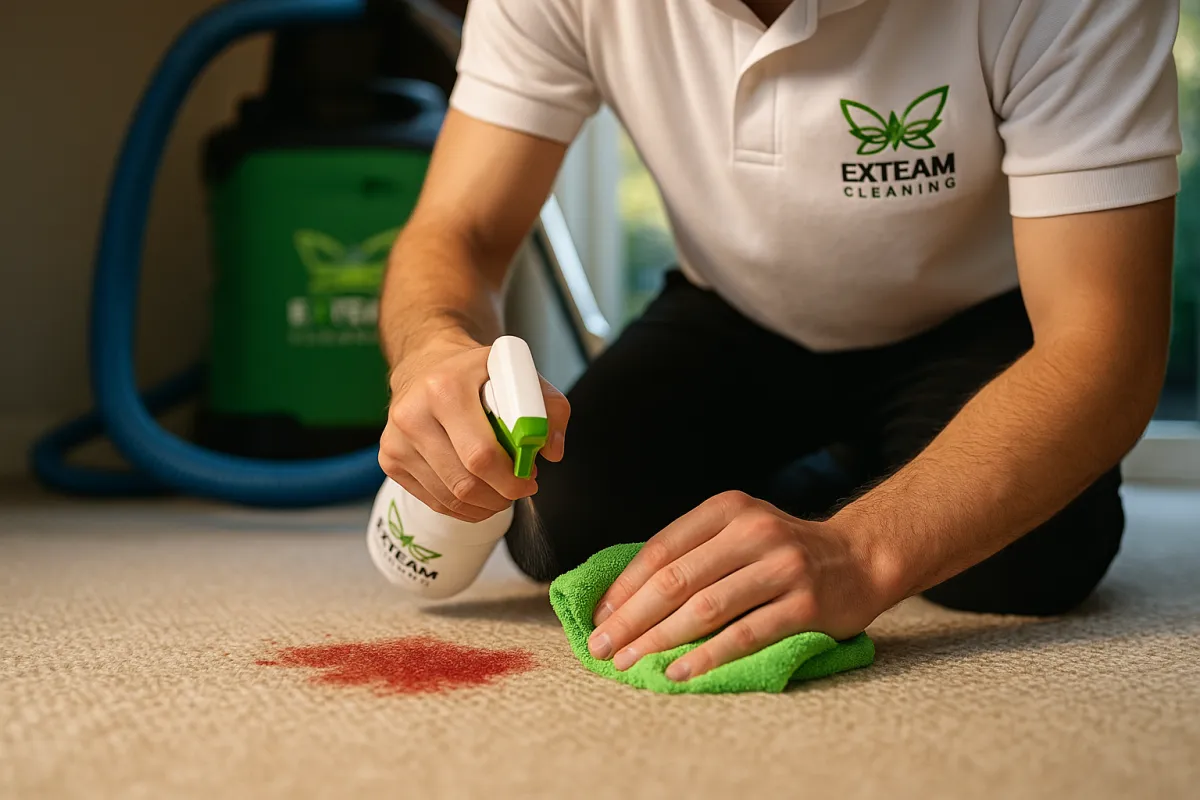
There is no single stain remover that is ideal for every spill. The safest approach is to match the first response to the substance and then move to a carpet-safe spot treatment only if needed.
| Stain | First response | What to avoid |
|---|---|---|
| Coffee or tea | Blot promptly with a clean absorbent cloth, then use a carpet-safe spot cleaner if required. | Scrubbing outward or leaving a large amount of water in the pile. |
| Red wine | Blot immediately to absorb as much liquid as possible, working from the outside towards the centre. | Rubbing, spreading the spill or pouring excessive water onto the area. |
| Grease or oil | Lift any solid residue, then use a cleaner formulated for the carpet and suitable for oily marks. | Aggressive brushing that pushes the oily residue deeper. |
| Mud | Let heavy wet mud dry enough to remove loose material, then vacuum before treating the remaining mark. | Scrubbing wet mud into the fibres. |
| Pet urine or accidents | Absorb fresh moisture quickly and use a suitable pet-stain/enzyme treatment according to its directions. | Masking the odour with fragrance alone or repeatedly soaking the area. |
| Ink | Blot carefully and use a product specifically intended for the carpet fibre after testing it first. | Rubbing the ink outward or using an untested solvent. |
| Blood | Blot with cool water and a clean cloth, using small amounts of moisture. | Hot water, which can make protein-based stains harder to remove. |

Coffee and tea stains
Coffee and tea can leave a visible brown mark even when the original spill looked small. Start by absorbing as much liquid as possible. Once the area is mostly dry, use a suitable carpet spot cleaner according to its instructions and blot rather than scrub.
Red wine stains
Speed matters with wine. Use a clean white cloth to absorb the liquid without pressing aggressively. Continue with fresh sections of the cloth until little moisture transfers. If a stain remains, use a carpet-safe stain treatment that is compatible with the fibre.
Grease and oil stains
Greasy marks need a different approach because water alone may not lift oily residue effectively. Remove any solid material first, then use a suitable carpet degreasing or spot-cleaning product. Apply sparingly and blot the area clean rather than working the grease deeper.
Mud and outdoor dirt
Rainy weather can quickly bring mud indoors. If the mud is wet and heavy, avoid vigorous wiping. Let the excess dry enough to lift or vacuum loose particles, then treat the remaining mark gently. This is especially important on light, plush carpets where aggressive brushing can disturb the pile.
Pet stains and odours
Pet accidents can involve both a visible mark and residue below the surface. Absorb fresh liquid immediately, then use a pet-safe carpet treatment designed for the type of stain. If an odour remains or the accident has penetrated into the underlay, surface cleaning may not be enough and professional treatment may be appropriate.
Ink and pen marks
Ink can be particularly challenging because different inks respond differently to solvents. Avoid experimenting with strong household chemicals. Blot carefully and use a carpet product specifically recommended for the fibre, testing it first in a hidden area. For expensive or delicate carpets, professional stain treatment is the safer option.

Adjust the method for your carpet type
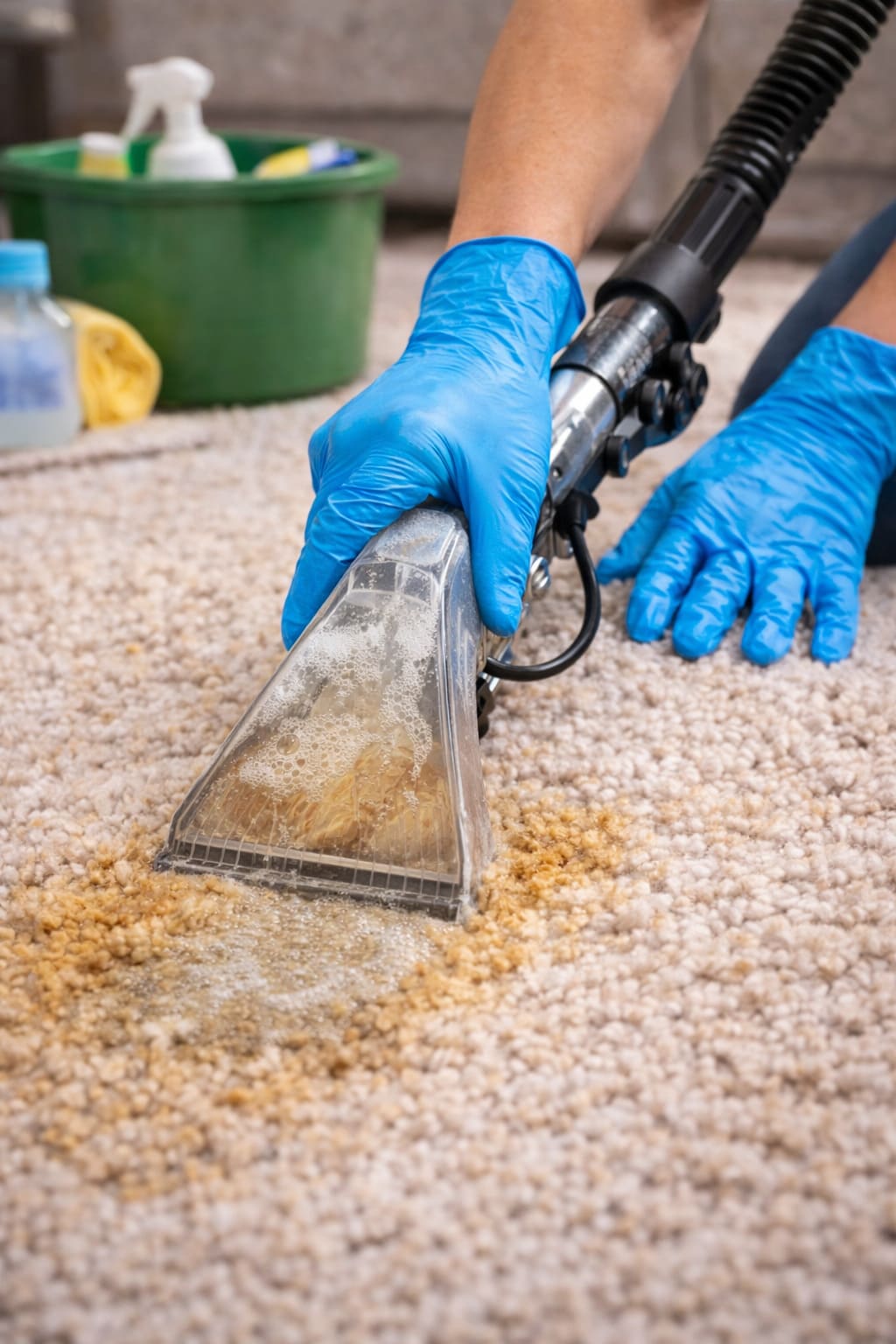
The same stain-removal routine should not automatically be used on every carpet. Fibre type, dye stability, backing and construction all affect how much moisture and agitation a carpet can safely handle.
| Carpet type | Care approach |
|---|---|
| Synthetic carpet | Often suitable for routine vacuuming and carefully controlled spot cleaning, provided the manufacturer’s instructions allow it. |
| Wool carpet or rug | Use gentle, fibre-appropriate products and minimal moisture. Valuable wool rugs are better assessed by a specialist. |
| Silk, viscose or delicate designer rugs | Avoid experimenting with household stain removers. Professional assessment is recommended. |
| Jute and other natural fibres | Use very controlled moisture and follow the care instructions closely because natural fibres can react poorly to over-wetting. |
| Antique or hand-knotted rugs | Treat them as valuable textiles rather than ordinary flooring. Professional cleaning can help protect dyes, structure and finish. |
When should you deep clean a carpet?
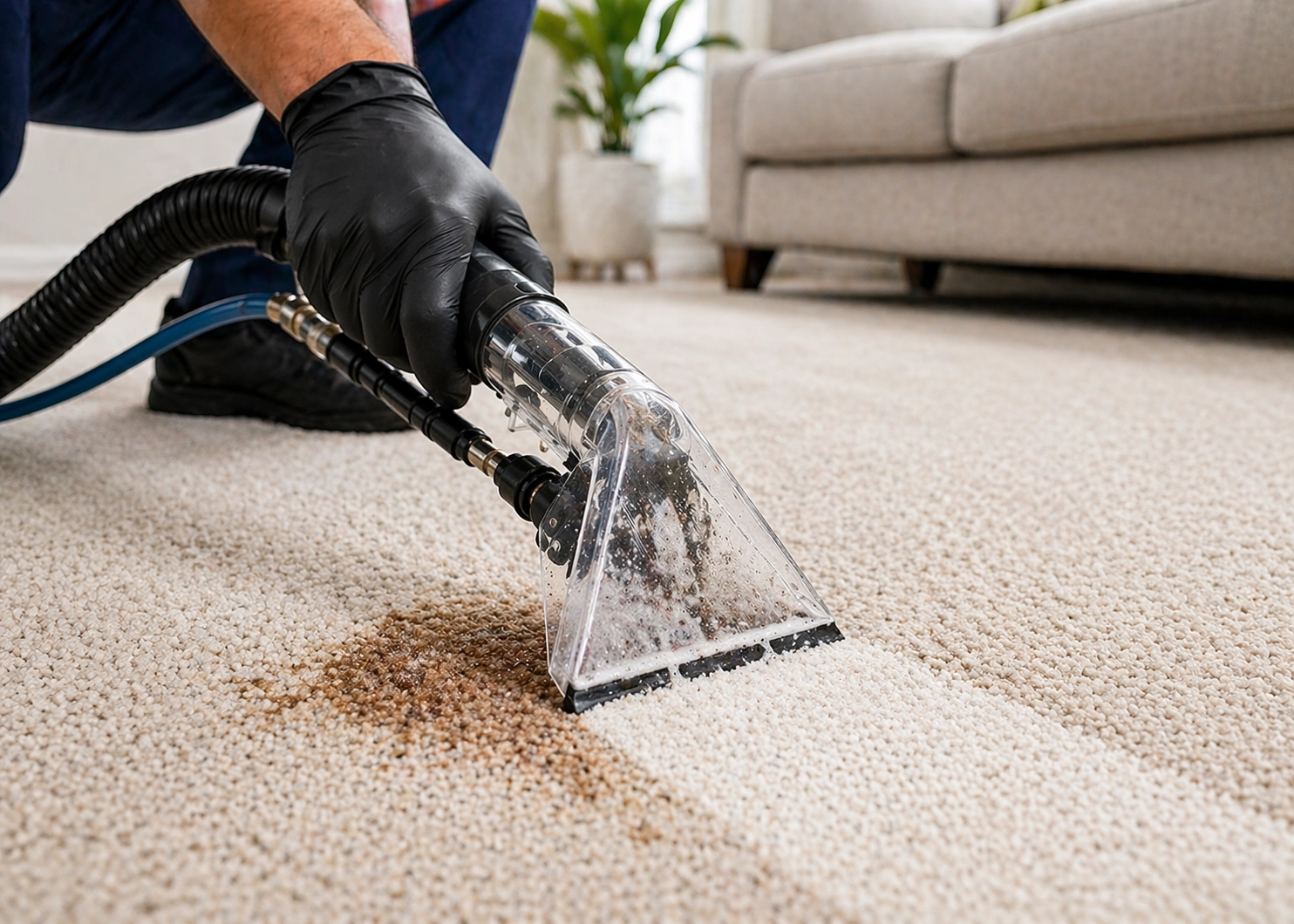
Spot cleaning handles individual accidents, but it does not replace periodic whole-carpet care. If the carpet looks generally dull, has dark traffic lanes, holds persistent odours or has not been professionally cleaned for a long time, a deeper clean may be appropriate.
Professional cleaning is especially worth considering for high-value rugs, delicate fibres, stubborn stains, pet-related contamination or carpets that have been repeatedly treated with household products. A specialist can inspect the material first and select a cleaning method that balances stain removal with fibre protection.

Common carpet-cleaning mistakes to avoid
- Scrubbing hard: Friction can spread stains and disturb the carpet pile. Blotting is usually the better first response.
- Soaking the carpet: Too much moisture makes drying harder and can affect carpet backing or leave lingering odours.
- Using the strongest cleaner available: A powerful household cleaner is not automatically safe for carpet fibres or dyes.
- Skipping the patch test: Always check an inconspicuous area before using a new product over a visible section.
- Ignoring the carpet material: Wool, silk, viscose, jute and antique rugs need more specialised care than many synthetic carpets.
- Putting furniture back too soon: Allow the cleaned area to dry completely before replacing furniture or resuming normal traffic.
Frequently Asked Questions
Can I clean a carpet with dish soap?
It is better to use a product made for carpets unless the carpet manufacturer specifically allows another cleaner. Household soaps can leave residue or affect some fibres.
Should I use hot water on a carpet stain?
Not automatically. The correct temperature depends on the stain and carpet. For protein-based stains such as blood, cool water is generally preferred.
How quickly should I treat a spill?
As soon as practical. The earlier you absorb a fresh spill, the less time it has to spread or dry into the fibres.
Can I use baking soda on every carpet?
Do not assume every carpet should be treated with baking soda. Check the manufacturer’s care guidance, especially for delicate or valuable rugs.
When should I call a professional?
Consider professional help for delicate or high-value rugs, large stains, persistent odours, repeated pet accidents, colour bleeding or stains that do not respond to a gentle spot treatment.
How can I prevent carpet stains?
Vacuum regularly, use entrance mats, deal with spills promptly, avoid outdoor shoes where practical, and keep suitable spot-cleaning supplies ready.
The takeaway: clean gently, treat specifically
The best carpet-cleaning method depends on two things: what caused the stain and what the carpet is made from. Start with dry vacuuming, blot fresh spills, use a compatible spot treatment sparingly and allow the area to dry completely.
For premium, delicate or valuable rugs, careful cleaning is about more than removing a mark. It is about protecting the fibre, colour, texture and finish that make the piece worth keeping. When a stain is stubborn or the material is delicate, professional carpet care can help you avoid turning a small spill into permanent damage.
Let Piing! handle the laundry and dry cleaning. Book a pickup and get your clothes collected, cleaned and delivered across Singapore — no store visits, no hassle.
Book a Pickup →