
You pull a load out of the machine, expecting that fresh, clean smell — and instead you get a damp, musty odour. It is one of the most common laundry complaints, and the frustrating part is that rewashing the same way usually does not fix it.
That musty smell is almost always caused by one thing: bacteria and mildew feeding on moisture, body oils or detergent residue somewhere between the drum and your wardrobe. The good news is that once you find the source, the fix is usually simple.
Here are the 10 most common reasons clothes smell musty after washing — and exactly what to do about each one.
1. Your washing machine is dirty
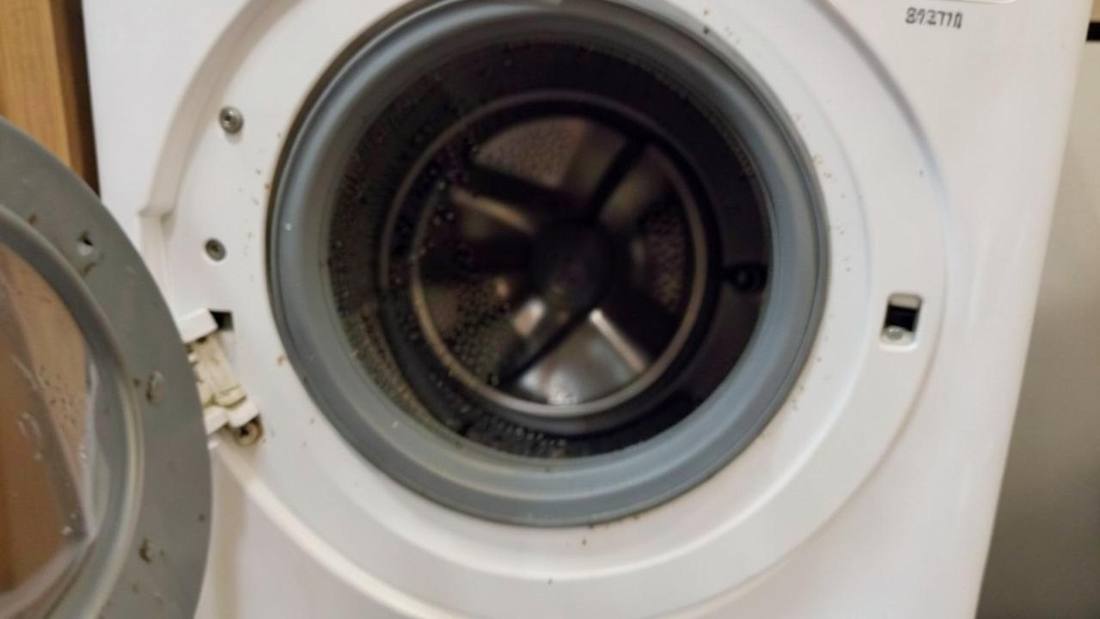
This is the number one cause. Front-load machines in particular trap moisture and detergent residue in the rubber door gasket, the detergent drawer and the drain filter. That warm, damp environment is perfect for mould and bacteria — and every wash passes your clothes through it.
How to fix it
- Run an empty hot cycle (60°C or the machine's “tub clean” setting) with a washing-machine cleaner or two cups of white vinegar.
- Pull back the rubber door seal and wipe inside the folds with a cloth and diluted vinegar or mild soapy water.
- Remove and rinse the detergent drawer, and clean the drain filter at the bottom front of the machine.
- Leave the door and drawer open between washes so the drum can dry out.
2. Wet clothes sat in the machine too long
We have all done it — started a load and forgotten about it until the next morning. Wet fabric sitting in a closed, warm drum gives bacteria hours to multiply, and that is when the sour, musty smell sets in. In humid weather, it can start in as little as 8–12 hours.
How to fix it
- Move clothes to the dryer or drying rack as soon as the cycle ends — ideally within an hour.
- If a load has been sitting overnight, do not just dry it. Re-run a quick rinse cycle with a cup of white vinegar to kill the odour-causing bacteria first.
- Use your machine's delay-start timer so the cycle finishes when you are actually home to unload it.
3. You are overloading the drum
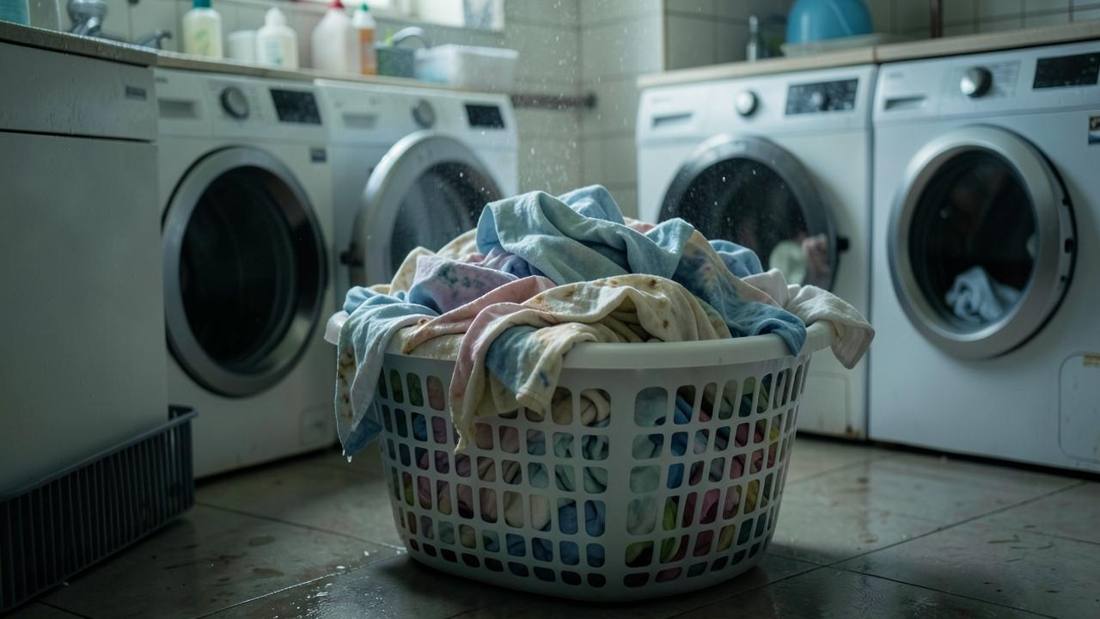
A drum packed to the brim cannot circulate water and detergent properly. Clothes in the middle of the load barely get rinsed, so body oils, sweat and bacteria stay trapped in the fabric — and come out smelling worse than they went in.
How to fix it
- Fill the drum loosely — you should be able to fit a hand vertically between the clothes and the top of the drum.
- Wash bulky items like doonas and towels in separate, smaller loads.
- Match the water level and cycle to the load size instead of using one setting for everything.
4. You are using too much detergent
It sounds backwards, but more detergent often means smellier clothes. Excess detergent does not rinse out fully. It leaves a residue in the fabric that traps moisture and becomes a food source for bacteria and mildew. The same residue builds up inside the machine itself.
How to fix it
- Measure detergent according to the label — and reduce the dose for small or lightly soiled loads.
- If your clothes feel stiff or slightly slimy after washing, that is detergent build-up. Run them through a hot wash with no detergent to strip it out.
- Skip fabric softener on towels and activewear; it coats fibres and locks in odour.
5. Every wash is cold and short
Cold, quick cycles are gentle and energy-efficient — great for delicates. But if everything goes through a 30-minute cold wash, bacteria and body oils are never fully removed, especially from towels, bedding, underwear and activewear.
How to fix it
- Wash towels, sheets and underwear at 40–60°C where the care label allows.
- Reserve cold quick cycles for lightly worn delicates and dark colours.
- Occasionally add an antibacterial laundry sanitiser or white vinegar to the rinse for loads that need extra help.
6. Clothes are drying too slowly
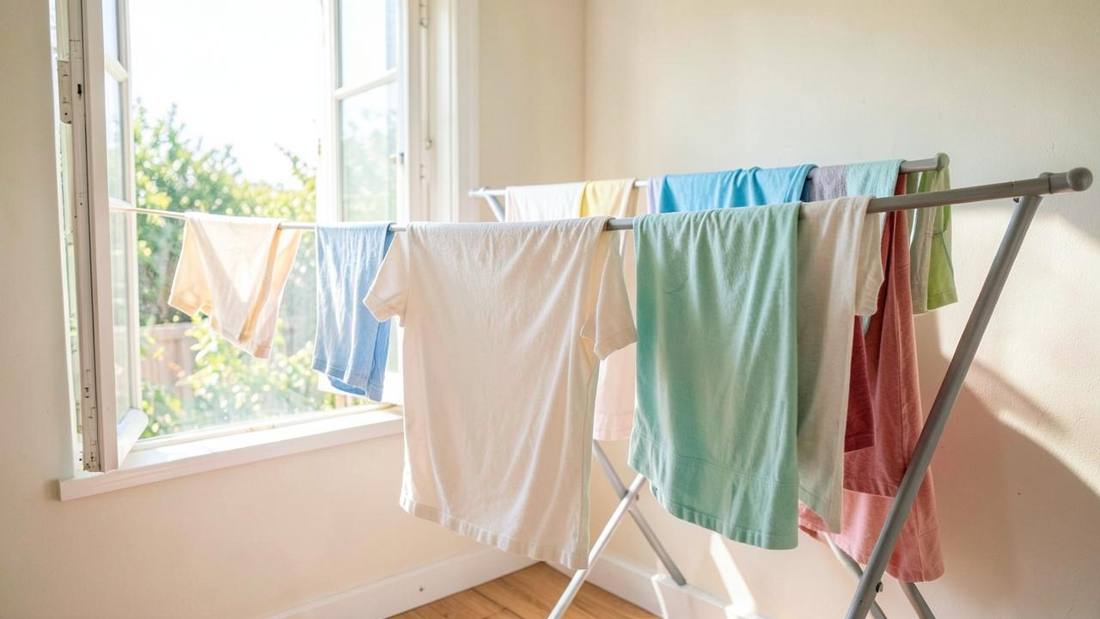
The longer fabric stays damp, the more time mildew has to grow. Clothes dried in a cramped, poorly ventilated room — or piled on a rack so thickly that air cannot circulate — can take 24+ hours to dry, and that is when the musty smell appears even though the wash was fine.
How to fix it
- Space garments out on the rack so air can move between them.
- Dry near an open window, a fan or a dehumidifier — airflow matters more than heat.
- On humid or rainy days, use a dryer or a heated airer rather than letting clothes sit damp for a day or more.
- Give thick items like jeans and hoodies an extra spin cycle to remove more water before drying.
7. You are putting clothes away slightly damp
Clothes that feel “almost dry” are still holding moisture in the seams, waistbands and thicker panels. Folded into a drawer or hung in a closed wardrobe, that trapped moisture has nowhere to go — and mildew follows.
How to fix it
- Check thick areas — collars, cuffs, waistbands, pockets — before folding. If in doubt, give it another hour.
- Let “line-dried” clothes air for 20–30 minutes in an open room before putting them away.
- Never iron-damp clothes straight into the wardrobe; let them cool and fully dry first.
8. Your wardrobe or drawers are humid
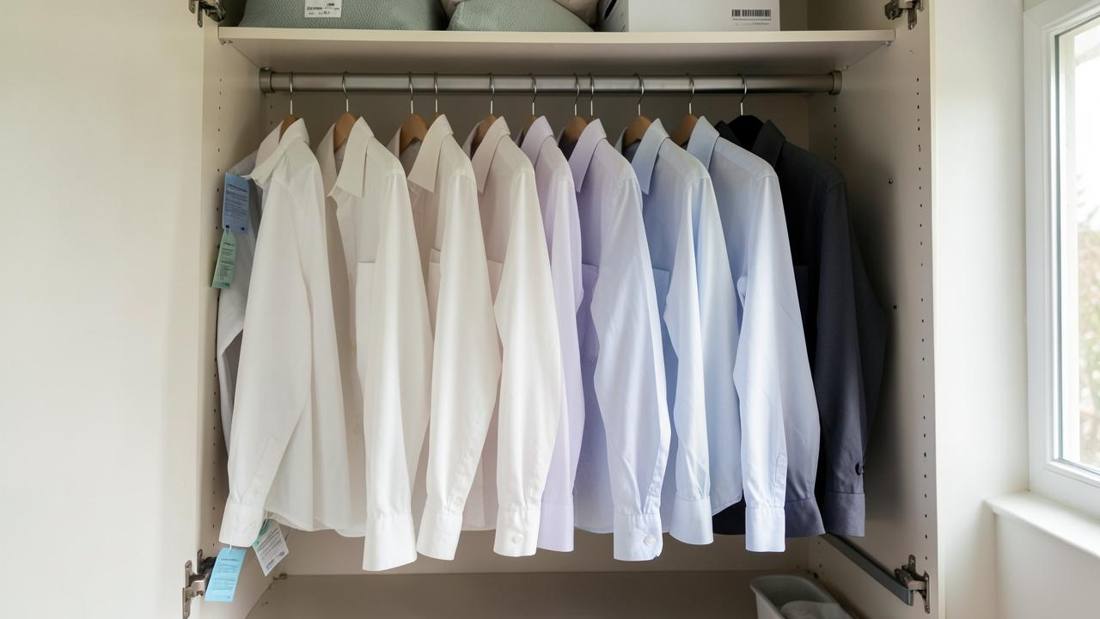
Sometimes the laundry is fine and the storage is the problem. A tightly packed wardrobe in a humid room traps stale, moist air around your clothes for weeks at a time.
How to fix it
- Leave a little space between hanging garments so air can circulate.
- Add moisture absorbers or dehumidifier sachets to wardrobes and drawers, and replace them regularly.
- Open wardrobe doors occasionally on dry days to let fresh air in.
- Do not store clothes in plastic bags long-term — fabric needs to breathe.
9. Body oils and sweat have built up in the fabric
Activewear, underarms of shirts, pillowcases and towels absorb sweat and body oils every time they are used. If those oils are never fully stripped out, they oxidise in the fibres and produce a stubborn musty or “sour” smell — often one that only appears once the garment warms up on your body.
How to fix it
- Pre-soak affected items for an hour in warm water with a cup of white vinegar or half a cup of bicarbonate of soda.
- Wash synthetics and activewear promptly after wearing rather than leaving them in a gym bag.
- Use an enzyme-based detergent occasionally — enzymes break down the oils and proteins that regular detergent can leave behind.
10. Hard water is leaving mineral residue
In hard-water areas, minerals react with detergent to form a scum that clings to fabric and the inside of your machine. That residue holds onto odour and stops detergent from working properly — a slow, invisible cause of musty laundry.
How to fix it
- Use a detergent formulated for hard water, or add a water-softening booster to the wash.
- Descale your machine every couple of months with a machine cleaner or citric acid cycle.
- Consider a rinse with added white vinegar — it helps dissolve mineral residue and softens fabric naturally.
The “reset wash” that fixes most musty clothes
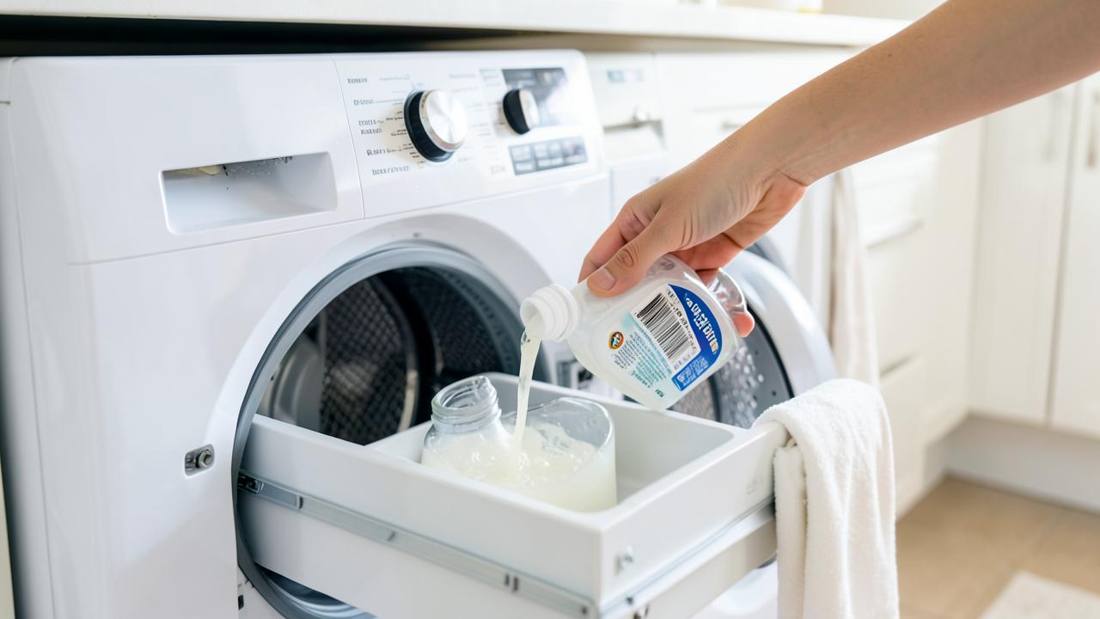
If a garment or a whole load already smells musty, this simple reset usually solves it:
- Wash hot, with vinegar, no detergent. Run the load on the warmest cycle the care labels allow with one cup of white vinegar in the detergent drawer.
- Wash again, normally. Follow with a regular cycle using the correct, measured amount of detergent.
- Dry fast and fully. Tumble dry or dry in moving air and sunshine until completely dry — not “almost”.
Quick reference: cause → fix
| Where the smell comes from | Tell-tale sign | Fast fix |
|---|---|---|
| Dirty machine | Drum smells damp when empty | Hot maintenance wash + clean the seal |
| Wet clothes left sitting | Sour smell after overnight loads | Vinegar rinse, then dry immediately |
| Overloading | Clothes feel poorly rinsed | Smaller, looser loads |
| Too much detergent | Stiff or slimy fabric | Hot wash with no detergent |
| Slow drying | Smell appears a day after washing | Airflow, fan, extra spin cycle |
| Damp storage / humid wardrobe | Everything smells stale in drawers | Dry fully + moisture absorbers |
Frequently asked questions
Why do my clothes smell musty only when I wear them?
Residual body oils and bacteria in the fabric reactivate with body heat and moisture. An enzyme-detergent wash or a vinegar pre-soak usually removes the build-up.
Does vinegar make clothes smell like vinegar?
No — the vinegar smell disappears completely as the clothes dry. It neutralises odours and dissolves residue without leaving a scent of its own.
How often should I clean my washing machine?
A monthly hot maintenance wash is a good rule of thumb, plus wiping the door seal and leaving the door ajar after every use. If you wash daily or live in a humid climate, clean it every two to three weeks.
Is the musty smell harmful?
The smell itself is a nuisance rather than a danger for most people, but it signals mould or bacteria in the fabric or machine. Anyone with allergies, asthma or sensitive skin should treat it promptly.
Can dry cleaning remove musty odours?
Yes. Professional cleaning is often the best option for structured, delicate or dry-clean-only garments — especially suits, coats, silk and wool — where home washing is not safe.
The bottom line
Follow the fixes above and most musty-smell problems resolve within one or two washes. And for the items you would rather not risk — the suit, the silk dress, the doona that never quite dries at home — professional cleaning is the easy answer. Piing picks up, cleans and delivers, so everything comes back genuinely fresh.
Let Piing! handle the laundry and dry cleaning. Book a pickup and get your clothes collected, cleaned and delivered across Singapore — no store visits, no hassle.
Book a Pickup →