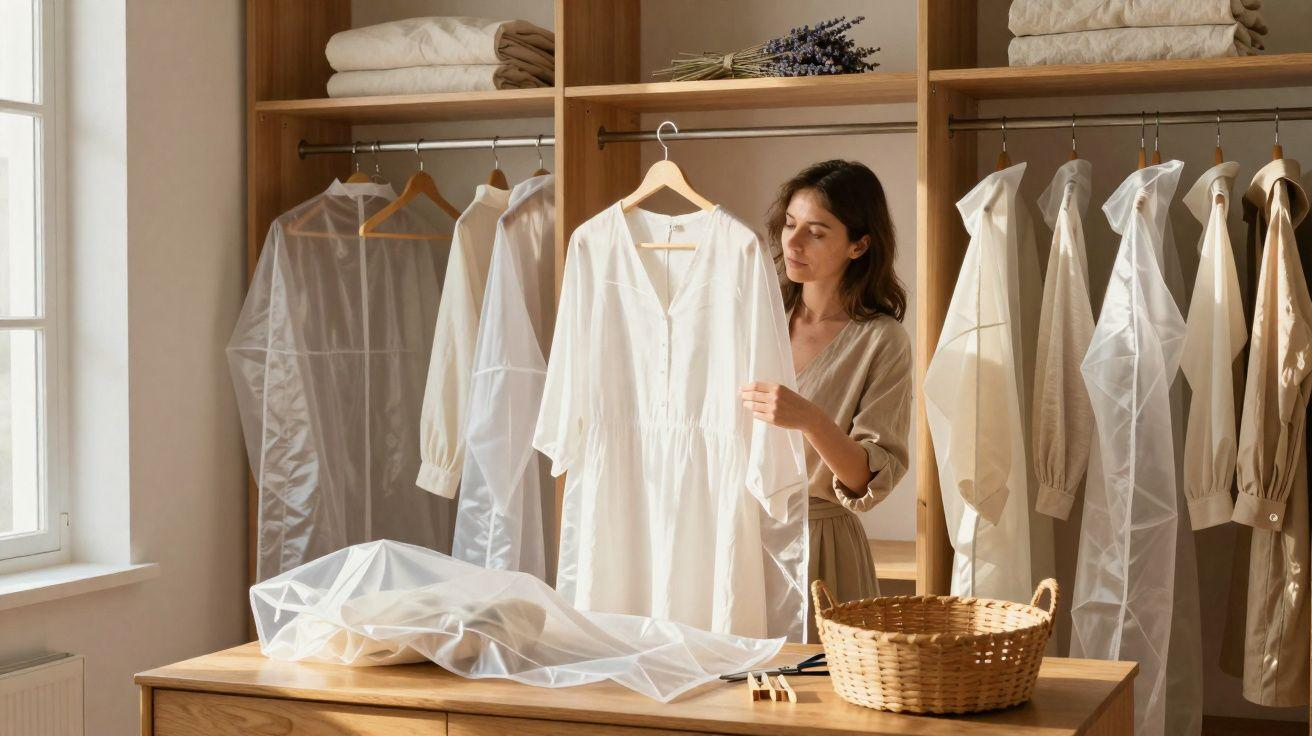
Somewhere in a Bukit Timah walk-in closet right now, a cashmere coat that cost more than a business-class ticket to Milan is hanging exactly where it should be — untouched since its last outing, breathing quietly on a wooden hanger. Two rails down, an almost identical coat from the same boutique already looks tired: bobbled at the cuffs, its colour gone flat, its shoulders starting to sag. The coats were never the problem. The washing was.
Expensive clothes rarely fail because the quality wasn't there. They fail because they get treated like everything else in the hamper — worn once, then thrown in "just to be safe." Most fine garments need washing far less often than people assume, and the pieces that cost the most are usually the ones that can least afford it. This guide breaks down exactly what needs washing on a schedule, what only needs airing and spot care, and how Singapore's humidity changes both answers.
The Rule Nobody Tells You
Every wash cycle, no matter how gentle, is a small controlled act of damage. Water swells and relaxes fibres. Detergent — even the "delicate" kind — strips away the natural oils that keep wool elastic and silk lustrous. Agitation, however mild, works loose the weave that gives tailoring its shape. None of it is visible after one wash. All of it is visible after fifty.
The wardrobes that still look new after five years aren't protected by some secret fabric. They're protected by restraint — by an owner who understood that a $2,000 blazer worn for four hours at dinner does not need the same treatment as a gym shirt worn for ninety minutes of sweat.
Why Washing Is the Real Enemy of Fine Fabric
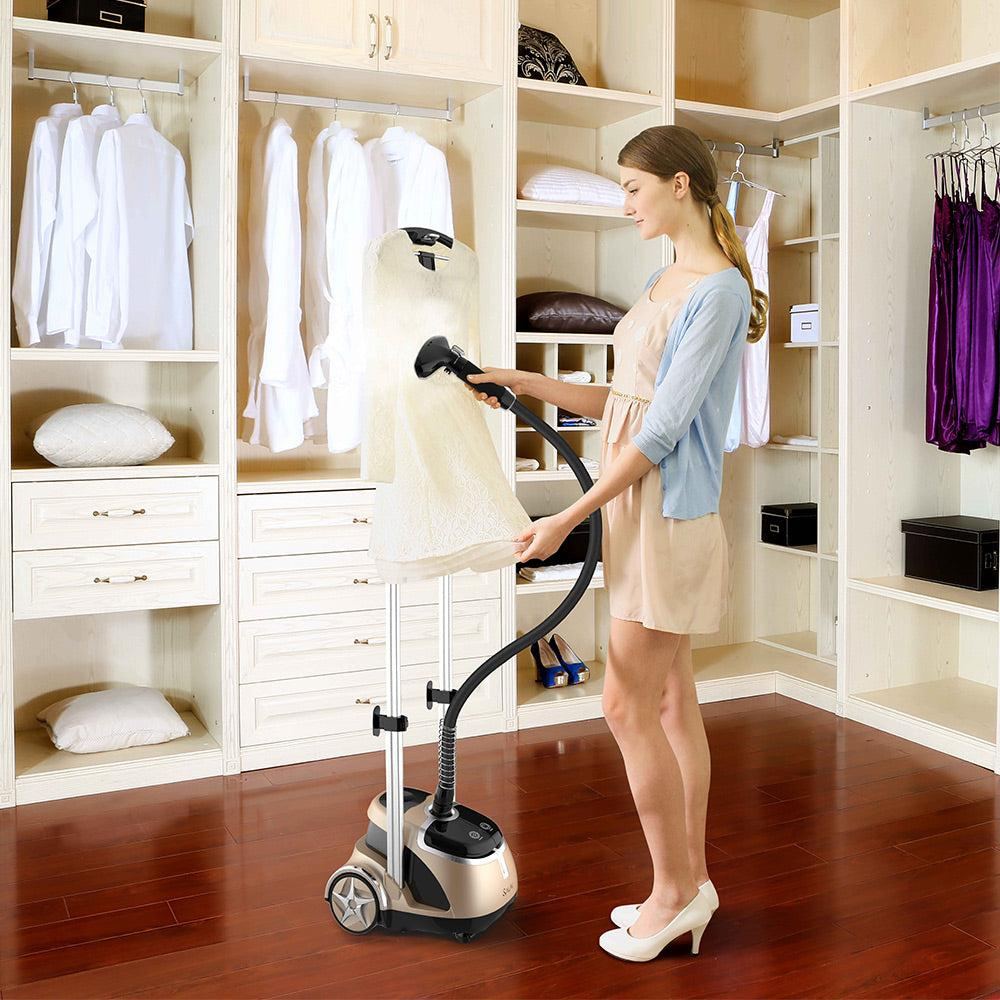
Steam refreshes a garment without ever touching water, detergent or a drum.
Three things happen every time a garment is properly washed, and all three compound with repetition:
- Fibres lose their finish. Wool loses lanolin, silk loses the protein coating that gives it sheen, and both start to look duller with each cycle.
- Colour fades. Even cold, gentle washing exposes dye to water and mechanical movement it wasn't designed to survive often.
- Structure degrades. The canvas and padding inside a blazer, the drape in tailored trousers, the recovery in a good knit — all of it slowly loosens with every wash and dry.
Does It Actually Need Washing? A Quick Test
Before anything goes in a hamper, it's worth thirty seconds of an honest check. Most items fail this test in the best possible way — they don't need washing yet.
- Smell the three contact points — collar, underarms, and waistband. If none carry odour, it doesn't need a wash.
- Check for visible marks. A spot-cleanable stain is not a reason to wash the whole garment.
- Feel the fabric. If it still feels crisp or springs back into shape, it hasn't absorbed enough wear to need cleaning.
- Ask how it was worn. A blazer over a shirt for a three-hour dinner is a different garment, hygienically, to a t-shirt worn to the gym.
How Often You Should Actually Wash Everything
| Garment | Wash After | Why |
|---|---|---|
| T-shirts & underwear | Every wear | Direct, prolonged skin contact and sweat |
| Activewear | Every wear | Sweat and bacteria set into synthetic fibres fast |
| Dress shirts (over undershirt) | 2–3 wears | Little direct skin contact if layered properly |
| Denim | 4–6 wears | Frequent washing fades colour and breaks down fit |
| Wool trousers | 5–8 wears | Wool is naturally odour- and dirt-resistant |
| Blazers & suit jackets | Seasonally, or 8–10 wears | Rarely touches skin; structure degrades with each clean |
| Cashmere & wool knits | Once or twice a season | Lanolin and loft are lost with every wash |
| Silk blouses | 3–4 wears, hand wash or dry clean | Fibres weaken quickly under agitation and heat |
| Coats & outerwear | Once a season | Outer layer rarely contacts skin directly |
The Between-Wash Rituals That Do the Real Work

A five-minute steam does most of what people assume only a wash can do.
The gap between wears is where an expensive wardrobe is actually maintained. None of this requires water, detergent or a machine:
- Steam, don't wash. A few minutes of steam relaxes wrinkles, lifts odour and refreshes the fabric's surface without touching the fibre's structure.
- Air it out for 24 hours. Hang a worn garment somewhere with airflow — not back in the closet — before returning it. Moisture and light odours dissipate on their own.
- Spot-clean immediately. A drop of wine or a smear of sauce, treated within the hour, almost never needs a full wash to disappear.
- Brush wool and tweed. A soft garment brush lifts dust and surface debris that would otherwise need a wash to remove.
Fabric by Fabric: What Survives, What Doesn't
Cashmere & Wool Knits
Naturally odour-resistant. Air out and brush between wears; wash only once or twice a season, by hand or by a specialist.
Wash rarelySilk & Satin
Weakens quickly under agitation and heat. Steam and spot-clean; hand wash or dry clean only when genuinely needed.
Spot clean firstTailoring & Suits
Internal canvas and padding degrade with every clean. Press and steam between wears; professional clean seasonally at most.
Professional pressLeather & Suede
Never machine wash. Wipe clean, condition occasionally, and take stains to a specialist immediately.
Never machine washCotton Shirts
Holds up well to regular washing. Still benefits from airing between wears to extend colour and collar life.
Wash regularlyDenim
Washing fades colour and breaks down fit fastest. Spot-clean and air out; wash sparingly, inside out, cold.
Wash sparinglyActivewear & Elastane
Traps sweat and bacteria fast, but heat and harsh detergent kill stretch fibres just as fast. Wash every wear, cold and gentle.
Wash every wearLinen
Forgiving and quick-drying. A light wash every few wears keeps it crisp without shortening its life.
Wash moderatelyStorage Habits That Extend Every Garment's Life
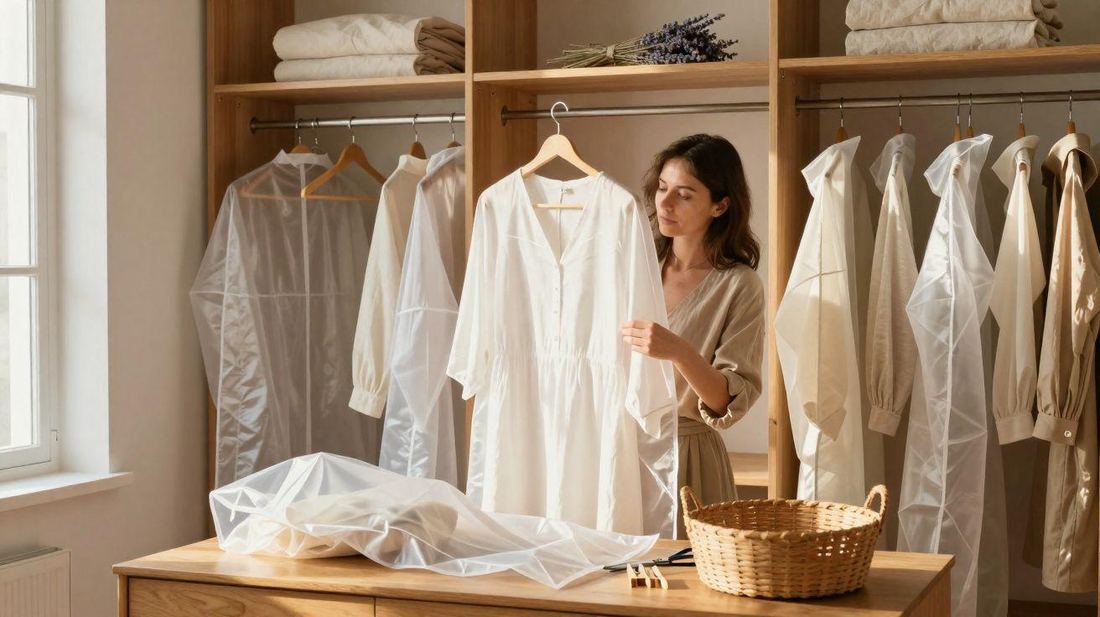
Breathable fabric, not sealed plastic, is what actually protects a garment between wears.
How a garment is stored between wears matters almost as much as how often it's washed. A few habits make an outsized difference:
- Swap plastic for breathable bags. The thin plastic from a dry cleaner traps residual moisture and solvent fumes against the fabric — remove it the moment you're home.
- Use wooden or padded hangers. Wire hangers distort shoulders permanently over time; wood and padding hold a garment's true shape.
- Give every piece breathing room. Garments crushed together trap humidity and wrinkle faster, both of which shorten the interval before a real wash is needed.
- Keep wardrobes out of direct sun. UV fades colour faster than washing ever will.
- Use cedar, not mothballs. Cedar blocks deter moths without the chemical smell that clings to natural fibres.
The Singapore Humidity Factor
In Singapore, the climate rewrites some of these rules. With humidity routinely above 80%, a closet is never fully dry, which means moisture-loving odour and mildew have a head start that wardrobes in drier climates simply don't face.
- Never return a garment to the closet slightly damp. "Almost dry" becomes musty within hours in this climate.
- Add a dehumidifier or silica gel to the wardrobe. It slows the moisture buildup that shortens the interval between real washes.
- Air natural fibres more often, not less. Wool and cashmere are more vulnerable to humidity-trapped odour here than in temperate countries — a quick air-out matters more, not less.
- Leave a gap between the wardrobe back panel and the wall. It's a small change that meaningfully improves airflow around stored clothes.
Seven Habits of Wardrobes That Never Look Tired
- Empty every pocket before hanging — leftover tissues and receipts trap moisture and crease fabric overnight.
- Treat stains within the hour — the longer a mark sits, the more likely the whole garment ends up in a wash it didn't need.
- Steam before you wash, every time — it solves wrinkles and light odour without touching the fibre.
- Rotate what you wear — giving every piece 48 hours to fully recover between wears extends its life meaningfully.
- Use the right hanger for the job — wide wooden hangers for jackets, clip hangers for trousers, padded ones for silk.
- Book a professional clean seasonally — for the pieces that matter, this beats any number of home washes.
- Keep a "24-hour rail" by the door — a single rail where worn clothes air out before either returning to the closet or heading to the wash.
Frequently Asked Questions
Is it unhygienic to not wash clothes after every wear?
Not for most outer layers. A blazer, coat or pair of trousers worn over other clothing has minimal direct skin contact and collects far less bacteria than something worn against skin. Airing it out achieves most of the hygiene benefit without the wear a wash causes.
How do I know if a blazer needs dry cleaning or just steaming?
If it smells clean and shows no visible marks, steam it. Book a proper dry clean only when there's a stain that spot-cleaning can't lift, or roughly once a season regardless — whichever comes first.
Can I air out clothes in Singapore's humidity, or will they smell worse?
Airing still works, but it needs moving air, not just time. A fan, an open window, or a spot near the air-con vent makes the difference between a garment that refreshes and one that turns musty.
Does washing clothes less often mean dirt just builds up over time?
No — the goal isn't to avoid washing altogether, it's to wash at the point a garment actually needs it rather than on autopilot after every wear. Spot-cleaning and airing handle the buildup that happens in between.
What's the one item you should always wash after every single wear?
Anything worn directly against skin for hours — underwear, t-shirts, socks and activewear. These absorb sweat and oils fast enough that airing alone isn't enough.
The Verdict

A wardrobe that lasts is built on knowing what to leave alone, not just what to clean.
So what actually needs washing? Only what touches skin and traps sweat. Everything else — the blazers, the cashmere, the silk, the tailoring that makes up the real value of a wardrobe — lasts longest when it's steamed, aired and spot-cleaned between the occasional wash it genuinely needs. The most expensive thing you can do to fine clothing isn't skipping a wash. It's giving it one too many.
When those pieces do need proper cleaning, Piing treats each fabric exactly the way it deserves — then delivers it back, ready to wear. Pickup & delivery across Singapore
Let Piing! handle the laundry and dry cleaning. Book a pickup and get your clothes collected, cleaned and delivered across Singapore — no store visits, no hassle.
Book a Pickup →