
It is 7:45 on a humid Singapore morning. You notice a coffee mark on the blouse you planned to wear, your suit jacket feels less than fresh after yesterday's commute, and the washing machine is right there. Do you wash both, send both for dry cleaning — or leave them alone?
The wrong choice can shrink wool, dull silk, distort tailoring or set a stain permanently. The right choice is rarely about which method is "better." It is about matching the process to the garment in front of you — not the garment category you assume it belongs to.
Dry Cleaning and Washing Do Different Jobs
Washing uses water and detergent to release water-soluble soil such as perspiration, drinks and everyday grime. Machine action, temperature and spin speed all influence shrinkage, colour loss and distortion.
Dry cleaning uses a specialised liquid solvent rather than water as the main cleaning medium. It is particularly effective on oils and grease, and for garments whose fibres, dyes, interlinings or structure may react badly to water.
Start With the Care Label — But Read It Intelligently
The label reflects the safest process tested by the manufacturer. "Dry clean only" is an instruction: water may damage the dye, finish or construction. "Dry clean" alone can be a recommendation, but home washing is still a risk if you cannot identify the fibre blend, trims and internal structure.
- Check every symbol. Temperature, agitation, bleach, drying and ironing instructions all work together, not in isolation.
- Look beyond the outer fabric. A washable wool shell can still contain interfacing, padding or lining that warps in water.
- Treat mixed fibres cautiously. A garment is only as washable as its most sensitive component.
- Do not experiment with sentimental pieces. Replacement cost is not the only measure of value.
A Simple Decision Guide
| Choose Washing When… | Choose Dry Cleaning When… |
|---|---|
| The care label allows it | The label says "dry clean only" |
| The garment is unstructured | It has tailoring, lining or padding |
| Soil is mainly sweat or water-based | The stain is oily, cosmetic or unknown |
| Colourfastness is known | The dye, print or trim may be unstable |
| You can control temperature and agitation | The piece is delicate, valuable or embellished |
What Each Fabric Needs
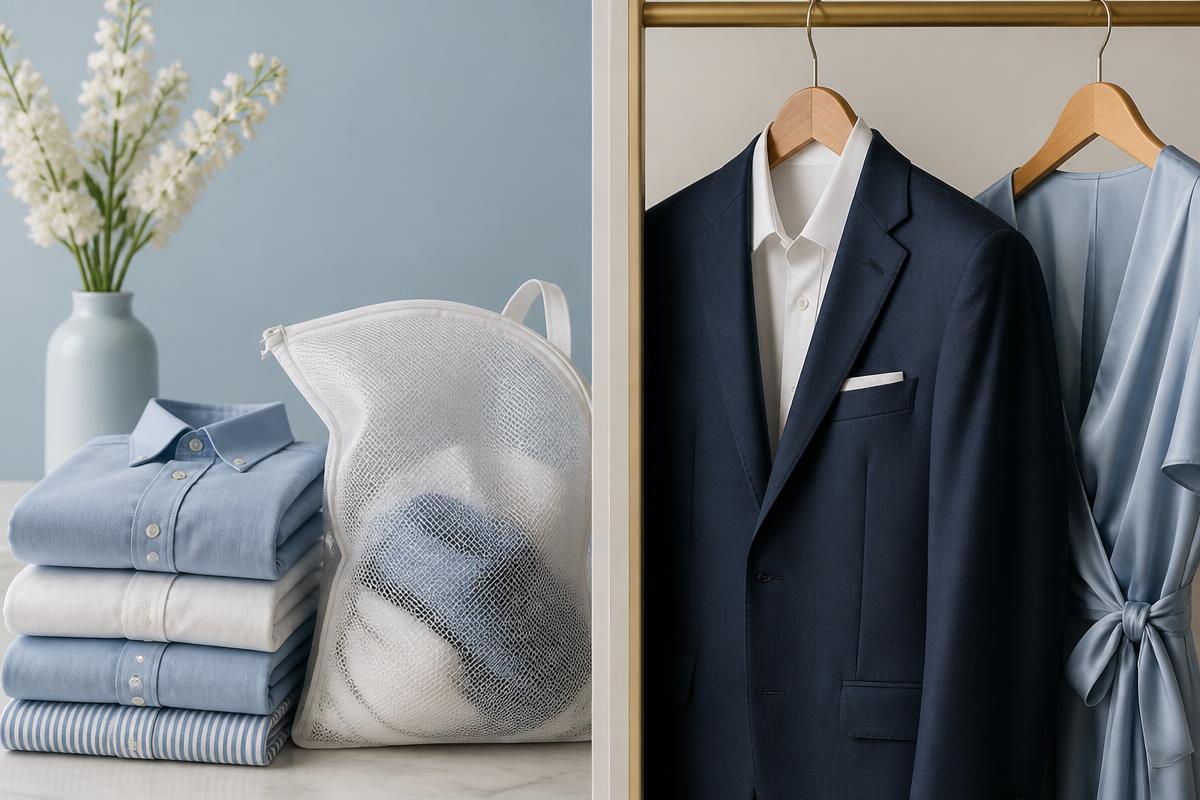
Construction matters as much as fibre — a cotton shirt and a tailored cotton jacket may need very different care.
Silk
Dry clean delicate, lined, printed or structured silk. Hand-wash only when the label permits it, using cool water and minimal movement.
Usually dry cleanWool & Cashmere
Structured wool belongs with a professional. Some unlined knitwear can be gently hand-washed, reshaped and dried flat.
Depends on constructionCotton & Linen
Most everyday pieces tolerate a careful wash. Tailored, dark-dyed or embellished versions may still need professional care.
Usually washSuits & Formalwear
Interfacing, shoulder pads and linings react differently to water. Professional cleaning protects the garment's engineered shape.
Dry cleanViscose & Rayon
Deserves special caution — some versions weaken when wet and may shrink or lose shape. Check the label before you risk it.
Depends on versionLeather, Suede & Fur
Needs a specialist process rather than ordinary dry cleaning. Standard solvents and water can both cause permanent damage.
Specialist onlySequins, Beads & Metallic Trims
Glued trims, sequins and metallic finishes should always be assessed before cleaning — one wrong process can be irreversible.
Professional onlyEveryday Basics
T-shirts and underlayers are built for the machine. Wash after every wear on a normal cycle when the label allows it.
WashThe Stain Can Change the Answer
Water-based marks and oily marks behave very differently. Perspiration, tea and many food spills often respond to aqueous cleaning, while sebum, cooking oil, makeup and grease are commonly better handled with professional solvents and targeted stain treatment.
Why Singapore's Climate Changes the Calculation
Heat and humidity mean clothes absorb more perspiration, sunscreen and moisture — even during a short journey between air-conditioned spaces. Leaving those residues untreated can yellow pale fabrics, attract insects and create odour or mildew in a closed wardrobe.
But more frequent cleaning is not automatically better. Air garments promptly, rotate jackets and trousers between wears, and clean when there is soil, persistent odour or a storage deadline.
What Good Professional Care Should Involve
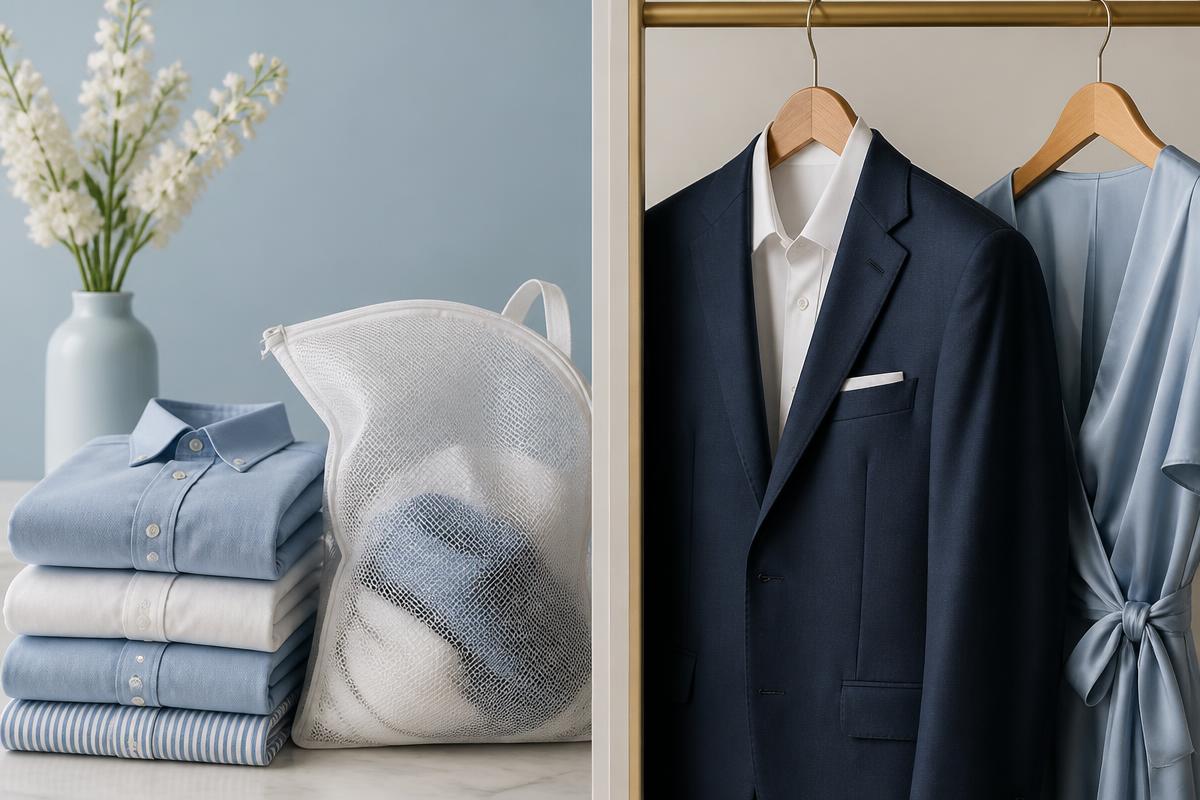
Good care starts before the cleaning does — inspection and classification decide everything that follows.
- Inspection: identifying fibres, construction, stains, trims and pre-existing damage.
- Classification: separating garments by colour, material and suitable process.
- Targeted stain care: treating each mark according to its chemistry before general cleaning.
- Controlled cleaning: selecting the appropriate method rather than applying one process to everything.
- Finishing and final check: restoring shape, pressing carefully and inspecting the result before return.
With Piing, pickup and delivery make it easier to get that decision right without adding another errand to your week. Mention stains and special concerns when booking so the garment can be assessed with the right context.
How Often Should Clothes Be Cleaned?
There is no universal wear count. Underlayers usually need washing after each wear. Shirts and blouses depend on contact with skin and perspiration. Trousers, knitwear and jackets can often be aired and worn again if they remain clean and fresh. Formalwear should be cleaned before long-term storage, especially after outdoor events.
Over-cleaning gradually affects colour and fibres; under-cleaning allows invisible residue to age. The sensible middle ground is condition-based care: inspect after every wear and act on what the garment actually needs.
Frequently Asked Questions
Can I wash a "dry clean only" garment at home?
You can, but it is a risk the label is explicitly warning you against. Some pieces survive a careful hand wash; others shrink, bleed colour or lose their shape permanently. If the garment matters to you, send it to a professional instead of testing the label.
Does dry cleaning use harmful chemicals?
Modern professional cleaners use tightly controlled solvents and equipment designed for both effectiveness and safety. A reputable cleaner follows proper ventilation and handling procedures, so the process is safe for both your clothes and the people wearing them.
Why did my dry-clean-only item shrink anyway?
Usually because it was exposed to heat, not water — a hot press, an over-eager iron, or high-heat finishing on a fibre that could not take it. This is why professional finishing, done correctly, matters as much as the cleaning step itself.
Is dry cleaning necessary if a garment just smells, not stained?
Not always. Airing a lightly worn jacket or trousers between wears is often enough. Clean when odour persists after airing, when there is visible soil, or ahead of long-term storage.
How do I know if a stain is oil-based or water-based?
If it feels greasy, darkens the fabric, or came from food, cosmetics or skin oils, treat it as oil-based and leave it to a professional. If it is a clear or pale mark from a drink, sweat or rain, aqueous cleaning usually handles it well.
The Verdict

A wardrobe that lasts is built one correct cleaning decision at a time.
Wash sturdy, colourfast and unstructured pieces when their label allows it. Dry clean structured, delicate, lined, embellished or water-sensitive garments — and bring valuable pieces to a professional whenever the risk of guessing is higher than the cost of care.
The best method is the one that removes soil while preserving colour, texture and shape. Read the label, consider the entire garment, identify the stain and resist the urge to improvise. Your clothes will look better, feel better and stay in rotation much longer.
Piing picks up, cleans and dries every garment exactly the way its fabric demands — then delivers it back, ready to wear. Pickup & delivery across Singapore
Let Piing! handle the laundry and dry cleaning. Book a pickup and get your clothes collected, cleaned and delivered across Singapore — no store visits, no hassle.
Book a Pickup →